

Web Design in 2026: What to Anticipate and How It May Look
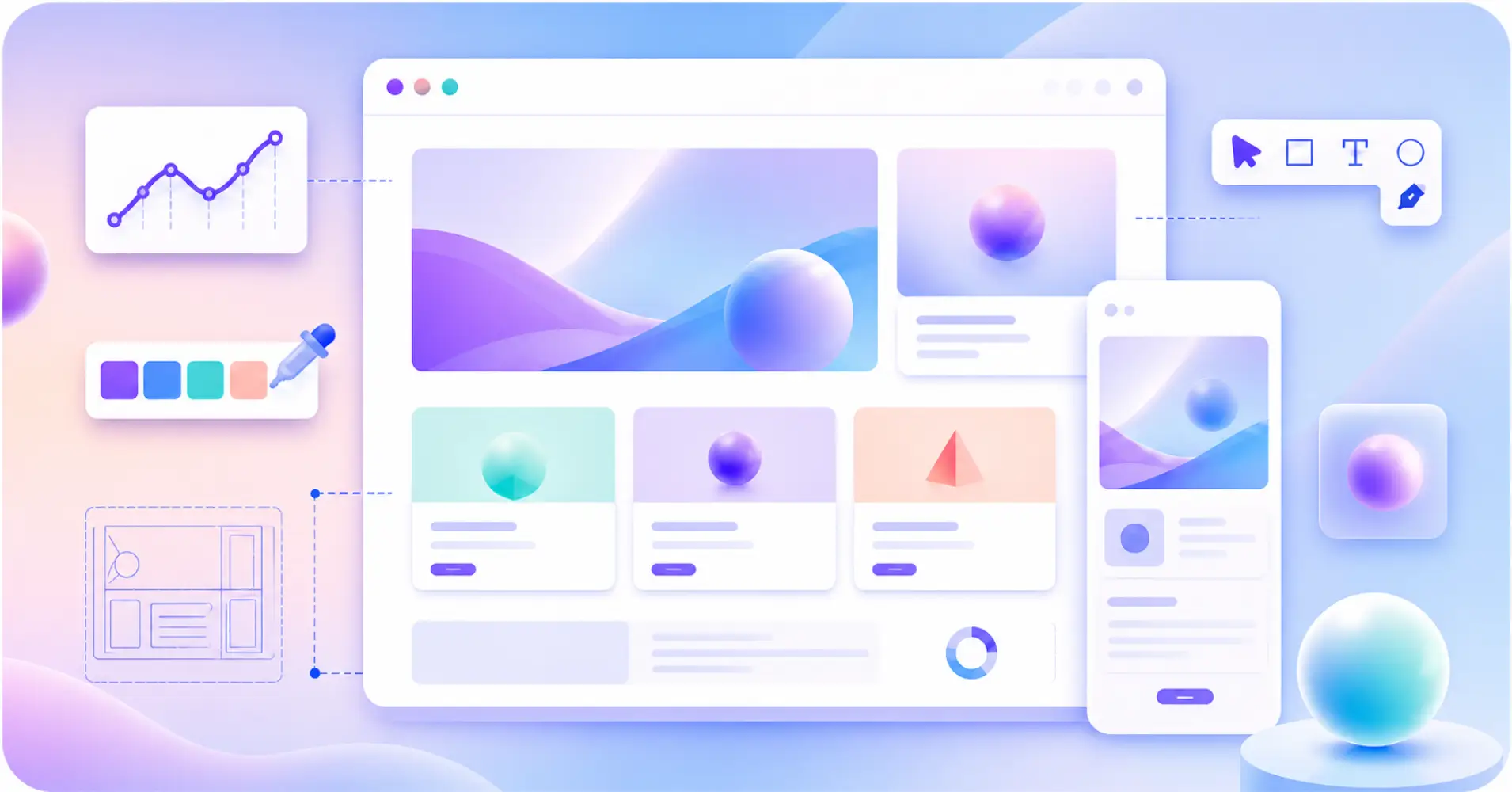
Web design in 2026 will not be only about beautiful layouts, bold colors, or smooth animations. The future of web design is moving toward faster, smarter, more accessible, and more personalized website experiences that help businesses earn trust, guide visitors clearly, and turn attention into action.
Websites are no longer simple digital brochures.
They collect leads, recommend products, answer questions, book appointments, process payments, support customers, and connect with CRM and marketing automation tools.
So, when we talk about web design trends in 2026, we are not only talking about how websites may look. We are also talking about how they may think, respond, and perform.
Key Takeaways
- Web design in 2026 will be shaped by AI, personalization, accessibility, speed, mobile-first UX, and conversion-focused design.
- Modern web design will need to balance creativity with usability and performance.
- AI tools will help designers move faster, but human strategy, taste, and UX thinking will still matter.
- Accessibility will become a standard expectation, not an optional upgrade.
- eCommerce website design will focus more on trust, smoother checkout, better product discovery, and personalized buying journeys.
- WordPress websites will become more experience-driven by connecting design with forms, CRM, payments, bookings, support, automation, and eCommerce.
What Is the Future of Web Design?
The future of web design is the shift from static, one-size-fits-all websites to intelligent, responsive, accessible, and conversion-focused digital experiences.
In 2026, websites will use AI, personalization, motion, better UX, faster performance, and connected business tools to create experiences that feel more useful for every visitor.
But that does not mean every website needs 3D graphics, AI chatbots, or wild animations.
The best website design in 2026 will still be simple at its core:
- Clear message
- Fast loading
- Easy navigation
- Strong trust signals
- Smooth path to action
The real difference is adaptability.
A first-time visitor, returning customer, mobile shopper, and high-intent lead should not always get the exact same experience.
Why Web Design Trends Matter in 2026
Following every new design trend is a bad idea. But ignoring web design trends completely is also risky.
Website design directly affects how people judge your brand. A slow, outdated, confusing, or hard-to-use website can quietly damage trust.
A modern website design, on the other hand, can make your business feel more credible, helpful, and ready for the future.
Current web design discussions already point toward immersive visuals, experimental navigation, bold typography, dark mode, motion design, sustainable design, AI chatbots, mobile-first layouts, accessibility, and personalization.
But trends only matter when they serve the user.
A 3D hero section is useful if it helps people understand a product. It is noise if it slows the page down.
Bold typography is powerful if it improves hierarchy. It becomes a problem when it hurts readability.
AI personalization can improve the customer journey. It can also feel uncomfortable if it ignores privacy and context.
The future of web design belongs to brands that use trends with purpose.
From 2025 to 2026: What Is Changing?
The biggest change is that websites are becoming more active.
In the past, a business website mostly worked like this:
A visitor landed on a page, read some text, clicked a button, filled out a form, and left.
In 2026, the experience may look different.
A visitor lands on a page. The website understands the device, intent, behavior, location, referral source, or lifecycle stage. Then it shows a relevant message, recommends the next step, opens a smart form, connects the lead to a CRM, or starts an email journey.
That is why the future of website design is not only visual. It is also strategic.
The best websites in 2026 will likely combine three things:
- A strong visual identity
- A smooth user experience
- A connected system behind the design
15 Web Design Trends to Expect in 2026
Before jumping into the trends, remember this: the future of web design is not about using every new effect. It is about creating websites that are faster, clearer, smarter, and easier to trust.
Here are the web design trends likely to shape 2026.
1. AI-Powered Web Design Will Become More Practical
AI in web design will not be limited to quick layouts or placeholder copy. In 2026, AI will become part of the actual design workflow.
Designers may use AI to:
- Generate layout ideas
- Create first-draft wireframes
- Analyze user behavior
- Personalize website content
- Suggest UX improvements
- Create visual assets
- Generate landing page variations
- Test headlines and CTAs
- Power chatbots and conversational interfaces
But AI will not replace good design thinking.
AI can create options. Designers still need to decide what fits the brand, audience, message, and business goal. That is where real strategy lives.
For businesses, the winning approach will be AI-assisted, not AI-dependent.
Use AI for speed. Use human judgment for taste, emotion, story, and trust.
2. Websites Will Become More Personal and Adaptive
Personalization will be one of the most important website design trends in 2026.
A modern website should not treat every visitor the same way. Someone visiting your homepage for the first time needs a different message than someone who has already viewed your pricing page three times.
Personalized website experiences may include:
- Dynamic homepage sections
- Product recommendations
- Location-based content
- Returning visitor messages
- Behavior-based CTAs
- Personalized lead magnets
- Smart popups
- Browsing history-based suggestions
- Customer lifecycle-based offers
For eCommerce websites, this matters even more.
If a customer viewed a product category, abandoned checkout, or returned after reading reviews, the next experience should feel more relevant.
For WordPress site owners, this means the website should connect with tools for forms, CRM, email automation, eCommerce, customer support, and user behavior tracking.
In simple words, the website should not just show pages. It should remember context and guide the next step.
3. Mobile-First Design Will Remain Non-Negotiable
Mobile-first design is not new. But in 2026, it will be even more important.
Many users will experience your website first from a smaller screen, weaker connection, and shorter attention span.
According to StatCounter, mobile accounted for about 55% of global desktop vs. mobile vs. tablet market share in March 2026, while desktop accounted for around 43.31%.
A future-ready mobile website should include:
- Thumb-friendly navigation
- Clear tap targets
- Fast-loading pages
- Shorter forms
- Sticky CTAs
- Mobile-friendly product pages
- Simple checkout flows
- Readable typography
- Responsive spacing
- No layout-breaking popups
Mobile design is not just about making the desktop version fit on a smaller screen. It is about designing the experience around how people actually use mobile devices.
Open your website on your phone and ask:
- Can I understand the offer in 5 seconds?
- Can I tap the main CTA easily?
- Can I fill out the form without frustration?
- Can I complete checkout without zooming or guessing?
If the answer is no, your website is not ready for 2026.
4. Performance-First Design Will Beat Heavy Visual Design
A beautiful website that loads slowly is not modern. It is just heavy.
In 2026, performance-first web design will become a bigger priority because users, search engines, and AI-powered discovery systems all need websites that are fast and easy to access.
Google says its core ranking systems reward content that provides good page experience. Google also recommends looking at Core Web Vitals, secure connections, mobile display, intrusive interstitials, and whether the main content is easy to distinguish.
Performance-first design means:
- Compressing images
- Using fewer unnecessary scripts
- Avoiding bloated animations
- Choosing lightweight themes
- Cleaning unused CSS and JavaScript
- Optimizing fonts
- Designing faster mobile pages
- Testing real user experience
Here is the future design rule:
If a design element makes the page prettier but slower, harder to use, or less accessible, it needs to justify its existence.
That is the line.
5. Accessibility-First Design Will Become a Baseline
Accessibility is not a shallow trend. It is a responsibility.
Still, accessibility-first design will become much more visible in 2026 because businesses can no longer afford to treat it as an afterthought.
The WebAIM Million 2026 report found that 95.9% of the top one million home pages had detected WCAG 2 failures. The most common issues included low contrast text, missing alternative text, missing form input labels, empty links, and empty buttons.
Accessible web design includes:
- Strong color contrast
- Proper heading structure
- Alt text for meaningful images
- Clear labels for form fields
- Keyboard-friendly navigation
- Descriptive button text
- Visible focus states
- Readable font sizes
- Simple language
- Screen reader-friendly layouts
This matters for every website, but especially for WordPress businesses using forms, checkouts, booking pages, LMS pages, and customer portals.
A simple mindset helps here:
Do not design only for perfect conditions.
People may browse your website with poor eyesight, slow internet, one hand, screen readers, old devices, bright sunlight, stress, or urgency.
Good design still works.
6. Bold Typography Will Carry More Brand Personality
Typography will become more expressive in 2026.
Figma highlights bold typography as a major web design trend, with brands using oversized headlines, custom fonts, motion, layered type, and dynamic font pairings to create stronger first impressions.
Expect to see:
- Big hero headlines
- Editorial-style layouts
- Kinetic typography
- Variable fonts
- Strong font pairings
- Type-led landing pages
- Typography used as a visual element
But bold typography should not become a readability problem.
A headline can be huge. It still needs to be clear. A font can be stylish. It still needs to be readable. A hero section can look artistic. It still needs to tell people what the website is about.
Bold typography works best when it follows a simple formula:
Strong headline. Short supporting copy. Clear CTA. Enough whitespace.
7. Motion Design and Microinteractions Will Guide Users
Motion design will keep growing, but the best websites will use motion with restraint.
Figma describes motion design as a way to add rhythm and storytelling to web experiences through hover effects, scroll-based narratives, button animations, and micro animations. Designmodo also includes dynamic effects, animations, meaningful interactions, and microinteractions in its 2026 trend coverage.
Useful microinteractions include:
- Button hover states
- Form validation feedback
- Loading indicators
- Checkout progress bars
- Success animations
- Menu transitions
- Product image interactions
- Scroll-based content reveals
Motion should help users understand what is happening. It should not distract them from the message.
Bad motion says, “Look at me.”
Good motion says, “Here is what to do next.”
That difference matters.
8. 3D, AR, and Immersive Visuals Will Grow
Immersive web design will keep getting attention in 2026.
Figma lists 3D and immersive elements as one of the top web design trends for 2026, including WebGL experiences, interactive models, scroll-triggered animations, and AR previews.
This trend can work especially well for:
- eCommerce products
- Furniture stores
- Fashion brands
- Real estate websites
- Architecture firms
- SaaS product demos
- Creative portfolios
- Automotive brands
- EdTech and training platforms
For example, a customer may rotate a product in 3D, preview furniture in a room, explore a virtual tour, or interact with a product demo before booking a call.
But immersive design needs control.
A product preview that helps people buy is useful. A heavy animation that blocks the content is not.
Wavespace’s 2026 website design examples also highlight WebGL, 3D, parallax, cinematic effects, storytelling, grid systems, typography, contrast, and motion as part of modern website inspiration.
9. Experimental Navigation Will Need a Practical Limit
Experimental navigation is becoming more common. Think radial menus, hidden drawers, interactive maps, and nonlinear browsing paths.
This can work well for creative websites, campaigns, portfolios, product stories, and immersive brand experiences.
But for business websites, navigation still needs to answer basic questions quickly:
- What do you offer?
- Who is it for?
- How much does it cost?
- Why should I trust you?
- What should I do next?
Creative navigation is good when it makes exploration enjoyable.
It becomes a problem when users feel lost.
Use experimental navigation for experience-led pages. Use clear navigation for conversion-led pages.
A SaaS pricing page, eCommerce checkout, support portal, or booking page should not make users solve a puzzle.
10. Dark Mode and Theme Personalization Will Become More Common
Dark mode has moved from trendy to expected.
In 2026, more websites may offer:
- Light and dark mode toggles
- User-controlled themes
- Accessibility-friendly contrast modes
- Reading-focused modes
- Brand-specific color themes
- Personalized dashboard appearances
Dark mode works especially well for SaaS dashboards, developer tools, productivity apps, media websites, learning platforms, creative portfolios, and communities.
But dark mode needs careful contrast testing.
Gray text on a black background may look sleek, but it can become painful to read.
Dark mode should reduce friction, not just change the vibe.
11. Sustainable Web Design Will Get More Attention
Sustainable web design will become a bigger conversation because websites are getting heavier.
More elements often mean more complexity. More complexity can affect speed, accessibility, maintainability, and energy usage.
The WebAIM Million 2026 report found that the average home page had 1,437 elements in February 2026, a 22.5% increase in one year.
Sustainable web design focuses on:
- Lightweight pages
- Optimized media
- Cleaner code
- Less unnecessary tracking
- Efficient hosting
- Reusable components
- Long-lasting design systems
- Reduced digital waste
Sustainable websites are not just better for the environment. They are often faster, easier to maintain, and better for users.
That is a practical win.
12. Conversational Interfaces Will Become More Natural
Chatbots used to feel robotic. In 2026, conversational interfaces will feel more useful because AI models are getting better at understanding natural language.
A future-ready website may include:
- AI chatbots
- Voice search
- Voice navigation
- Guided product finders
- Conversational forms
- Smart support widgets
- AI-powered knowledge base search
- Sales assistants
People are getting used to asking complete questions instead of clicking through endless menus.
Websites will need to answer more directly.
Instead of forcing users to browse five service pages, a website could let them ask:
“What is the best plan for a small eCommerce store with 500 monthly orders?”
Then the site could guide them to the right product, pricing, documentation, or booking page.
13. Design Systems Will Matter More Than One-Off Pages
In 2026, strong websites will not be built page by page from scratch. They will be built from systems.
A design system includes:
- Typography rules
- Color palette
- Spacing
- Buttons
- Cards
- Form fields
- Icons
- Layout grids
- Components
- Interaction rules
- Accessibility standards
- Content patterns
This helps teams design faster and maintain consistency.
For WordPress websites, design systems are especially useful because teams often manage many pages, landing pages, product pages, forms, blog templates, and campaign pages.
Without a system, websites slowly become messy.
One button style becomes five. One form layout becomes seven. One landing page design becomes impossible to maintain.
That is how modern website design starts breaking.
The future-ready approach is simple:
Build reusable blocks. Create clear style rules. Keep design consistent across marketing pages, product pages, checkout pages, dashboards, and customer emails.
14. eCommerce Design Will Focus on Trust and Frictionless Buying
eCommerce design trends in 2026 will be less about flashy product grids and more about reducing buying hesitation.
Baymard’s cart abandonment research puts the average documented online shopping cart abandonment rate at around 70.22%.
Many online stores do not lose customers because the product is bad. They lose customers because the buying experience creates friction.
Future-ready eCommerce design should focus on:
- Clear product information
- Transparent pricing
- Visible shipping costs
- Trust badges
- Reviews and testimonials
- Fast checkout
- Guest checkout
- Mobile checkout
- Multiple payment options
- Easy refund and return information
- Better product filtering
- Personalized recommendations
- Abandoned cart recovery
For WordPress eCommerce, the future is not just about having a store. It is about having a complete buying journey.
The product page, cart, checkout, payment, receipt, email confirmation, subscription flow, customer account, and support experience should feel connected.
That is where design becomes revenue.
15. WordPress Websites Will Become More Experience-Driven
WordPress powers a massive part of the web, so any conversation about the future of web design has to include WordPress.
But the future of WordPress web design is not only about better themes or prettier templates.
It is about connected experiences.
A modern WordPress website may need:
- Forms for lead capture
- CRM for customer data
- Email automation for nurturing
- Booking tools for appointments
- Payment tools for selling services
- eCommerce for digital or physical products
- Support systems for customers
- Membership or LMS features
- Analytics for decision-making
- Automation for repetitive tasks
In 2026, a website should not only look like a business. It should work like one.
That is the biggest opportunity for WordPress users.
Web Design Trends Businesses Should Avoid in 2026
Not every trend deserves a place on your website.
Here are a few to avoid.
Too Many Animations: Animation should guide attention. It should not slow down the page, distract users, or make people dizzy.
Overdesigned Hero Sections: If people cannot understand what your business does within a few seconds, the design is failing.
Low Contrast Design: Soft colors may look elegant, but unreadable text hurts accessibility, trust, and conversion.
Generic AI Visuals: AI-generated images can be useful. But overused AI aesthetics can make brands feel fake, forgettable, and lazy.
Hidden Navigation: Minimal navigation looks clean, but hiding important pages can frustrate users.
Desktop-Only Thinking: A website that looks great only on a large monitor is not ready for 2026.
Overcomplicated Forms: Forms should feel easy. Ask only what you need. Use labels clearly. Break long forms into steps when needed.
Trend Chasing Without Strategy: A trend is not a strategy. Use trends only when they support your users and business goals.
How to Prepare Your Website for the Future of Web Design
You do not need to rebuild your entire website overnight.
Start with the improvements that affect users, search visibility, and conversions the most.
1. Audit Your Website Speed
Run your important pages through PageSpeed Insights and Search Console. Look at real user data when possible.
2. Review Your Mobile Experience
Test your homepage, blog posts, product pages, checkout, forms, and pricing pages on mobile.
3. Improve Accessibility Basics
Start with contrast, alt text, form labels, button text, keyboard navigation, and heading structure.
4. Simplify Your Navigation
Make it easy for users to find your products, pricing, contact page, support page, and key resources.
5. Refresh Your Typography
Use readable fonts, strong hierarchy, and enough spacing. Do not make users fight with the text.
6. Make CTAs Clearer
Every important page should have one clear next step.
7. Connect Your Forms With Automation
A form submission should not sit quietly in an inbox. Connect it with CRM, email automation, lead scoring, or customer follow-up.
8. Personalize Where It Matters
Start with simple personalization: returning visitor messages, abandoned cart flows, product recommendations, or lifecycle-based emails.
9. Improve eCommerce Trust Signals
Add reviews, secure payment badges, refund information, shipping clarity, and better checkout UX.
10. Build Reusable Design Components
Create reusable sections for hero areas, testimonials, pricing, FAQs, forms, product cards, and CTAs.
11. Add Structured Content for AI Search Visibility
For GEO, make your content easy for AI systems and search engines to understand.
Use:
- Clear headings
- Direct answers
- FAQs
- Tables where useful
- Definitions
- Internal links
- Structured data where appropriate
- Helpful images and videos
- Content that matches real user questions
GEO-friendly content should be clear, complete, well-structured, and genuinely useful.
What Will Websites Look Like in 2026?
Websites in 2026 will likely look cleaner, bolder, smarter, and more interactive.
You can expect to see:
- Bigger typography
- More motion and microinteractions
- More dark mode options
- More personalized sections
- More AI chat and guided search
- More immersive product demos
- More mobile-first layouts
- More accessible design patterns
- Faster, lighter pages
- More connected business workflows
But the best websites will not use every trend.
They will choose the right trends for the right users.
A law firm does not need the same website experience as a gaming brand. A local clinic does not need the same design as a SaaS dashboard. A WooCommerce store does not need the same UX as a creative portfolio.
The future of web design is not one look.
It is the ability to design the right experience for the right audience.
Future of Web Design: Final Thoughts
The future of web design in 2026 is not about chasing shiny effects. It is about building websites that feel useful from the first click.
AI will change how websites are created. Motion, 3D visuals, bold typography, and immersive storytelling will make websites more expressive. Personalization will make experiences more relevant.
But the heart of good web design will stay the same.
People visit websites because they want something. They want to learn, compare, buy, book, subscribe, contact, download, or solve a problem.
The best website design in 2026 will help them do that faster, easier, and with more confidence.
So, do not build a website that only looks modern.
Build one that works beautifully.
FAQs About the Future of Web Design
What Is the Future of Web Design?
The future of web design is moving toward AI-powered, personalized, accessible, fast, and conversion-focused website experiences. Websites will become more adaptive and connected, helping businesses guide visitors through clearer customer journeys.
What Are the Biggest Web Design Trends in 2026?
The biggest web design trends in 2026 include AI-powered design, website personalization, mobile-first UX, performance-first design, accessibility, bold typography, motion design, 3D visuals, dark mode, sustainable web design, conversational interfaces, and design systems.
How Is AI Changing Web Design?
AI is changing web design by helping teams generate layouts, create content ideas, analyze user behavior, personalize experiences, support chatbots, test CTAs, and speed up design workflows. However, human strategy and brand judgment are still essential.
What Makes a Website Look Modern in 2026?
A modern website in 2026 should have clear messaging, strong typography, fast loading speed, mobile-first design, accessible layouts, subtle motion, clean navigation, trust signals, and a smooth path to conversion.
Are 3D and Motion Design Good for Every Website?
No. 3D and motion design are useful when they support the user journey, explain a product, or improve engagement. They are not useful if they slow the website, distract users, or make the experience harder to understand.
Why Is Accessibility Important in Modern Web Design?
Accessibility makes websites usable for more people, including users with visual, motor, cognitive, or situational limitations. It also improves form usability, navigation, readability, and overall user experience.
What Web Design Trends Should Small Businesses Follow?
Small businesses should focus on mobile-first design, fast loading speed, simple navigation, clear CTAs, accessible pages, trust signals, smart forms, customer reviews, and basic personalization before investing in complex visual trends.
How Can WordPress Websites Prepare for Future Web Design Trends?
WordPress websites can prepare by improving performance, using accessible themes, optimizing mobile UX, connecting forms with CRM and automation tools, improving eCommerce checkout, using reusable design components, and publishing helpful, structured content.
Is Web Design Still Important for SEO in 2026?
Yes. Web design affects page experience, mobile usability, accessibility, site speed, internal linking, content structure, and conversion. A better-designed website can help users find information faster and take action with less friction.
How Do I Make My Content GEO-Friendly?
To make content GEO-friendly, answer questions clearly, use descriptive headings, include definitions, add FAQs, use tables where useful, cite reliable sources, keep important content in text form, add structured data when appropriate, and make the page easy to crawl, read, and understand.

WordPress, automation, eCommerce and growth marketing specialist, a Core Contributor and Media Corps member blending storytelling with technology to craft strategies in SEO, email marketing, and beyond.
-
10 Best jQuery Table Plugins for Best Data Visualization in 2026
Discover the 10 best jQuery table plugins for 2026. Compare -
Complete Guide on How to Build A Church Website with WordPress
Learn how to build a church website with WordPress, from -
14 Best Wireframing Tools in 2026: Free, AI & Paid Options
Compare 13 of the best wireframing tools for websites and



Leave a Reply
You must be logged in to post a comment.