


Content marketing is the practice of creating helpful content, such as blog posts, emails, and videos, that guides shoppers from browsing to buying instead of relying on ads alone. The best content marketing strategies connect every post to one goal: more leads, trust, or repeat sales. This guide covers 15 tactics for building that system.
Key Takeaways
- Build a content strategy around one clear goal before you start creating
- Use email marketing to turn visitors into leads you can nurture
- Reviews, stories, and community build trust faster than ads
- Repurpose content into new formats like video content instead of starting over
- Avoid the mistakes that derail most beginner content marketing plans
What Is Content Marketing for eCommerce Stores
Content marketing for eCommerce means creating content that answers customer questions, builds trust, and brings shoppers back, rather than only running paid ads. Common types of content include blog posts, email newsletters, social videos, and customer reviews.
Content marketing also looks different depending on your audience. B2B marketing usually involves a longer decision, so B2B content tends to lean on detailed guides, case studies, and comparison data. B2C content tends to work better as short, visual, and emotional, built for a faster purchase decision.
Traffic alone does not pay the bills. A visitor who reads a helpful guide or trusts your reviews is far more likely to buy than one who lands on your site cold. Good content marketing turns that first visit into a sale, and that sale into a repeat customer.
Why Content Marketing Matters for SEO and Long-Term Growth
Content marketing is essential for SEO because search engines reward sites that consistently publish relevant content. Every blog post or guide is another chance to rank for a question your customers are already searching.
Unlike paid marketing, which stops the moment you stop spending, content marketing keeps working. Blog content and other evergreen content, posts that stay useful for years instead of months, can keep bringing in organic traffic long after you hit publish.
This is also where content marketing and SEO overlap most. Updating old posts, fixing outdated information, and earning natural backlinks all compound over time, the same way a savings account earns more the longer you leave it untouched.
Checklist: What to Prepare Before You Start
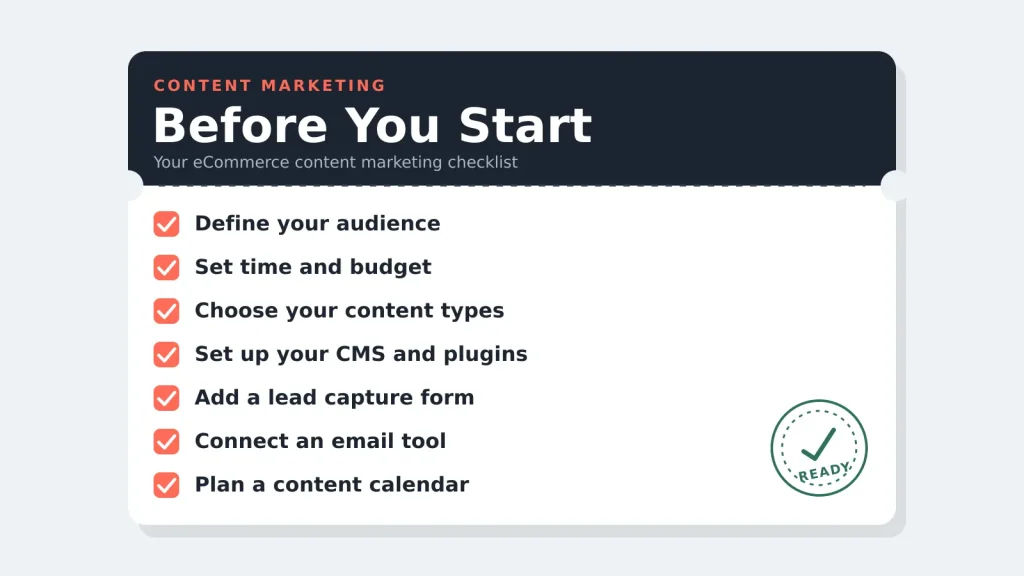
Before publishing a single post, set the foundation for your content strategy. Use this checklist to get ready:
- Decide your target audience and the specific problem your content should solve for them
- Set a realistic time and budget commitment for content work each month
- Choose your core content types, such as blog posts, email, social, or video
- Confirm your content management software and core plugins, such as your form and email tools, are ready
- Set up a way to capture leads, such as a sign-up or contact form
- Set up a way to follow up with those leads, such as an email tool
- Decide on a content calendar and a realistic posting cadence
Plan Your Content Strategy Before You Create Anything
Quality content creation works best with a plan behind it. A content strategy keeps your efforts focused instead of scattered across random posts.
Choose the right types of content
Not every format fits every store. There are many types of content marketing to choose from, including blog posts, email, video, and social, and not all of them suit every audience.
A skincare brand might lean on video content and tutorials, while a B2B supplier may get more value from detailed guides and case studies. Video marketing in particular has grown fast, since short clips often outperform static photos for product discovery. Pick one type of content to start, based on what your audience already prefers.
Match content to the buyer journey
New visitors need different content than returning customers. Someone discovering your store wants simple, helpful information, not a hard sell right away.
Map your content to three stages: awareness, consideration, and decision. A blog post might attract a new visitor, while a comparison guide helps someone closer to buying.
Build a content calendar and generate ideas
A content calendar keeps your content production consistent instead of relying on inspiration. Whether you are a solo content creator or running a small team, block out topics by week or month, and leave room to adjust based on what performs.
When you run out of ideas, look at your own support tickets, customer questions, and competitor content gaps. Customers asking the same question three times is a sign that the question deserves its own piece of content.
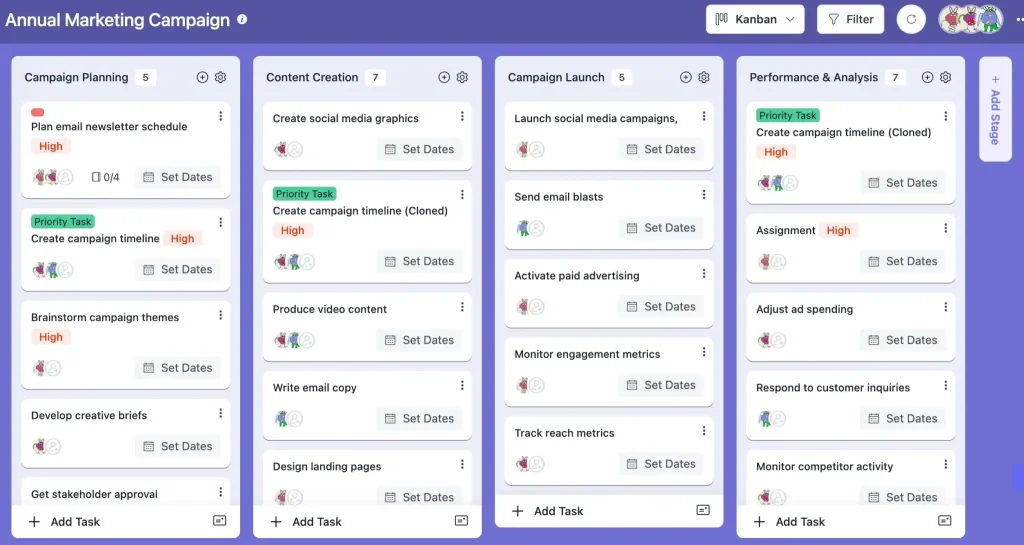
A spreadsheet works for a one-person calendar, but it falls apart once writers, designers, and a marketing team share the workload. FluentBoards gives you a Kanban or Calendar view for planning content, with recurring tasks for weekly posts and templates for formats you repeat often, such as product launch announcements or monthly newsletters.
Capture and Nurture Leads With Email Marketing
Email marketing remains one of the strongest channels for turning content marketing readers into customers. Recent data shows businesses earn between $36 and $42 for every $1 spent on email marketing, with online stores often seeing returns at the higher end of that range (Constant Contact, 2026). That kind of return depends on capturing leads in the first place.
Turn visitors into subscribers
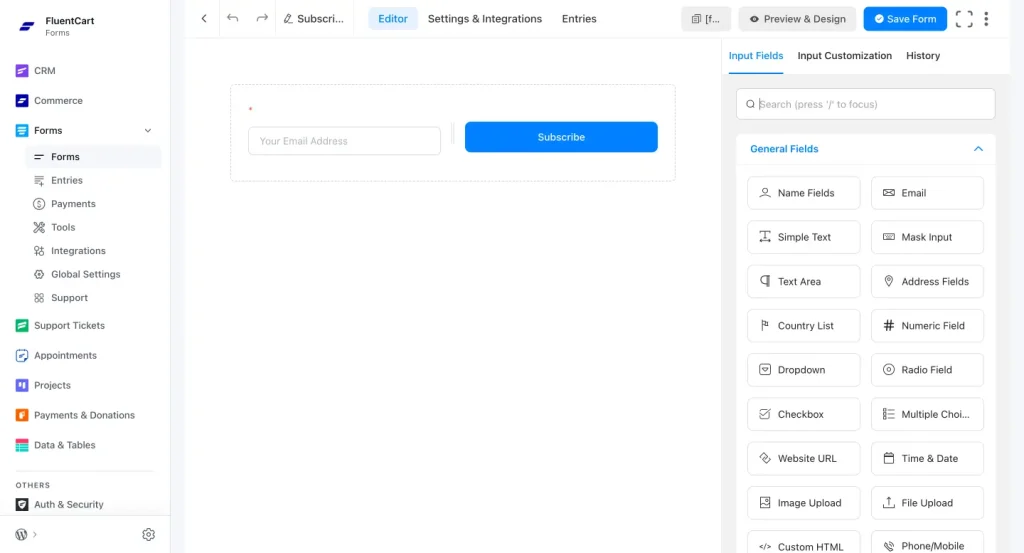
A blog post or guide should always lead somewhere. Add a simple sign-up form so readers can join your list before they leave the page.
With Fluent Forms, you can build a sign-up or lead capture form in minutes using the drag-and-drop builder, then connect it directly to your email list.
Personalize follow-up emails
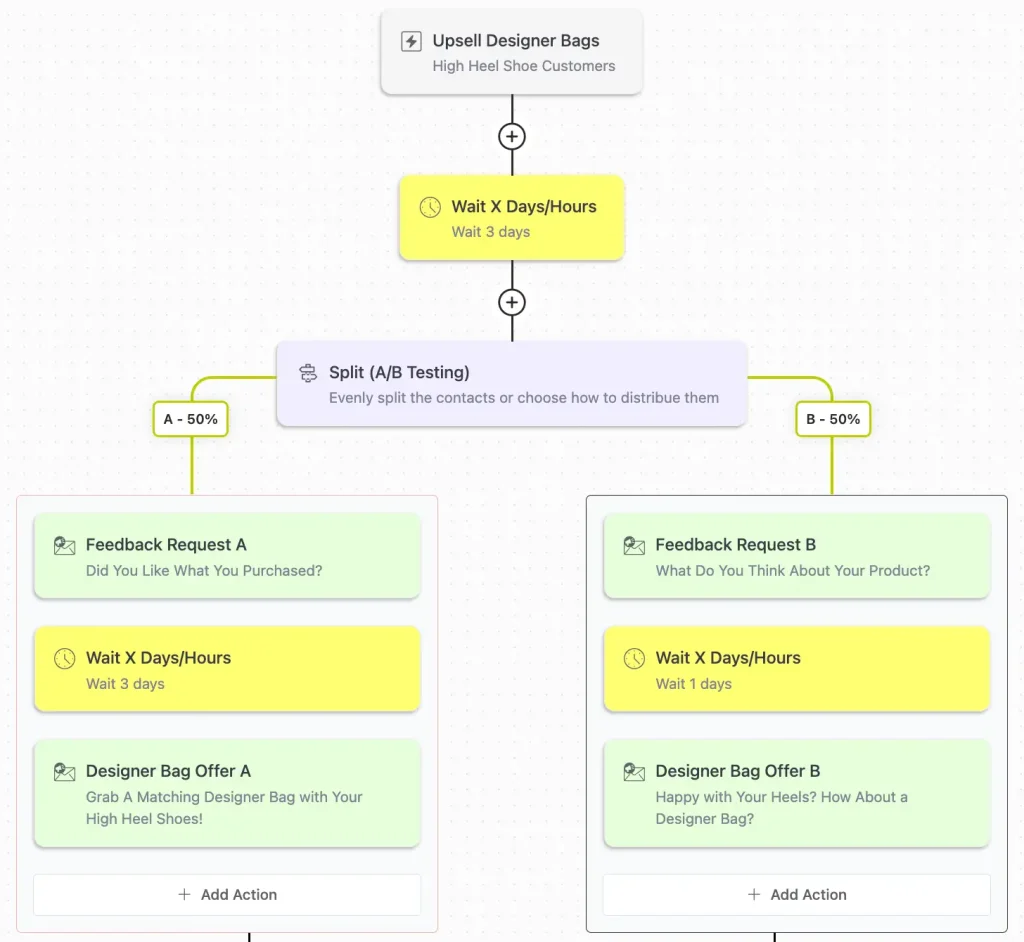
Once someone subscribes, the real work begins. Generic newsletters get ignored, but follow-ups based on what a subscriber actually browsed or bought perform far better.
FluentCRM lets you segment subscribers by behavior and send automated, personalized email sequences without adding a separate SaaS tool to your stack.
Build Trust With Reviews, Case Studies and Storytelling
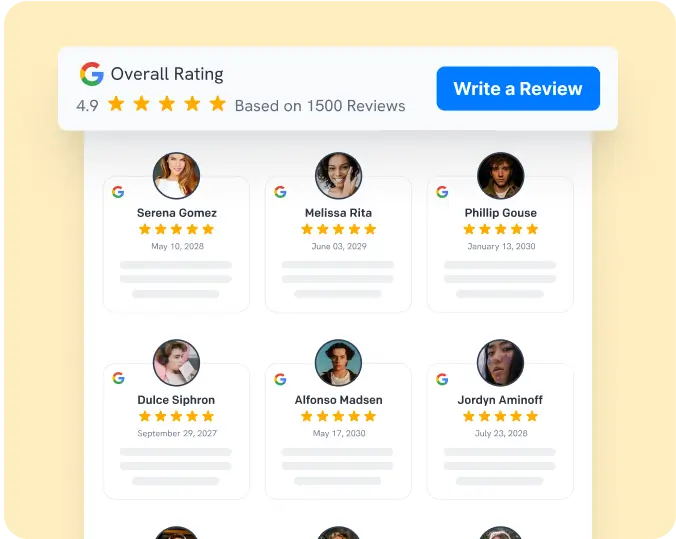
Content marketers know that shoppers trust other shoppers more than they trust sales copy. Displaying customer reviews has been shown to lift sales by close to 20%, and conversion rates climb even higher once a product has five or more reviews (Spiegel Research Center, via Capital One Shopping). For more on building credibility with social proof, see WPManageNinja’s social media reputation management guide.
Add genuine customer reviews to product pages, and avoid anonymous or unverifiable testimonials. Case studies work well for higher-priced products, since they show a full before-and-after story rather than a single quote.
Storytelling rounds out the trust-building toolkit. Share how your business started, or let customers describe their own experience in their own words. Customer photos and unboxing clips, a simple form of user-generated content, often outperform produced marketing campaigns because they feel unscripted and real.
Grow a Community Around Your Brand
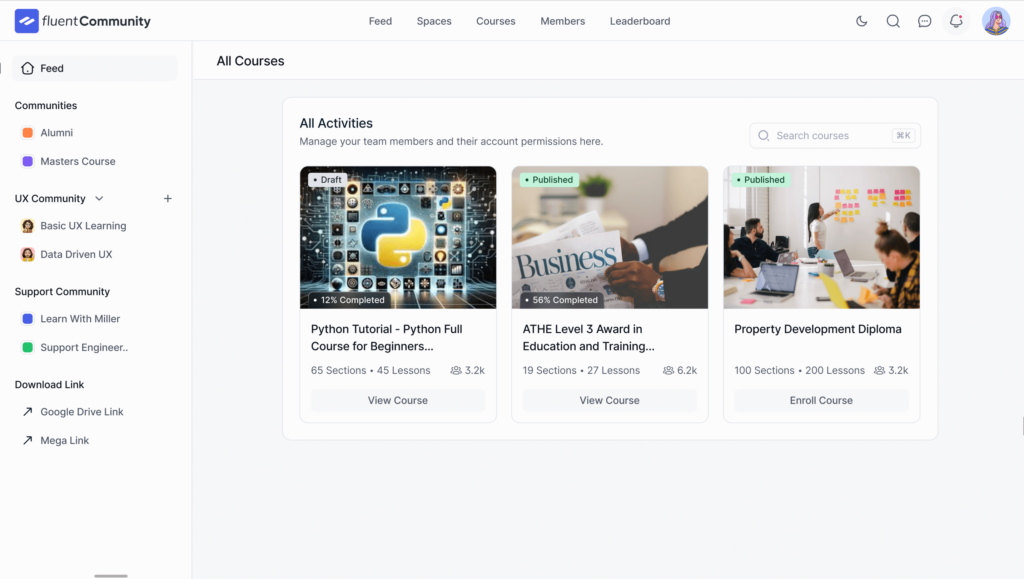
A community keeps customers engaged between purchases. Instead of relying on a Facebook group you do not control, you can host that space directly on your own site.
FluentCommunity lets you create a gated space where customers can ask questions, share tips, or get early access to new products. Store owners running subscription or membership products tend to benefit the most, since the community itself becomes a reason to stay subscribed.
Promote Your Content Across Digital Marketing Channels
Creating content is half the work. Promoting it across the right digital marketing channels is what actually brings traffic back to your store.
Match the platform to your content type. Instagram works well for product photos and short videos, Pinterest suits visual product discovery, and LinkedIn fits B2B audiences better than consumer brands. Facebook groups and pages still drive meaningful traffic for many stores, even though the platform feels less new.
Spreading your marketing efforts across too many channels at once dilutes results. Pick two platforms where your audience already spends time, and post consistently rather than spreading thin across five.
Simplify Checkout to Convert Content Marketing Traffic
Content marketing can bring a reader to your store, but a clunky checkout will lose the sale anyway. Every extra step or slow page costs you a conversion you already earned.
FluentCart gives you a fast, self-hosted checkout built for WordPress stores, without the transaction fees or bloat common in other eCommerce plugins. Pairing strong content marketing with a smooth checkout means fewer abandoned carts at the finish line.
Repurpose Old Posts and Create Content in New Formats
You do not need to create content constantly. Older posts can keep working for you if you update and reshare them instead of letting them sit unused.
Turn a popular blog post into short video content, or pull a chart from an old article into a new social post. Refresh outdated statistics, broken links, and old screenshots at least once a year so the content stays accurate.
Common Content Marketing Mistakes to Avoid
Every beginner runs into real challenges in content marketing, tight content marketing budgets, limited time, and unclear ROI chief among them. But most beginner plans still fail for a handful of repeatable, avoidable mistakes rather than a lack of resources. Avoid these:
- Publishing content without a clear goal or target audience in mind
- Using heavy industry jargon that confuses first-time visitors
- Skipping lead capture, so readers leave without a way to follow up
- Ignoring older content instead of updating and repurposing it
- Posting on too many social platforms instead of a focused few
- Copying competitor content instead of building an original voice
FAQ
What is content marketing for eCommerce stores?
Content marketing for eCommerce means creating blog posts, emails, videos, and other content that helps shoppers make decisions and builds trust in your store. It works alongside ads, not instead of them, by turning casual visitors into long-term customers.
How does content marketing work?
Content marketing works by publishing content that answers a real customer question, then guiding that reader toward a next step, such as subscribing, reading more, or buying. Over time, that consistent content builds trust and search visibility that ads alone cannot replicate.
Why is content marketing important for small businesses?
Content marketing can help small businesses build an asset that keeps working long after you publish it, unlike an ad that stops the moment you stop paying. It also costs less than most paid marketing channels, which matters most when budgets are tight.
How does content marketing help with SEO?
Content marketing helps with SEO by giving search engines fresh, relevant pages to index and rank. Each well-optimized post is a chance to answer a question your customers are already searching, which compounds traffic over months and years.
What are the biggest challenges in content marketing?
The biggest challenges in content marketing are usually time, consistency, and measuring results. Most stores solve this by starting with one content type and one clear goal, instead of trying to do everything at once.
What’s the difference between B2B and B2C content marketing?
B2B content marketing usually relies on detailed guides, case studies, and data to support a longer buying decision. B2C content marketing tends to work better as short, visual, and emotional content built for a faster purchase decision.
What is the best content marketing approach for beginners?
The best content marketing strategies for beginners start small. Pick one content type, such as a blog or email newsletter, and connect it to a way to capture leads, then add new formats once that first channel works.
How often should I publish content?
There is no fixed rule, but consistency matters more than frequency. Many small stores succeed by publishing one blog post and one or two emails a week, then adjusting based on what readers respond to.
Do I need a big budget to use content marketing?
No. Email marketing and blog content cost little beyond your time, and tools like Fluent Forms and FluentCRM are free to start. The biggest investment is consistency, not budget.
Which content marketing channel has the best ROI?
Email marketing consistently delivers strong returns, with businesses earning $36 to $42 for every $1 spent (Constant Contact, 2026). That makes it one of the best content investments for beginners with limited budgets.
Wrapping Up
Developing a content marketing strategy starts with one habit: connecting every piece of content to a clear goal, whether that is leads, trust, or repeat sales. Start with the checklist above, pick two or three strategies from this guide, and build from there.
If you want to put lead capture, email marketing, community, and checkout on autopilot, explore the Fluent product suite and see which tool fits your store first.

WordPress, automation, eCommerce and growth marketing specialist, a WordPress Core Contributor and Media Corps member blending storytelling with technology to craft strategies in SEO, email marketing, and beyond.
-

Ecommerce SMS Marketing: Strategies, Examples & Best Practices
Learn ecommerce SMS marketing strategies, campaigns, and best practices to -

Omnichannel Marketing: 7 Steps to a Connected Shopping Experience
It’s never too late to upgrade your marketing plan. Whether -

7 Best Ecommerce Plugins for WordPress in 2026 (Tested And Compared)
Compare the 7 best ecommerce plugins for WordPress in 2026


Leave a Reply
You must be logged in to post a comment.