

21 Recent Innovative Marketing Examples Every Business Can Learn From
If you want recent innovative marketing examples that actually teach you something, the usual “top 10 viral ads” lists won’t help. Most of them describe what happened without explaining why it worked.
This guide breaks down 21 real campaigns from Spotify, Burger King, CeraVe, Coca-Cola, The Ordinary, Notion, Scrub Daddy, and more. For each one, you’ll see the psychological trigger behind it, what made it spread, and how a small business or WordPress site can apply the same principle without a celebrity budget.
You’ll also get a campaign comparison table, a small business implementation framework, and a checklist you can act on this week.
Key Takeaways
- One trigger per campaign, not five at once. Pick identity, surprise, belonging, or transparency, and commit to it.
- Earned attention beat ad spend in all five deep-dive campaigns. Shareability did the distribution.
- AI is now a creative collaborator. Coca-Cola and Heinz used GPT-4/DALL-E to let audiences co-create content.
- Community-led campaigns scale cheaply. Notion and Chipotle handed creative control to fans instead of producing it in-house.
- Personalized email is still the highest-ROI SMB tactic. A simple recap email beats a generic blast.
- Budget changes scale, not the trigger. The same psychology works for global brands and 10-person businesses alike.
- The tools already exist. FluentCRM, Fluent Forms, and FluentCommunity replicate these mechanics without enterprise budgets.
Why Traditional Marketing Is Losing Effectiveness
Banner ads, generic email blasts, and interruption-style advertising are losing ground fast. Three forces are driving this shift.
Attention is fragmented. People split their time across TikTok, Instagram, YouTube Shorts, email, and Slack-style communities. A single-channel campaign reaches a fraction of the audience it used to.
Ad fatigue is real. Audiences have seen thousands of “limited time offer” banners. Repetition without relevance now reads as noise, not persuasion.
Trust has shifted to peers. Consumers weigh user-generated content and community recommendations more heavily than brand-produced ads. A campaign that doesn’t invite participation feels one-directional in a market that expects dialogue.
This is why the campaigns in this guide rely less on ad spend and more on identity, humor, community, and timely use of AI. They feel like entertainment first, marketing second, and that’s exactly the point.
What Makes Modern Marketing Campaigns Different
Innovative marketing campaigns are campaigns built around participation, personalization, or surprise rather than repetition and interruption. They turn the audience into a co-creator instead of a passive viewer.
Four traits separate today’s most effective creative marketing examples from traditional advertising:
- Personalization at the individual level. Spotify Wrapped and Grammarly’s weekly reports use each user’s own data to make the content feel like it was made specifically for them.
- Community-driven marketing. Campaigns like Notion’s user-led growth or Chipotle’s TikTok challenges hand creative control to the audience, which builds belonging instead of just brand awareness.
- AI-powered marketing campaigns. Coca-Cola’s “Create Real Magic” and Heinz’s AI ketchup series used generative AI tools to turn the audience into creative collaborators, not just buyers.
- Engineered surprise. CeraVe’s Michael Cera stunt and Nutter Butter’s surreal TikTok series rely on confusion or shock that compels people to share just to ask, “did you see this?”
Key Takeaway: The common thread across nearly every viral marketing campaign in this guide isn’t budget. It’s a single sharp psychological trigger, executed with discipline across one or two channels.
Recent Innovative Marketing Examples Worth Studying in 2026
These five campaigns represent the clearest, most teachable recent innovative marketing examples in the current market. Each one is broken down the same way: what it was, why it worked, the trigger behind it, what’s publicly known about its results, and how a smaller business can borrow the principle.
1. Spotify Wrapped
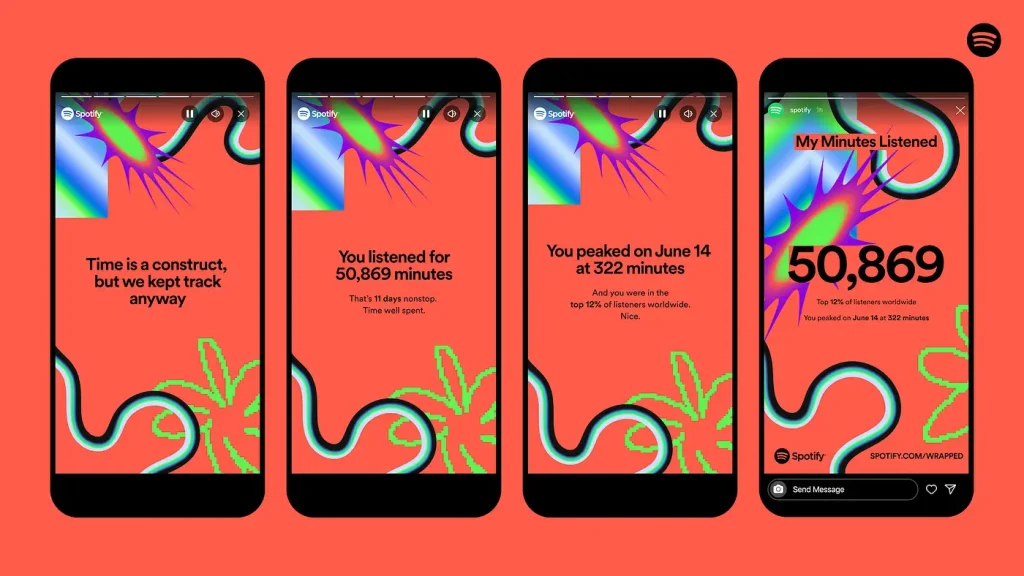
Campaign Overview: Spotify’s annual “Wrapped” turns each user’s listening history into a personalized, shareable story. It spans email, the app, a microsite, and global out-of-home (OOH) activations across 30+ markets, using interactive visual “story” slides and social graphics.
Why It Worked: It uses hyper-personalization, since every output is built from the user’s own data, combined with a built-in reason to post on social media.
Key Psychological Trigger: Identity (“this is me”) and Belonging (comparing results with friends).
Results & Impact: Spotify has not disclosed exact reach or revenue figures for Wrapped. What’s well documented is the scale of the rollout itself: a coordinated push across email, app, microsite, and physical OOH placements in over 30 markets, repeated annually since launch.
SMB Takeaway: You don’t need global OOH to copy this. A personalized “year in review” or “month in metrics” email, built from data you already have (purchases, usage, milestones), creates the same identity-driven shareability at near-zero cost.
2. Burger King: “There’s a New King (and It’s You)”
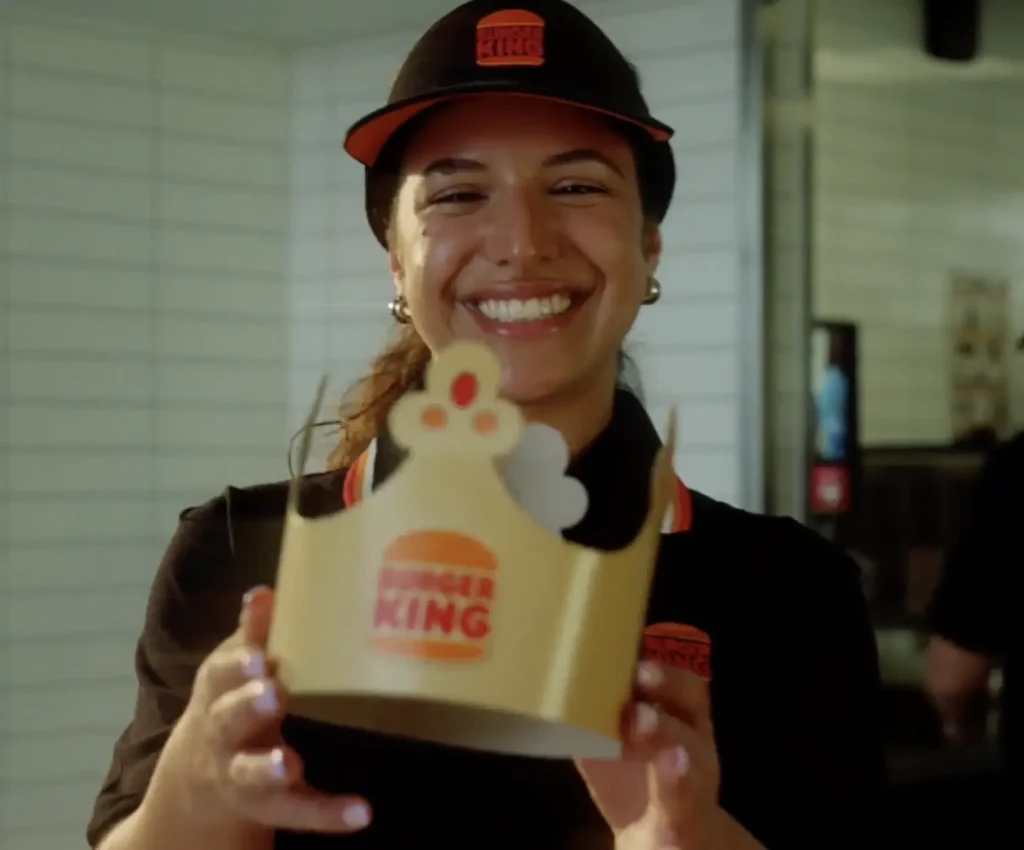
Campaign Overview: Burger King “crowned” its customers as the new King, building a mockumentary-style TV spot and social campaign around how real customer feedback shaped products like the Whopper, even letting fans interact directly with company leadership.
Why It Worked: It reversed the usual brand-to-customer direction of marketing. Instead of telling customers what’s new, it showed customers being listened to.
Key Psychological Trigger: Belonging and Transparency. Framing real customer input as the actual narrative makes the audience feel heard rather than sold to.
Results & Impact: Public performance figures for this campaign have not been disclosed. The strategic signal is the structure itself: a PR-led, multi-channel story built entirely around customer voice rather than product features.
SMB Takeaway: Feature real customer feedback publicly, in a newsletter, a testimonial page, or a short video, and show the specific change it caused. Transparency about listening to customers is a trigger any business size can use.
3. CeraVe x Michael Cera
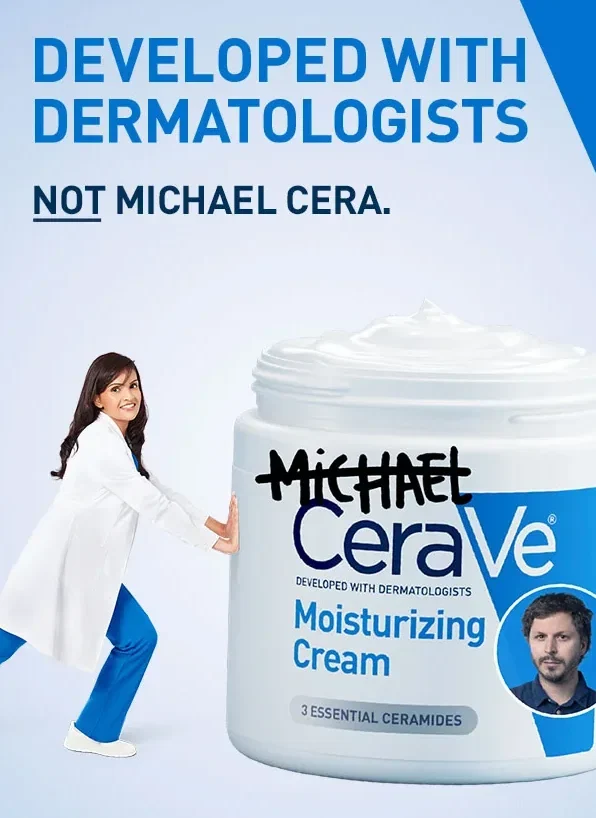
Campaign Overview: Skincare brand CeraVe ran a multi-stage stunt suggesting actor Michael Cera invented their cream. It teased the idea on social and through influencers ahead of the Super Bowl, then revealed a TV spot of dermatologists clarifying, “CeraVe, not Michael Cera.”
Why It Worked: It deliberately played into an existing internet rumor and let confusion do the marketing. Audiences shared it just to figure out what was real.
Key Psychological Trigger: Surprise and Humor, executed across earned, paid, and owned media in sequence.
Results & Impact: Specific performance numbers for the campaign haven’t been publicly released. What is verifiable is the structure: a staged reveal across social teasers, influencer seeding, and a Super Bowl-timed TV spot, a deliberate multi-phase rollout rather than a single ad drop.
SMB Takeaway: You don’t need a celebrity or a Super Bowl slot. The transferable tactic is the staged reveal: tease a mystery on social first, then resolve it days later with the real message. Curiosity does the heavy lifting before you ever explain anything.
4. Coca-Cola: “Create Real Magic”
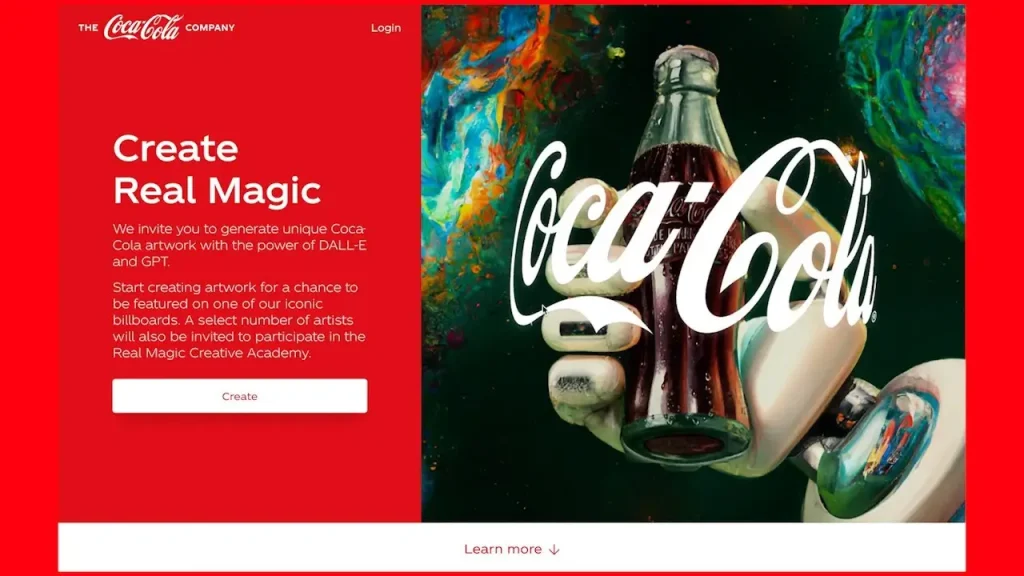
Campaign Overview: Coca-Cola launched an AI art platform inviting fans to remix brand assets (the logo, contour bottle, Santa, the polar bear) using GPT-4 and DALL-E, with selected designs appearing on real billboards.
Why It Worked: It turned an iconic, decades-old brand identity into raw material for fan creativity instead of keeping it locked behind brand guidelines.
Key Psychological Trigger: Creativity and Belonging. Contest mechanics gave people a tangible reason (a billboard placement) to share their work.
Results & Impact: Coca-Cola has not disclosed specific participation or reach figures. The verifiable fact is the mechanism: a generative AI platform built on GPT-4 and DALL-E that converted brand assets into a public creative tool.
SMB Takeaway: You don’t need GPT-4 access to apply this. Run a simple design or caption contest using your existing brand assets, and promise real exposure (a feature on your site, social, or packaging) for the best entries. The “co-creation” trigger works at any budget.
5. The Ordinary: “Markup Marché”
Campaign Overview: Skincare brand The Ordinary opened pop-up stores in cities including Paris and London, selling everyday groceries at absurd “beauty-style” markups, paired with a campaign microsite mimicking an e-commerce checkout page.
Why It Worked: It used irony to make an abstract pricing critique (industry markups) into something physical and instantly understandable.
Key Psychological Trigger: Surprise and Humor, an example of guerrilla marketing examples built on a single sharp idea rather than a large media budget.
Results & Impact: Exact attendance or sales figures from the pop-ups haven’t been publicly disclosed. The campaign’s documented outcomes include extensive beauty press coverage and a tie-in where the pop-ups were linked to local food bank donations.
SMB Takeaway: A pop-up isn’t required. The transferable tactic is making an abstract value proposition (your pricing, your process, your guarantee) physical and visual enough that a photo of it explains the entire pitch.
Psychological Trigger Analysis
Every campaign above, and most viral marketing campaigns in general, run on one of these seven triggers. Recognizing them is the fastest way to evaluate your own marketing ideas before you spend a dollar on production.
- Curiosity/Surprise: Heinz’s AI ketchup series (feeding DALL-E 2 prompts about “ketchup” and posting the surreal results) and Nutter Butter’s horror-style TikTok series, which reportedly drew 3.3B+ impressions, both compel clicks simply to “see what happens.”
- Identity/Aspiration: Spotify Wrapped and Nike’s “Why Do It?” let viewers see themselves in the story, which drives both sharing and loyalty.
- Status/Achievement: Grammarly’s weekly writing reports and Duolingo’s streak emails use comparison and pride. People share their own progress.
- Belonging/Community: Chipotle’s #GuacDance challenge drew 250K+ videos and 430M+ views by giving fans an easy way to participate and win. Notion’s grassroots community model grew to roughly 20M users, with about 1M people in its community hub by 2022.
- Transparency/Humanization: Burger King’s “New King” campaign and Ryanair’s TikTok account (run with a self-deprecating, employee-driven tone) make brands feel relatable instead of corporate.
- Scarcity/FOMO: Limited-time formats, like Chipotle’s annual Boorito event or a single-night pop-up, exploit time pressure even without explicit countdown numbers.
- Humor/Entertainment: Scrub Daddy built 3.4M TikTok followers and billions of views using meme formats and Gen Z slang instead of hard-sell copy. e.l.f. Cosmetics’ #EyesLipsFace dance challenge generated roughly 5M user videos and 7B+ total views from a single original sound.
Key Takeaway: Social proof and education also count as triggers. HubSpot’s free Website Grader tool, built in 2007, still generates leads today by giving an instant, data-backed score, no ad spend required.
Campaign Comparison Table
Use this table to quickly compare cost level and difficulty before you commit to a campaign style.
| Brand | Campaign | Category | Channels | Trigger(s) | Cost Level | SMB Difficulty |
|---|---|---|---|---|---|---|
| Spotify | Wrapped | Email/Interactive | Email, App, OOH | Identity, Curiosity | Medium | Medium |
| Grammarly | Weekly Insights | Status, Community | Low | Easy | ||
| Duolingo | Feature Roundup Emails | Email, App | Achievement, Curiosity | Low | Medium | |
| Canva | Pandemic Content Emails | Community, Education | Low | Medium | ||
| Nike | Why Do It? | Video/Branding | TV, Online Video | Aspiration, Belonging | High | Hard |
| Apple | Shot on iPhone | UGC/Social Video | Social, OOH | Social Proof, Pride | High | Hard |
| Liquid Death | Humorous Social Videos | Social | TikTok, YouTube | Humor, Novelty | Medium | Medium |
| CeraVe | Michael Cera Prank | Viral Stunt | Social, TV | Surprise, Humor | High | Hard |
| Heinz | AI Ketchup | Social/Guerrilla | Social | Surprise, Novelty | Medium | Medium |
| Coca-Cola | Create Real Magic | AI/Contest | Website, Social | Creativity, Belonging | Medium | Medium |
| Burger King | New King | Brand Story | TV, Social, PR | Belonging, Transparency | Medium | Medium |
| Ryanair | TikTok Account | Social | TikTok | Humor, Relatability | Low | Easy |
| Scrub Daddy | TikTok Content | Social | TikTok | Humor, Community | Low | Easy |
| Nutter Butter | Horror TikToks | Social | TikTok | Curiosity, Surprise | Low | Medium |
| e.l.f. Cosmetics | #EyesLipsFace | Social/Dance | TikTok | Fun, Identity | Medium | Easy |
| Chipotle | #Boorito / #GuacDance | Social/Promotion | TikTok, In-store | FOMO, Community | Low | Easy |
| Notion | Community Hub | Community-led | Reddit, Discord, Site | Belonging, Ownership | Low | Hard |
| Semrush | Influencer Weekend | B2B Influencer | Offline Event, Social | Exclusivity, Collaboration | Medium | Hard |
| The Ordinary | Markup Marché | Pop-up/Website | Pop-ups, Site | Surprise, Humor | Medium | Medium |
| HubSpot | Website Grader | Interactive Tool | Website | Value, Social Proof | Low | Easy |
Small Business Implementation Framework
You don’t need Coca-Cola’s budget to apply any of this. Use this framework to match a tactic to your resources.
Email Marketing Ideas
| Idea | Budget | Difficulty |
|---|---|---|
| Annual or monthly recap email (personalized usage stats) | Low | Medium |
| Customer benchmark report (“You scored better than 80% of customers”) | Low | Medium |
| Milestone or anniversary celebration emails | Low | Easy |
| Founder storytelling email sequence | Low | Medium |
| Educational drip series that builds authority over time | Low | Medium |
If you’re building any of these, 10 Different Types of Emails breaks down which format fits which goal, and How to Start a Newsletter Business With WordPress shows the full setup using Fluent Forms, FluentSMTP, and FluentCRM together.
Social and Video Ideas
| Idea | Budget | Difficulty |
|---|---|---|
| Mascot or brand character reacting to trending sounds | Low | Easy |
| Branded hashtag challenge with featured submissions | Low | Medium |
| Behind-the-scenes or staff clips | Low | Easy |
| Customer story mini-documentaries (2–3 minutes) | Medium | Medium |
| Duets and stitches with relevant creator content | Low | Easy |
Website and Interactive Ideas
| Idea | Budget | Difficulty |
|---|---|---|
| ROI or savings calculator | Low | Medium |
| Interactive quiz or product-fit assessment | Low | Medium |
| Free benchmark report tool (your version of HubSpot’s grader) | Low | Medium |
| User-generated content gallery (“Wall of Fame”) | Low | Medium |
| Dynamic countdown for limited offers | Low | Easy |
Key Takeaway: The highest-ROI formats for small businesses are user-driven and cost-efficient, not big-budget. Email personalization and UGC consistently outperform large ad spends because the audience does the distribution for you.
WordPress Marketing Applications
Every tactic above maps to a real WordPress workflow. Here’s how the Fluent stack covers it end to end.
Personalized recap and milestone emails (the Spotify Wrapped and Grammarly model) run on FluentCRM, which segments contacts and triggers automated sequences based on purchase history, tags, or engagement data, without sending your data to a third-party email service.
Reliable delivery for any of these campaigns depends on inbox placement. FluentSMTP handles that layer, and it’s worth checking if you’re choosing between providers: see our FluentCRM vs Mailchimp comparison if you’re migrating from a hosted platform.
Interactive quizzes, calculators, and lead-gen tools (the HubSpot Website Grader model) are built with Fluent Forms, using conditional logic and numeric calculation fields to turn a form into a mini-assessment tool.
Community-driven campaigns (the Notion or Burger King model, where customer voice is the content) run well on FluentCommunity, which gives you a branded space for discussion, polls, and customer-led content without relying on a third-party platform’s algorithm.
Social proof and UGC galleries (the Apple Shot on iPhone model, at SMB scale) are handled by WP Social Ninja, which pulls in live social feeds and reviews directly onto your site. Our guide on displaying an Instagram feed on WordPress covers the setup.
Coordinating a multi-channel launch (the Burger King or Coca-Cola style rollout, scaled down) is a project management problem before it’s a creative one. FluentBoards keeps the campaign timeline, content calendar, and approvals in one Kanban view. Our Product Launch Strategy guide walks through the planning stages in more detail.
Affiliate and referral-driven amplification, the same word-of-mouth mechanic behind several campaigns in this guide, runs through FluentAffiliate. If you’re already running an affiliate program, our breakdown of 30 affiliate marketing mistakes to avoid in 2026 is worth a read before you scale it.
Actionable Marketing Ideas: Quick Wins Checklist
Pick two or three of these to test this month. None require a large team or budget.
Conclusion
The recent innovative marketing examples covered here, Spotify Wrapped, Burger King’s “New King,” CeraVe x Michael Cera, Coca-Cola’s “Create Real Magic,” and The Ordinary’s Markup Marché, don’t share a budget tier. They share a method: pick one psychological trigger, build the entire campaign around it, and let the audience do the distribution.
Heading into 2026, the marketing trends pointing forward are the same ones already visible in this list: AI-powered creative tools, short-form video, and community-led content are growing fastest, while interruption-based advertising keeps losing ground. The businesses winning attention right now aren’t outspending competitors. They’re out-thinking them on a single, well-executed idea.
Start small. Pick one trigger from the table above, match it to a tool you already have, and ship it.
FAQ
What are some recent innovative marketing examples businesses can learn from?
Spotify Wrapped, Burger King’s “New King” campaign, CeraVe’s Michael Cera stunt, Coca-Cola’s “Create Real Magic” AI platform, and The Ordinary’s Markup Marché pop-ups are five of the clearest recent innovative marketing examples, each built around a single psychological trigger rather than ad spend.
What makes a marketing campaign “innovative” versus just “creative”?
A creative campaign focuses on originality in design or messaging. An innovative marketing campaign goes further by changing the mechanism of engagement itself, turning the audience into a participant through personalization, community contribution, or AI co-creation, rather than just a viewer.
What psychological triggers make marketing campaigns go viral?
The most common triggers behind viral marketing campaigns are curiosity/surprise, identity/aspiration, status/achievement, belonging/community, transparency, scarcity/FOMO, and humor. Most successful campaigns lean on one or two of these, not all of them at once.
Can small businesses use the same tactics as Spotify or Coca-Cola?
Yes. The underlying mechanics (personalized data-driven emails, customer co-creation contests, UGC galleries, simple interactive tools) all scale down to low-budget, easy-difficulty versions that any small business or WordPress site can run, as outlined in the SMB implementation framework above.
What are the biggest marketing trends for 2026?
The clearest marketing trends for 2026 are AI-powered personalization and creative generation, continued growth of short-form video and interactive formats, and a shift toward community-driven marketing where customers help shape and distribute the campaign instead of just consuming it.
Looking to build the systems behind these campaigns instead of just reading about them? Explore FluentCRM for email automation, Fluent Forms for interactive lead-gen tools, or read more on GEO and SEO best practices for 2026 to make your own content this citable.

WordPress, automation, eCommerce and growth marketing specialist, a WordPress Core Contributor and Media Corps member blending storytelling with technology to craft strategies in SEO, email marketing, and beyond.
-

Turn YouTube Traffic Into Leads With a WordPress Video Funnel
Turn YouTube traffic into high-ticket leads with a WordPress funnel -
Turn a Free Kanban Board Template Into a Fractional Operations Business
A free Kanban board template that turns into a real -
How to Migrate from Mailchimp to FluentCRM: 4 Practical Methods
Move contacts, tags, lists, and consent data from Mailchimp to


Leave a Reply
You must be logged in to post a comment.