

How to Start a Social Media Marketing Agency in 2026 (Complete Guide)

You’ve managed a few Instagram pages, run ads for a local business, or helped someone get more orders through social media.
Now you’re wondering: Can this become a real business?
Yes. The global social media marketing industry is expected to cross $345 billion by 2029, and small businesses need agencies that actually understand them.
In this guide, you’ll learn how to start a social media marketing agency in 2026, land your first client, build your website, and grow without burning out.
Let’s begin.
- A social media marketing agency helps businesses grow through content, paid ads, and reporting. The strongest agencies in 2026 specialize in 2 to 3 services.
- Picking a niche before launching makes everything easier. A focused agency for dentists or skincare brands sells much faster than a generic one.
- Setting up your business legally from day one protects you from tax issues and client disputes. An LLC, a contract, and a separate bank account cover the basics.
- Monthly retainers between $1,500 and $5,000 per client work best in your first year. Charging too little brings in clients who burn you out fast.
- Building your agency website on WordPress keeps things flexible and affordable. A page builder and a few plugins can launch a professional site for under $300 a year.
- You will need 2 to 3 strong case studies before paying clients arrive. Start with your own brand, then offer free or discounted work to a few friendly businesses.
- Cold email, LinkedIn, and referrals are the fastest ways to find your first clients. Content marketing and SEO take much longer to pay off.
- Onboarding clients well in their first 30 days decides whether they stay long term. A contract, intake form, kickoff call, and clear updates make the difference.
- Growing past 5 clients comes down to systems, not more hours. Documenting your processes, hiring a helper, and using fixed packages are how agencies scale.
What Does a Social Media Marketing Agency Actually Do?
A social media marketing agency is a service business that helps other companies grow on social media. Most agencies handle content creation, posting, paid ads, audience engagement, and performance reporting. Some also take care of influencer campaigns and social commerce.
Now, you might be wondering how an agency is really different from a freelancer. It mostly comes down to structure and how you operate.
A freelancer usually takes on whatever work comes their way. An agency, on the other hand, has clearly defined services and repeatable processes. It can also handle multiple clients at the same time without things falling apart.
You do not need a big team to call yourself an agency. What you really need is a clear offer and a system to deliver it.
Most common social media marketing agency services include:
- Organic content creation and posting
- Paid social media advertising on platforms like Meta, TikTok, and LinkedIn
- Community management and direct messaging
- Influencer marketing
- Analytics and reporting
- Social commerce and shoppable content
In 2026, the agencies that grow the fastest do not try to do all six. They pick two or three areas, go deep, and become known for those.
Is Starting a Social Media Marketing Agency Worth it in 2026?
A social media marketing agency in 2026 can genuinely be highly profitable only if you treat it like a real business and not a side project.
Almost 80% industry leaders are willing to expand their social media marketing budget over othe channels.
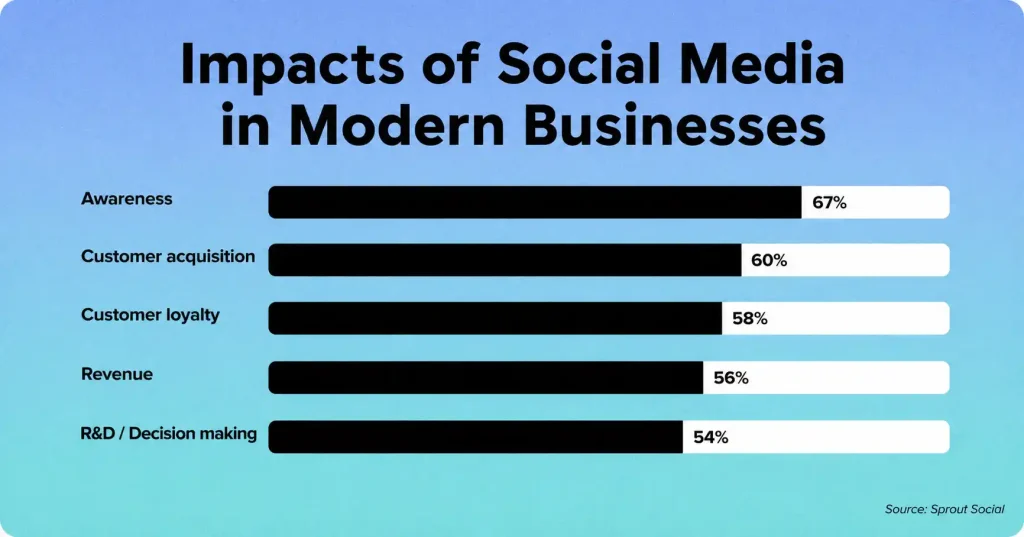
Most of them prefer hiring an agency over building an in-house team because a full-time hire is hard to justify. But here is the honest part. The space is also crowded. There are 87,197 Digital Advertising Agencies in the US alone. So yes, the competition is real, and it keeps growing every year.
Crowded, however, does not mean closed. It just means generic agencies struggle, while specialized ones continue to do well.
How to Build your Social Media Marketing Agency from Scratch
Starting a social media marketing agency may feel overwhelming at first, but the process is actually a series of small, manageable steps. Once you break it down, the path becomes much clearer.
We have put together a simple 8-step roadmap that covers everything from picking your niche to scaling your agency. Let us walk through them together below.
Step 1: Pick your niche and services
A niche really makes everything easier. Your marketing becomes simpler, your sales calls become shorter, and service delivery becomes much more predictable.
For example, when a dental clinic owner sees “social media marketing for dentists” on your homepage, they pay attention much faster than seeing a generic “social media marketing agency for small businesses.”
There are basically two ways to niche down, and the strongest agencies usually combine both:
- By industry. Pick a specific type of business to serve, such as dentists, real estate agents, restaurants, e-commerce brands, SaaS companies, lawyers, or fitness studios. This works best when you already have some experience or strong contacts in that field.
- By service. Pick a specific skill you offer, like TikTok ads, short-form video editing, LinkedIn content for founders, or community-led growth strategies. This works best when you have a particular skill that is in demand.
A pitch like “We run TikTok ads for DTC skincare brands” is the kind of thing clients remember.
When picking your own niche, look for these three signals:
- You have at least basic experience or a strong interest in the industry
- The clients in that niche can comfortably afford $1,500 or more per month
- The market is large enough that a quick LinkedIn search shows thousands of potential clients
Do not overthink this either. Your first 5 to 10 clients will teach you a lot, so you can always refine your niche as you go.
Step 2: Set up your business legally and financially
Setting up your business legally and financially can save you from the hassle of tax issues, client disputes, and personal financial risk later on. This is also where your social media marketing agency business plan starts taking real shape.
Here are the basics you need to handle before taking your first client:
- Register your business. An LLC is the most common structure for new agencies in the US. It separates your personal assets from your business in case of a dispute. Outside the US, ask a local accountant which structure fits.
- Open a separate business bank account. Mixing personal and business money makes taxes a nightmare. A free business checking account is enough to start.
- Set up basic accounting software. Tools like QuickBooks, Wave, or Xero will save you hours every month once you have a few clients.
- Use a contract from your very first client. Cover scope, payment terms, cancellation policy, content ownership, and confidentiality.
- Get liability insurance once you have 3 to 5 clients. Hiscox and Next Insurance offer plans starting at around $40 to $80 per month.
Skipping these steps will not save you time. It will only cost you a client at the worst possible moment.
Step 3: Define your pricing model
Your social media marketing agency pricing decides how predictable your revenue will be in the first year. Most new agencies either undercharge out of fear or overcomplicate things and create confusion.
There are three pricing models commonly used in this industry, and each has its place:
- Monthly retainers. Your client pays a fixed fee every month for a defined scope of work. This is the gold standard for social media agencies because it gives you predictable revenue and lets you plan calmly.
- Project-based pricing. Your client pays a one-time fee for a specific deliverable, like a content calendar or a launch campaign. Useful for one-off work, but tough on cash flow because every month starts at zero.
- Performance-based pricing. You charge based on results, such as a percentage of ad spend or a commission on sales. It can be lucrative, but risky in your first year because you do not have enough data to predict outcomes confidently.
For at least your first 12 months, we suggest sticking with monthly retainers. They are the easiest to manage and the easiest for clients to commit to.
Sample pricing structure
| Tier | Monthly Price | What is Included |
| Starter | $1,500 to $2,500 | 1 platform, 12 posts per month, basic reporting |
| Growth | $3,000 to $5,000 | 2 platforms, 20 posts per month, paid ads up to $1k spend, monthly strategy call |
| Pro | $5,000 to $10,000+ | 3+ platforms, custom content, paid ads, dedicated account manager |
One important note. Please do not undersell your work out of fear. A $500 a month client demands the same attention as a $3,000 a month client, but burns you out twice as fast.
If you cannot sell at $1,500 a month, the issue is usually the pitch or the positioning, not the price.
Step 4: Build your agency website
Your website is your storefront, your portfolio, your sales rep, and your client onboarding system, all in one place. If it looks unprofessional, you will lose deals before the first conversation even begins.
A good agency website needs these core pages:
- Homepage with a clear headline, your niche, and 2 to 3 client logos
- Services page describing what you offer and who it is for
- About us page with your story and team, even if the team is just you
- Case Studies landing page with real numbers and outcomes
- Pricing page with at least one starting tier visible
- Contact us page with a form and a way to book a call
- Blog page for SEO and authority building
Now here is the part where most new agency owners get stuck because of the tools they might need. The good news is, you do not need a $5,000 custom website to look professional. WordPress with a page builder and a few well-chosen plugins can handle everything you need.
Needed WordPress Plugin
Elementor
for designing your website without writing a line of code. It has thousands of templates and works well with most WordPress themes, so you can launch a professional-looking site in a weekend.
Fluent Forms
for your contact form, lead capture, and project intake. When a prospect lands on your contact page, the form can collect their budget, project scope, and timeline. This way, you walk into every sales call with full context.
FluentCRM
for email automation and lead nurturing. Most new agencies leak leads simply because they have no follow-up system. FluentCRM lets you build full nurture sequences inside WordPress itself, without paying for monthly subscriptions.
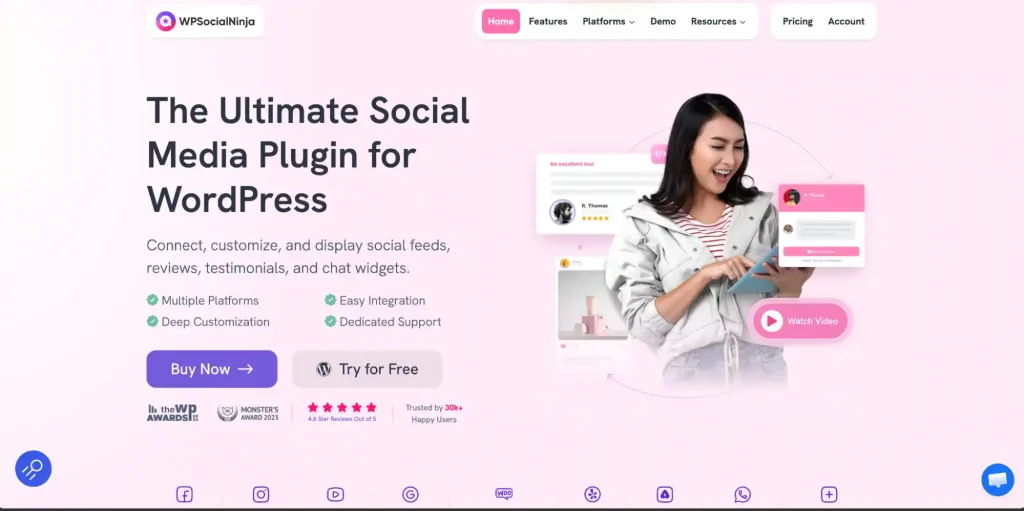
WP Social Ninja
for showing social proof on your agency website. It aggregates client reviews from Google, Facebook, and more platforms, embeds your Instagram, Facebook, YouTube, or TikTok feed to show your strong social presence, and adds chat widgets like WhatsApp or Messenger so prospects can reach you instantly.
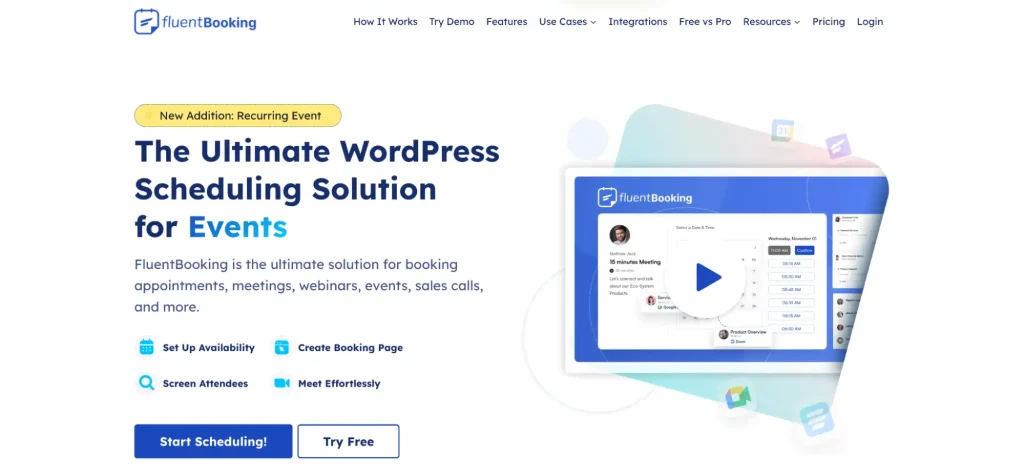
FluentBooking
for scheduling discovery calls. Prospects can book directly into your calendar instead of going back and forth via email. It syncs with Google Calendar and sends automatic reminders, which cuts no-shows by half.
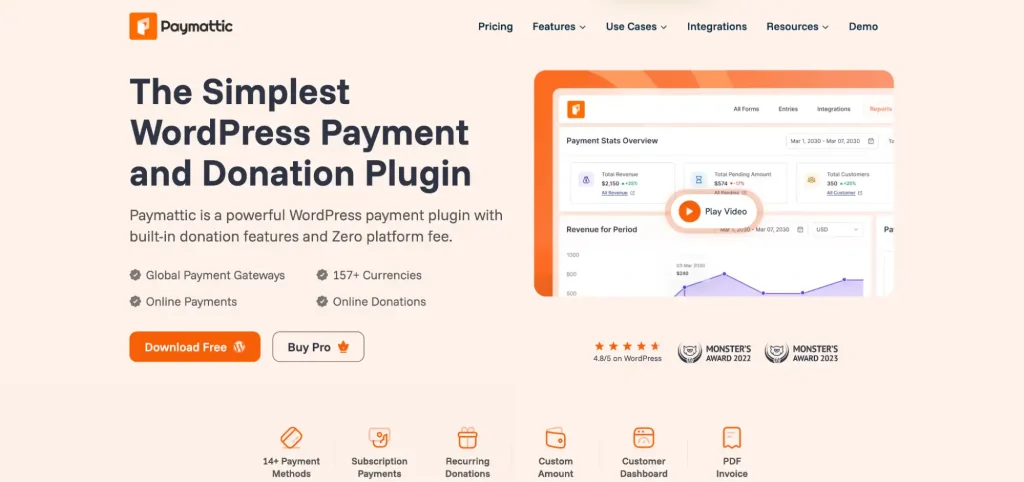
Paymattic
for collecting service payments on your website. Once a client signs the contract, you can send them a Paymattic payment form to handle one-time payments, recurring retainers, or subscription billing through Stripe, PayPal, Square, and 11 other gateways. There are no extra markups beyond what your payment gateway charges.
Yoast SEO
for getting your blog content to rank on Google. It walks you through optimizing every post for a target keyword, readability, and meta description, even if you have never done SEO before.
WP Rocket
for keeping your site fast. A slow agency website signals an unprofessional one. WP Rocket handles caching, image optimization, and lazy loading without any technical setup on your end.
UpdraftPlus
for daily automated backups. The first time a plugin update breaks your site (and it will happen), you will be glad you have a one-click restore.
FluentAuth
for protecting your site from spam and brute-force login attempts. This free version is enough for most new agency sites.
You do not need every plugin from day one. Start with the page builder, forms, CRM, social proof, SEO, and backup plugins. Add the rest as your agency grows.
Step 5: Build your portfolio (even with no clients)
Building your portfolio means creating 2 to 3 strong case studies that prove you can deliver real results, even before paying clients show up. Almost every new agency hits this wall in the beginning. You cannot land paying clients without proof you can deliver, but you cannot deliver without paying clients first.
Here is how you break through it:
- Use your own brand as a case study. Document everything you do for your own social media, including posting frequency, engagement growth, and any leads you generate. A founder who cannot grow their own social presence will have a hard time selling to clients later.
- Offer free or discounted work to 2 to 3 friendly businesses. Pick businesses where you genuinely want to see results, not random favors for friends. A good arrangement is 60 to 90 days of free or discounted work in exchange for permission to use the results as a public case study.
- Document the process and results carefully. Track follower growth, engagement rate, leads generated, sales attributed, and ad ROAS if you ran paid campaigns. A strong case study includes the starting point, the actions you took, and the changes that followed in clear numbers.
- Format your case study in a few different ways. A one-page PDF for sales conversations, a 2-minute Loom video walkthrough for cold outreach, and a written version on your website. Each format works in different sales situations.
A small reminder. Be selective with your pro bono clients. The right one is a real business with real customers, not your cousin’s hobby Etsy shop. Three solid case studies are usually enough to start landing paying clients.
Step 6: Find your first paying clients
Finding your first paying clients in year one mostly comes down to actively reaching out to people, not waiting for them to find you on their own. Content marketing and SEO are wonderful, but they usually take time. Reaching directly is the most practical choice when you’ve just started.
Here are the channels we have seen work fastest for new agencies:
- Cold email. Build a small list of around 100 prospects in your niche. Use tools like Apollo or Hunter, then send each one a friendly, personalized email. A 3 to 5% reply rate is realistic, which usually means 1 to 2 paying clients per 100 emails.
- LinkedIn outreach. Send connection requests with a short personal note. Once they accept, just start a normal conversation. No pitching. Most agency founders we know landed their first 10 clients right here.
- Referrals. The moment you have one happy client, ask them gently if they know two other people who might benefit from your help. Referrals tend to close way faster than cold leads, sometimes 3 to 5 times faster.
- Local networking. Chamber of Commerce events, small meetups, and niche Facebook groups can quietly bring in clients within 90 days. The key is to show up regularly and stay helpful.
- Niche communities. Slack groups, subreddits, and Discord servers are great places to build a reputation. Just be helpful and share what you know. Avoid jumping into pitches.
A realistic timeline is around 60 to 120 days from your first outreach to your first paying client. If it happens faster, that is wonderful. If it takes longer, you should check your outreach script or offerings. Sometimes a little modification can fix the issue.
Step 7: Onboard clients professionally
Onboarding is the process of welcoming a new client and setting up everything needed to start working together smoothly. It usually covers the first 30 days after they sign up. These early weeks often decide whether they stay with you long term or leave within a few months.
Follow these strategies for a solid professional onboarding:
- Sign the contract first. Get the agreement signed and the first invoice paid before any work begins. This sets clear expectations from day one and protects both sides.
- Send an intake form the same day. Tools like Fluent Forms work great here. Use the form to collect their brand details, target audience, competitor links, and any logins you will need.
- Schedule a kickoff call quickly. Try to set it within the first 5 business days. Use this call to walk through your plan for the next 90 days, agree on what success looks like, and decide how often you will share updates.
- Share a basic plan in week one. Even a simple 2-page document outlining the kinds of posts you will create shows the client you are working with focus, not waiting around.
- Deliver first content by week two. Do not wait until day 30 to show any work. Clients get anxious quickly when they cannot see anything happening.
- Set a clear update routine. A short weekly or bi-weekly video update often works better than long PDF reports. It feels personal and lets the client see you behind the work.
Most clients churn because they feel uncertain about whether you are working hard on their account. Over-communicate during the first month, and you will keep them.
Step 8: Grow your agency the right way
Growing your agency means moving past the point where you do every task by yourself. Once you have 3 to 5 clients, you will run out of hours in the day. To grow further, you need a few simple systems and a small team that can help share the work.
Here is how most agencies move from busy to growing steadily:
- Write down your processes. Every task you do again and again should have a simple step-by-step guide. Tools like Notion, ClickUp, or Google Docs work fine. These guides are what let you hire someone later without burning yourself out.
- Hire your first helper. A part-time helper, video editor, or junior content creator at $5 to $15 per hour can take repeat tasks off your plate. The free time you get back goes straight into strategies.
- Raise your prices for new clients. Existing clients can stay at their original rate, but new clients pay 20 to 30% more. This is how agencies grow income without adding more clients.
- Add new services carefully. Paid ads, email marketing, or short-form video are natural next steps. Just do not add anything you cannot deliver well. Stretching too thin always hurts.
- Turn your work into fixed packages. Instead of a custom plan for every client, offer 2 or 3 ready-made packages. They are easier to sell, easier to deliver, and much easier to grow with.
The agencies that cross $30k a month do it through focus and good systems, not by doing more things for more people.
Tools you will actually need to run your agency
Once your website is live and clients start coming in, you will need a small set of tools to manage your daily work. The good news is, you do not need a fancy or expensive setup. Most growing agencies run smoothly on a simple stack of free or low-cost tools.
Here are the categories you should set up early:
Scheduling and posting
Tools like Buffer, Later, or Metricool let you plan and schedule posts for all your clients in one place. They save hours every week and make sure nothing gets missed.
Design
Canva is the easiest option for creating social media posts, ads, and simple graphics. If you want more flexibility later, Figma is a great free choice once you are comfortable with design.
Project and client management
Notion, ClickUp, or Trello help you keep tasks, deadlines, and client work organized. Pick one and stick with it. Switching tools every few months wastes time.
Team communication
Slack and Discord both work well for chatting with helpers, contractors, or even clients. Both have free plans that are more than enough when you are just starting.
Screen recording for client updates
Loom lets you record short videos to walk clients through reports, content drafts, or quick check-ins. It feels much more personal than a long email or PDF.
File sharing and storage
Google Drive or Dropbox keeps your brand assets, contracts, and client files in one place. Make sure each client has their own clearly named folder from day one.
Basic analytics
The native analytics inside Instagram, Facebook, LinkedIn, and TikTok cover most of what you need at the start. Pair them with Google Analytics 4 for tracking website traffic if you run paid ads.
Pro Tips: A small note on cost. With free plans alone, you can run a 5-client agency comfortably. As you grow, you may upgrade to paid versions of one or two tools you use the most. There is no need to pay for everything up front.
Wrapping up
Starting a social media marketing agency in 2026 is genuinely more accessible than ever. The agencies that win this year are the ones that pick a niche, set up clean systems, and ship work consistently for the first 12 months.
Throughout this guide, we walked through every step you need to start strong. From picking a niche and setting up your business legally, to deciding your pricing, building your website, finding paying clients, and slowly growing your team. None of these steps is complicated on its own.
Your next move is the easiest one. Start by setting up your agency website, since everything else flows through it. The first step is always the hardest, but once you take it, the rest becomes much easier than it looks today.

Hey! Aumy here, working as a Digital Marketer at WP Social Ninja. I help businesses grow organically with the right strategies, consistent planning, and actions that actually converts. Outside work, you’ll find me traveling to new places, getting lost in a good book, or unwinding with great music and movies.
-

10 Best jQuery Table Plugins for Best Data Visualization in 2026
Discover the 10 best jQuery table plugins for 2026. Compare -
FluentSMTP Review: Whats Inside this 700K+ WordPress SMTP Plugin?
Check our FluentSMTP review blog to Discover whats inside this -

Taking a Closer Look at Common WordPress Errors and How to Fix Them
A troubleshooting guide to the common WordPress errors, why they


Leave a Reply
You must be logged in to post a comment.