

How to Become an Amazon Affiliate: Tutorial for Amazon Associates
Becoming an Amazon affiliate is one of the simplest ways to get started with affiliate marketing. You recommend relevant Amazon products, add your affiliate link, and earn commissions when people buy through your links.
This guide walks you through the full process. You will learn how the Amazon affiliate program works, who can qualify, how to join, how to create Amazon affiliate links, what rules to follow, and how to build a successful Amazon affiliate site without guessing your way through it.
Key Takeaways
- Amazon Associates lets creators earn commissions by promoting Amazon products.
- You need a public website, app, or social profile with original content.
- Amazon reviews your account after 3 qualifying sales within 180 days.
- Personal orders do not count as qualifying sales.
- Amazon made $716.9B in net sales in 2025, so the opportunity is still big.
- Amazon updated its Associates policies on April 14, 2026. Follow the rules from day one.
What Is the Amazon Affiliate Program?
The Amazon affiliate program, officially known as the Amazon Associates Program, is an affiliate marketing program where you recommend Amazon products and earn commissions from qualifying purchases.
It is free to join, and Amazon describes it as one of the largest affiliate marketing programs in the world.
In simple words, you become an Amazon associate, choose an affiliate product, create an affiliate link, and place that link inside your website or blog, YouTube description, social post, comparison table, or product review.
When someone clicks on your affiliate link and buys a qualifying item, you get a commission.
The biggest reason Amazon affiliates like this program is product variety. You do not need to create your own product, handle inventory, manage shipping, or provide customer support.
You simply promote products your audience already wants to buy from an online marketplace they already know.
How Does Amazon Associates Work?
Amazon Associates works through tracked links. After you join the Amazon Associates Program, Amazon gives you a unique affiliate ID. Every Amazon affiliate link you create includes that unique affiliate tracking ID, which helps Amazon identify which affiliate sent the visitor.
Here is the basic flow. A reader lands on your content, clicks on your affiliate link, visits Amazon, and buys a qualifying product. Then Amazon tracks the sale and adds the commission income to your affiliate account.
Amazon states that commission income differs by product category and qualifying programs.
The important part is intent. Random traffic rarely converts well. A product comparison, “best of” list, tutorial, buyer’s guide, or review usually works better because the reader is already close to making a purchase decision. That is where conversion rates improve naturally.
Why Become an Amazon Affiliate in 2026?
The biggest reason to become an Amazon affiliate is trust. People already buy from Amazon, compare products on Amazon, and read Amazon reviews before making decisions. As an affiliate marketer, that removes a lot of friction from the buying journey.
The second reason is scale. Amazon reported $716.9 billion in net sales in 2025, and independent sellers account for more than 60% of sales in Amazon’s store. That means there is a massive catalog of amazon products across almost every niche you can imagine.
The third reason is beginner friendliness. Compared with many affiliate programs, Amazon Associates is easy to understand. You recommend products, share your affiliate link, and earn commissions from qualifying purchases.
You can start with a small niche website, an active website, a YouTube channel, or eligible social media platforms.
Who Can Become an Amazon Affiliate?
You can become an Amazon affiliate if you have an active platform where you publish original content and recommend Amazon products to your audience. This can be a website, blog, mobile app, YouTube channel, or eligible social media profile.
Website Owners
Most Amazon affiliates start with a website or blog. It gives you better control over SEO, product reviews, comparison tables, and long-term traffic.
To qualify, your website should be:
- Owned by you
- Publicly accessible
- Filled with original content
- Updated with recent posts
- Helpful for readers, not just built for affiliate links
A good starting point is at least 10 original blog posts before applying.
Mobile App Owners
You can also apply with a mobile app if it provides original value to users. The app should be available through trusted app stores like Google Play, Apple App Store, or Amazon Appstore.
Your app should not look or work like a copy of Amazon’s shopping app. It needs its own purpose, content, and user experience.
Social Media Creators and Influencers
Social media creators can also qualify if they have an active and public profile. Platforms like YouTube, Instagram, TikTok, Facebook, Twitch, and X can work if your profile has real engagement.
In most cases, Amazon looks for a meaningful audience, often around 500 organic followers or more.
The Simple Rule
You do not need to be a big publisher to become an Amazon associate. You need an active platform, original content, real audience trust, and a clear plan to promote Amazon products in a helpful way.
| Creator Type | Example Niche | Affiliate Product Ideas |
|---|---|---|
| Blogger | Home office setup | Chairs, desks, lights, monitors |
| YouTuber | Camera gear | Tripods, lenses, microphones |
| Niche site owner | Outdoor camping | Tents, backpacks, flashlights |
| Influencer | Beauty and skincare | Tools, makeup, skincare items |
| WordPress site owner | Product reviews | Comparison tables, buying guides |
What Are the Requirements for Becoming an Amazon Affiliate?
Before becoming an Amazon affiliate, you need to understand Amazon’s approval process. This is where many beginners get confused.
Amazon allows you to sign up first, but your application is reviewed after you drive qualified sales. Amazon says the Associates team checks your application once you have driven at least three qualified sales within the first 180 days. Personal orders do not qualify.
Amazon also reviews all submitted sites, including websites, mobile apps, social pages, and Alexa skills. Your site must meet its customer experience standards. Amazon says all sites must have robust original content, and at least 10 posts is a good rule of thumb. Sites must also be publicly available, not closed groups or pages hidden behind paywalls.
So, if you want to qualify, do not apply with an empty website. You should have:
- An active website or approved platform
- At least 10 original posts
- Publicly available content
- Clear navigation
- A privacy policy and disclosure page
- Helpful product-focused content
- A real plan to promote Amazon products
- No copied product descriptions without added value
Amazon also says your site must contain original content, and third-party materials should include significant commentary, analysis, or transformation. The Amazon Associates Program is free to join, but Amazon warns that it has not authorized paid setup or consulting businesses to sell costly services on its behalf.
In simple words, build the website first. Then apply.
How to Sign Up for the Amazon Associates Program
Now let’s talk about the actual sign-up process. The good news is, it’s pretty straightforward once your website, content, and basic details are ready.
Step 1: Create Your Website or Blog
You need a platform before you apply. For most beginners, a website or blog is the best option because it gives you control over SEO, content, internal links, product tables, email capture, and long-term traffic.
If you are just getting started with affiliate marketing, choose a niche first. Do not build a site around “all Amazon products.” That is too broad. Choose something specific like:
- Home office setup
- Camping gear
- Baby products
- Kitchen tools
- Pet accessories
- Beginner photography
- Fitness equipment
- Motorcycle accessories
- Smart home gadgets
A focused niche helps you create better content and improve conversion rates because your audience knows what to expect from you.
Step 2: Publish Helpful Content Before Applying
Before you apply, publish at least 10 useful articles. These can include buying guides, reviews, tutorials, comparison posts, and product roundups.
For example:
- Best Budget Coffee Makers for Small Kitchens
- Air Fryer vs Convection Oven: Which One Should You Buy?
- 7 Desk Setup Accessories for Remote Workers
- Best Motorcycle Phone Mounts for Daily Riders
- How to Choose a Beginner Camera for YouTube
This content helps Amazon understand your site. It also gives visitors a reason to trust you before they click on your affiliate link.
Step 3: Go to Amazon Associates Central
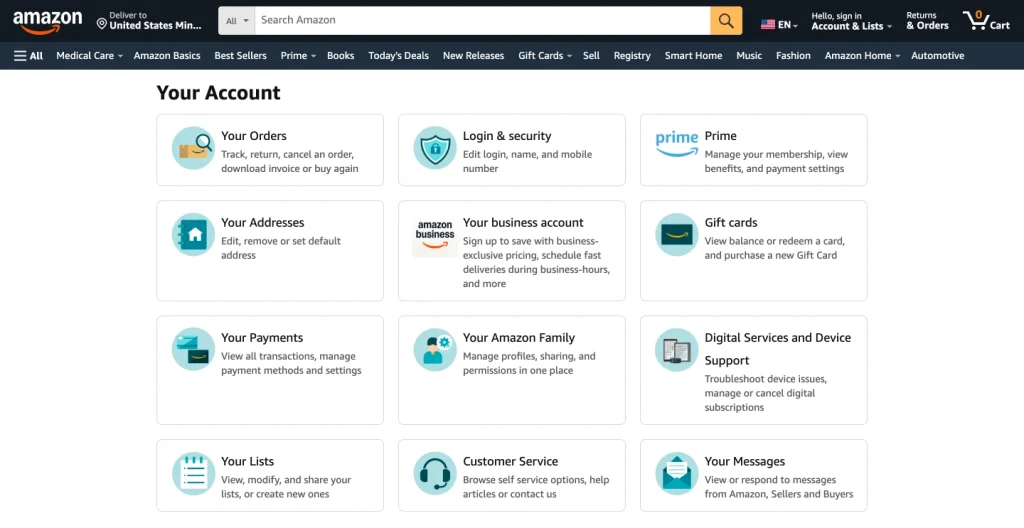
Visit Amazon Associates Central and start the sign-up process. You will need to log in with your Amazon account or create one.
During the application, Amazon will ask for your account details, website URL, preferred store ID, content category, traffic sources, and monetization methods. Be honest and specific. If your site is about kitchen gear, say that. If you plan to promote your Amazon affiliate content through SEO and Pinterest, mention that.
Step 4: Add Your Website, App, or Social Channel
Amazon asks you to list the sites where you plan to use links. Make sure the URLs are correct. Amazon says applicants should keep their site list updated so the review team checks the right traffic sources.
If your site is still under construction, wait. Apply only when the site looks ready.
Step 5: Explain How You Drive Traffic
Amazon wants to know how you will send traffic. This is not the place for vague answers like “online marketing.” Mention practical channels like:
- SEO blog posts
- Product reviews
- Comparison tables
- YouTube descriptions
- Pinterest pins
- Email newsletters
- Social media content
Your goal is to show that you have a real content plan, not just a random idea.
Step 6: Add Payment and Tax Information
After the initial setup, you can add payment and tax details. Amazon’s policy says commission income is generally paid approximately 60 days after the end of the calendar month in which it was earned. Payment options and minimum thresholds may vary by method.
You can usually choose direct deposit, Amazon gift card, or check, depending on your country and account setup.
Step 7: Make Three Qualifying Sales Within 180 Days
This is the part many new amazon affiliates miss.
You are not fully done just because you signed up. Amazon will review your application after you refer three qualifying sales within 180 days. If you fail to do that, your application may be withdrawn, but you can apply again when your site is better prepared.
That is why content preparation matters. Do not apply on day one of your website. Apply when your content has a chance to bring clicks and sales.
How to Create Amazon Affiliate Links with SiteStripe
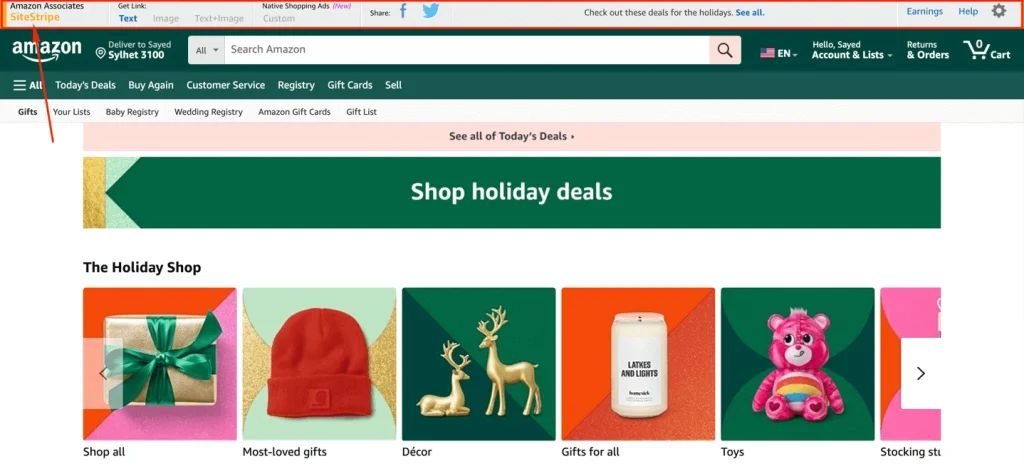
Once you are inside Associates Central, you can start creating links. The easiest way is through SiteStripe.
Amazon says SiteStripe lets Associates create links directly from Amazon.com without visiting Associates Central. It can build links to Amazon pages and share them on platforms like Facebook or Twitter.
Here is how to create an affiliate link using SiteStripe:
- Log in to Amazon with your Associates account.
- Go to the Amazon product page you want to recommend.
- Find the SiteStripe bar at the top of the page.
- Click “Get Link: Text.”
- Choose a short link or full link.
- Copy your affiliate link.
- Add it to your blog post, review, comparison table, or product box.
Amazon says the “Get Link: Text” feature can create short and long links for the current Amazon page, and your Associate ID and tracking ID are included in the generated link.
Where should you use your affiliate links?
You can add them in:
- Product review buttons
- Comparison tables
- “Best product” lists
- Tutorial tool lists
- Buying guide recommendations
- YouTube descriptions
- Social posts, if allowed and properly disclosed
Just do not overdo it. A page stuffed with links feels spammy. A page with helpful explanations and well-placed links feels useful.
What Products Should Amazon Affiliates Promote?
Choosing the right affiliate product is one of the biggest parts of becoming a successful Amazon associate.
Do not choose products only because they have a high commission rate. Choose products that match your audience, solve a real problem, and fit your content naturally.
For example, if your blog is about small apartment living, you can recommend:
- Foldable desks
- Compact kitchen appliances
- Under-bed storage
- Small-space organizers
- Air purifiers
- Wall shelves
If your blog is about biking, you can recommend:
- Helmets
- Gloves
- Action cameras
- Riding jackets
- Phone mounts
- Tire repair kits
- Portable air pumps
This is how you promote products with context. Your audience should feel like the product belongs in the article.
Also, think about buyer intent. People reading “what is a coffee grinder” may not buy today. But people reading “best burr coffee grinder under $100” are much closer to buying. That is where successful affiliate marketing happens.
How to Promote Your Amazon Affiliate Links
The best way to promote Amazon links is through helpful content. You are not just dropping links. You are solving buying confusion.
Here are some content formats that work well for affiliate marketing:
Product Reviews
Review one product deeply. Explain who it is for, what it does well, where it falls short, and whether it is worth buying.
Comparison Posts
Compare two or more products. These posts are powerful because readers are already close to a buying decision.
Example:
- Kindle Paperwhite vs Kindle Oasis
- Air Fryer vs Instant Pot
- GoPro vs DJI Action Camera
Best Product Roundups
These posts target searchers who want options.
Example:
- Best Standing Desks for Small Rooms
- Best Budget Microphones for YouTube
- Best Backpacks for Weekend Travel
Tutorial Posts
Tutorials help you recommend products naturally.
Example:
- How to Set Up a Home Podcast Studio
- How to Organize a Small Kitchen
- How to Start Camping as a Beginner
Comparison Tables
Tables make product data easier to scan. This is especially useful when you compare specs, prices, ratings, features, and ideal use cases.
For WordPress users, product tables can be a serious advantage. They help readers compare faster, and that can improve clicks on your Amazon affiliate links. This is also where plugins like AzonPress or table plugins can support your affiliate marketing efforts.
Social Media Promotion
You can use social media platforms to share content and share your affiliate link, but always follow Amazon’s requirements and platform rules. For example, if you use social media platforms like Facebook, make your disclosure visible and keep the recommendation useful.
Your goal should be to drive traffic to your website, not only send one-time clicks. A strong website gives you long-term SEO value, email list growth, and more control over your content.
Amazon Affiliate Program Policies You Must Follow
This part is not exciting, but it can save your account.
Every Amazon associate must follow Amazon’s program policies and Operating Agreement. Amazon says these policies are incorporated into the Associates Program Operating Agreement, and violations can be treated as a material breach.
Here are the big rules to remember.
1. Disclose Your Affiliate Relationship
Amazon requires you to include a legally compliant disclosure with your links and identify yourself as an Amazon Associate. It also says your disclosure should be clear and placed near links or product reviews where customers will notice it easily.
Amazon requires this statement to appear clearly on your site:
“As an Amazon Associate I earn from qualifying purchases.”
You should also disclose when you’re using affiliate links in plain language. For example:
“This post contains affiliate links. If you buy through these links, we may earn a commission at no extra cost to you.”
This tells readers you’re using affiliate links and keeps the relationship transparent.
2. Follow FTC Disclosure Rules
The FTC also expects disclosures when there is a financial or material relationship behind a recommendation. The FTC’s Endorsement Guides were revised in 2023 with updated principles and definitions, including “clearly and conspicuously.”
So do not hide your disclosure in the footer only. Put it near the beginning of the post and near product-heavy sections when needed.
3. Do Not Use Misleading Claims
Do not say a product is “the best” if you have no reason to support it. Never invent fake experiences. Do not claim guaranteed results.
Your content should help people make better decisions.
4. Be Careful with Prices
Amazon prices change often. If you mention a price manually, it can become outdated fast. A safer approach is to use wording like “check current price” instead of hardcoding prices.
5. Use Properly Formatted Links
Amazon says purchases may be disqualified if links are not properly formatted or tracked. Special links must use the Associate ID Amazon assigned to you.
So, always use official linking tools like SiteStripe, Product Advertising API, or other approved tools.
How Much Commission Can Amazon Affiliates Earn?
Amazon says Associates can earn up to 10% in associate commissions from qualifying purchases and programs. However, actual commission depends on product category, qualifying revenue, and Amazon’s current rate card.
Amazon’s policy also says commission income is calculated as a percentage of qualifying revenue. Qualifying revenue excludes items like shipping charges, gift-wrapping fees, taxes, service charges, credits, rebates, and other deductions.
So your earnings depend on:
- Product category
- Commission rate
- Traffic volume
- Click-through rate
- Conversion rates
- Product price
- Content quality
- Search intent
- Trust with your audience
Let’s say your site gets 10,000 monthly visitors. If 20% click your links, that is 2,000 Amazon clicks. Then 5% of those clicks convert, that is 100 sales. If your average commission is $3 per sale, that is $300 per month.
Now imagine improving your content, ranking more buying keywords, adding comparison tables, and increasing your click-through rate. That is how commission income grows.
Amazon Associates commission calculator covering all standard rates, bounties, bonuses, trade-in events, and multi-currency conversion
Amazon Associates calculator
Standard commission rates · Bounties · Bonuses · Multi-currency
Projected earnings
All commission rates at a glance
Bounty & bonus total
Trade-In summary
Combined monthly earnings
Commission limitations
Exchange rates are indicative approximations for illustration only. Amazon pays commissions in USD. Always verify current rates for actual financial planning.
How to Make Your First $1,000 with Amazon Affiliates
Making $1,000 per month as an Amazon affiliate is possible, but it usually does not happen from one blog post. It takes niche focus, content consistency, SEO, and regular optimization.
Here is a practical roadmap.
Step 1: Pick a Profitable Niche
Choose a niche with enough products, enough search demand, and enough buyer questions.
Good examples:
- Home office gear
- Baby products
- Kitchen appliances
- Pet care
- Fitness equipment
- Camping gear
- Tech accessories
- Beauty tools
- Motorcycle accessories
Avoid niches that are too broad. “Tech” is too big. “Budget desk accessories for remote workers” is much easier to build around.
Step 2: Publish Buying-Intent Content
Focus on keywords where people are close to buying.
Examples:
- Best wireless mouse for MacBook
- Best air fryer for small family
- Best motorcycle gloves for summer
- Best standing desk under $300
- Best microphone for online classes
These posts are more likely to generate clicks because the reader already wants help choosing.
Step 3: Use Comparison Tables
Comparison tables help readers make decisions quickly. Add columns like:
- Product name
- Best for
- Key feature
- Pros
- Cons
- Current price button
This improves user experience and can help maximize your affiliate clicks.
Step 4: Build Internal Links
If you write a post on “best home office chairs,” link to related posts like:
- How to Set Up a Home Office
- Best Standing Desks
- Best Desk Lamps
- Best Monitor Arms
Internal links help readers move through your content and help search engines understand your topical authority.
Step 5: Update Old Content
Affiliate content gets outdated quickly. Products go out of stock. New models launch. Reviews change. Better alternatives appear.
Update your content every few months. Replace weak products. Add new images. Improve tables. Refresh FAQs. Better updates can improve rankings, clicks, and affiliate marketing success.
Step 6: Build an Email List
Email can support affiliate content, but be careful with Amazon’s link rules. In many cases, it is safer to send readers to your own blog post instead of placing Amazon links directly in emails.
For example, send a newsletter like:
“New guide: 7 useful desk accessories for remote workers.”
Then link to your blog post where your Amazon links are properly placed and disclosed.
Step 7: Track What Works
Use Amazon reports to check clicks, ordered items, conversion, and revenue. Look for patterns.
Ask:
- Which pages get clicks?
- Which products convert?
- Which posts rank but do not earn?
- Which links are getting ignored?
- Which product categories bring better commission?
A successful Amazon affiliate does not guess forever. They test, improve, and repeat.
Amazon Affiliate FAQs
Is the Amazon affiliate program free?
Yes. The Amazon Associates Program is free to join. Amazon’s participation requirements state that the Associates Program is free to join.
How do I become an Amazon affiliate?
To become an Amazon affiliate, create a qualifying platform, publish original content, apply through Amazon Associates Central, add your site, create links, and refer at least three qualifying sales within 180 days for review.
Do I need a website to become an Amazon affiliate?
A website is not the only option, but it is one of the best. Amazon says bloggers, publishers, and creators with a qualifying website or mobile app can participate. Influencers with an established social following may use the Influencer Program route.
How many posts do I need before applying?
Amazon says all sites must have robust original content, and at least 10 posts is a good rule of thumb.
How long do Amazon affiliate cookies last?
Amazon’s standard session is generally 24 hours from the click, unless the customer places an order, clicks another special link, or the session otherwise ends under Amazon’s policy. If the customer adds a product to cart, the purchase may qualify if completed no later than 89 days after the initial click.
Does Amazon pay per click?
No. Amazon Associates is not a pay-per-click program. You earn from qualifying purchases and eligible customer actions, not clicks alone. Amazon says Associates earn from qualifying purchases and programs through the traffic they drive to Amazon.
Can I promote Amazon affiliate links on social media?
Yes, if the platform is allowed, your account is listed properly, and you disclose clearly. Amazon says anytime you share an affiliate link, you should disclose it to your audience.
What is SiteStripe?
SiteStripe is Amazon’s link-building tool that lets Associates create links directly from Amazon.com without going back to Associates Central.
How much can Amazon affiliates earn?
Amazon says Associates can earn up to 10% in commissions from qualifying purchases and programs, but your actual income depends on traffic, product category, commission rate, content quality, and conversion rates.
What is the best way to get started with affiliate marketing?
The best way to get started with affiliate marketing is to pick a niche, build a content-rich website, publish helpful buying guides, apply to a trusted program, and promote products your audience already wants.
Final Checklist: How to Become an Amazon Affiliate
- Pick a focused affiliate niche with real buyer intent.
- Build an active website, eligible social page, or mobile app.
- Publish original content with commentary, analysis, and useful product guidance.
- Join the Amazon Associates Program with accurate information.
- Create affiliate links with SiteStripe or Mobile GetLink.
- Add affiliate disclosures before your links.
- Drive traffic through SEO, YouTube, social content, or other allowed channels.
- Get three qualifying sales within 180 days.
- Review Amazon’s program policies before scaling.
- Track earnings, improve content, and keep your recommendations honest.
Becoming an Amazon affiliate is easy. Becoming a trusted one takes work. But if you build useful content, recommend the right products, and follow the rules, Amazon Associates can become a practical starting point for affiliate marketing and a long-term online business.

WordPress, automation, eCommerce and growth marketing specialist, a WordPress Core Contributor and Media Corps member blending storytelling with technology to craft strategies in SEO, email marketing, and beyond.
-
Single-Step Form vs. Multi-Step Form: Which One Is the Best and Why
Single-step vs multi-step form, which format converts better? Learn how -
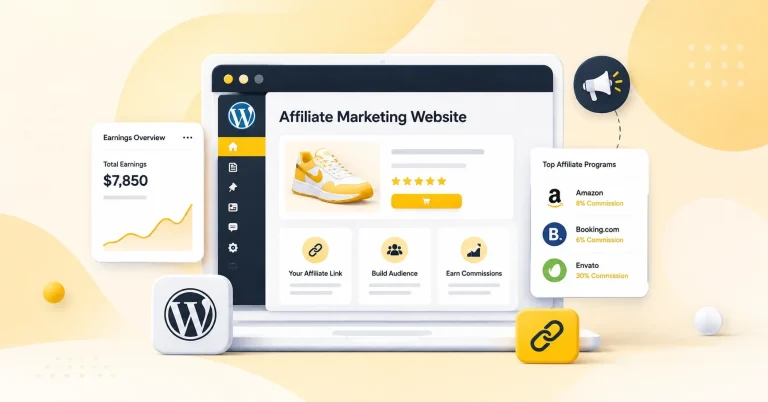
The Real Setup Behind a Working Affiliate Marketing Website
A step-by-step guide to building an affiliate marketing website with -

Turn YouTube Traffic Into Leads With a WordPress Video Funnel
Turn YouTube traffic into high-ticket leads with a WordPress funnel

Comments
-
[…] How to get registered as an Amazon Associate […]
-
[…] Learn how to get registered with Amazon Associates […]
-
[…] Learn How to Become an Amazon Affiliate […]
-
[…] Become an Amazon affiliate. Start here […]
-
[…] hope this article helped you to figure out the right Amazing affiliate WordPress plugin for the journey of your Amazon affiliate marketing. If you have anything to share, feel free to let me know in the comment box. I would love to […]
-
[…] Reference 3 […]
-
[…] How create Amazon Affiliate account ? […]
-
[…] Amazon Affiliate is one of the easiest programs on the entire globe. To promote Amazon products, you need a proper medium where you’ll show or talk about the … Read more… […]
-
[…] Amazon affiliate is one of the most popular affiliate programs on earth. When you sign up for the program, you can access the affiliate dashboard where you’ll … Read more… […]
-
[…] 14-Apr-2020 — Here’s what Amazon is telling members of its affiliate program: Hello Associate,. We hope you are staying well during this time. We are writing …How to Become an Amazon Associate (step-by-step guide for …https://wpmanageninja.com › … […]
Leave a Reply
You must be logged in to post a comment.