

Black Friday Marketing Strategies for 2026: Core and Advance Move

A bigger discount will not fix an offer people do not understand.
It will not help if your emails miss the inbox, your sales team cannot explain which plan fits, or shoppers hit a problem at checkout. Yet these are the details that often decide whether a Black Friday campaign produces profitable customers or merely a busy weekend.
Black Friday 2026 falls on November 27. If you are planning now, use the time before November to build the campaign. If you are reading this in the final month, start with the four-week preparation plan below.
The opportunity is substantial. Adobe recorded $11.8 billion in U.S. online spending on Black Friday 2025, up 9.1% from the previous year. Spending across the five days from Thanksgiving through Cyber Monday reached $44.2 billion. Those figures describe the wider market, not a forecast for an individual store. Your results will depend on the customers you reach and the experience you give them.
This guide starts with the core Black Friday marketing strategies every campaign needs. Then it moves to advanced strategies for businesses with an email list, existing customers, a sales team, or enough data to tailor the campaign.
Key Takeaways
- Start before the sale. Warm interested leads with comparisons, use cases, and demos so they understand the product before the discount arrives.
- Get the core campaign right first. Set a profit target, create clear offers, build a dedicated landing page, plan your emails, and test mobile checkout.
- Check email deliverability early. Verify your sending setup, review failures, clean your list, and test both promotional and order emails before increasing volume.
- Segment by behavior. Send different messages to customers, link clickers, openers, and inactive contacts. Treat opens as a weaker signal than clicks, replies, and purchases.
- Prepare the sales team. Give them offer rules, customer use cases, business ideas, short demos, and answers to common objections.
- Respond to friction during the sale. If shoppers leave at checkout, investigate pricing, coupons, shipping, and payment before sending more reminders.
- Plan beyond Black Friday. Help new customers use what they bought, then measure profit and repeat purchases alongside campaign revenue.
The core Black Friday marketing strategies
These are the fundamentals. Get them working before adding complicated automations or more channels.
1. Set a goal that accounts for profit
Revenue is easy to celebrate. Profit takes more thought.
Set a target for sales, but also decide:
- How many new customers you want
- Your target average order value
- The lowest margin you can accept
- How much you can spend to acquire a customer
Suppose a $100 product costs $45 to deliver. A 30% discount leaves $25 before payment fees, advertising, and other campaign costs. Selling more units may still make sense, but you should make that choice with the full calculation in front of you.
Give each promotion a purpose. An entry-level offer may attract new customers. A bundle may increase order value. An upgrade may bring existing customers back.
Start here: Review last year’s best sellers and your most profitable products. They are not always the same list.
2. Choose offers people can understand quickly
“Up to 70% off selected items” might earn a click, but it can disappoint shoppers if the product they want has a much smaller discount.
Make the main offer specific. State the product, price or saving, eligibility, and deadline. If several offers serve different buyers, group them by need.
| Buyer | Possible offer |
|---|---|
| First-time customer | A clear starter deal |
| Customer building a larger setup | A bundle of complementary products |
| Existing customer | A relevant upgrade |
| Loyal customer | Early access or a customer-only benefit |
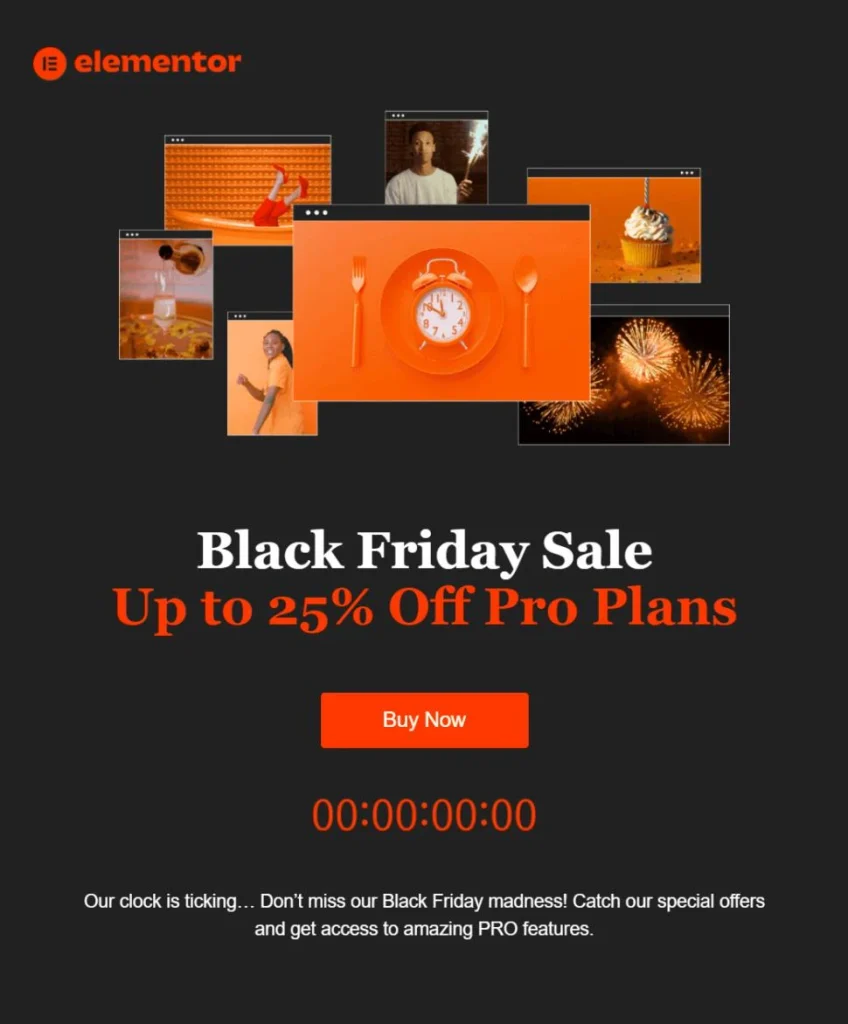
Example: Elementor’s 2025 Black Friday campaign presented separate offers for its Editor plans, Hosting, add-ons, and support. Customers could find the product category that suited them. Its listed prices and dates are historical examples, not live 2026 deals.
3. Create a dedicated Black Friday landing page
Your ad, email, or social post should lead to a page that continues the same conversation.
Above the fold, show what is on sale, who the offer is for, the main benefit, and where to buy. Below that, answer questions about plan differences, compatibility, delivery, refunds, and coupon rules.
Include the exact end time and time zone. If a coupon is required, show it prominently and test it.
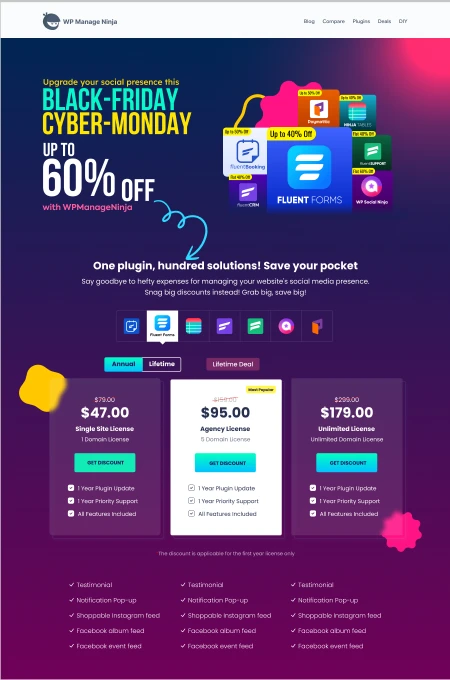
WPManageNinja’s 2025 Black Friday and Cyber Monday deals page is a historical example of organizing many products and partner offers into one browsable destination. The offers shown there have expired, but the category structure is useful if your business sells several solutions. wpmanageninja.com
Start here: Ask someone unfamiliar with your campaign to open the page for ten seconds. Can they tell you what the offer is and what to click?
4. Build an email campaign with a purpose for every send
One launch email is easy to miss. Ten nearly identical emails are easy to ignore.
Plan a small sequence where every message adds something:
- Preview: Explain which problem the upcoming offer will help solve.
- Early access: Fulfill a genuine promise to subscribers or loyal customers.
- Launch: Present the offer and a direct link to the right page.
- Proof: Show a demonstration, customer example, or answer to a common concern.
- Final reminder: State the real deadline and terms.
Write these before the sale. Check that each email matches the page it links to.
If you need a WordPress-based way to capture leads and follow up, our guide to building a WordPress marketing technology stack covers how forms, CRM, and email sending fit together.
5. Promote the sale where your customers already pay attention
Social media, partners, affiliates, communities, search, and paid ads can all support a Black Friday campaign. You do not need to be everywhere.
Look at where your past customers found you. Give each chosen channel material that suits it:
- A short demonstration for video channels
- A useful product comparison for search
- A direct offer for an engaged email list
- A specific use case for a niche community
- Clear creative and a matching landing page for ads
Measure sales and qualified interest by channel, not views alone. A smaller audience that needs your product may be more valuable than a broad audience attracted only by a large discount.
6. Make the mobile purchase easy
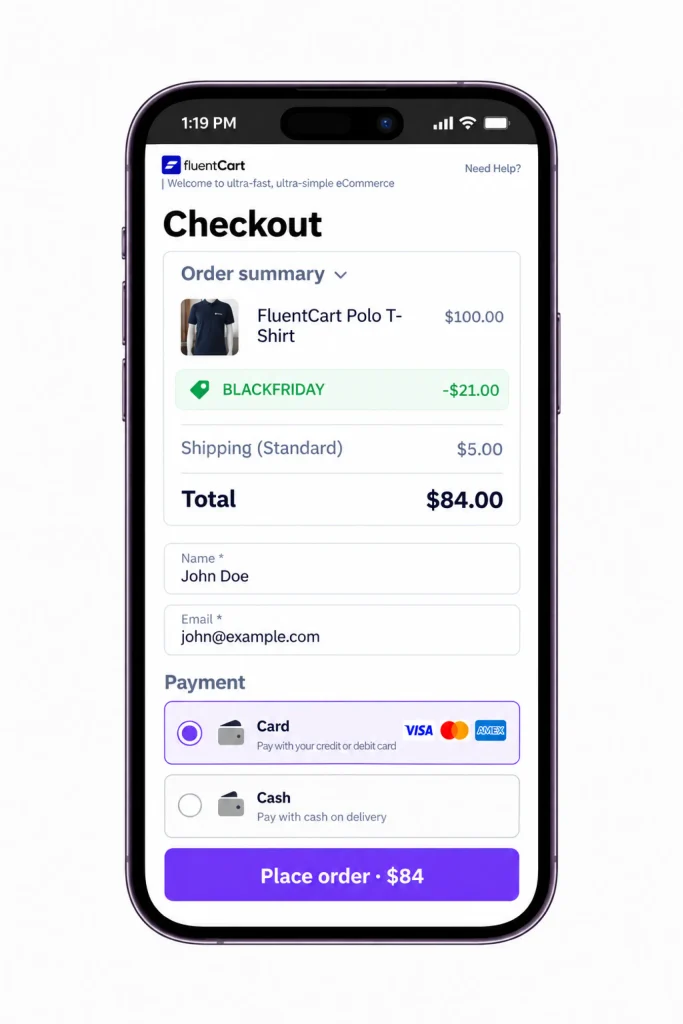
Adobe reported that 56.4% of U.S. online sales during the November–December 2025 holiday season came through smartphones. A campaign that looks good on desktop can still lose orders at mobile checkout.
Place a test order on a phone. Check the product variations, coupon, shipping charge, payment method, and confirmation email. Test a failed payment and an abandoned cart as well as a successful order.
If you offer an add-on at checkout, keep it closely related to the original purchase. Our guide to ecommerce order bumps shows how such offers can work without taking over the checkout experience.
Advanced Black Friday marketing strategies
The core campaign gets your store ready to sell. These strategies help you recognize who is interested, address their concerns, and spend your effort where it has the most value.
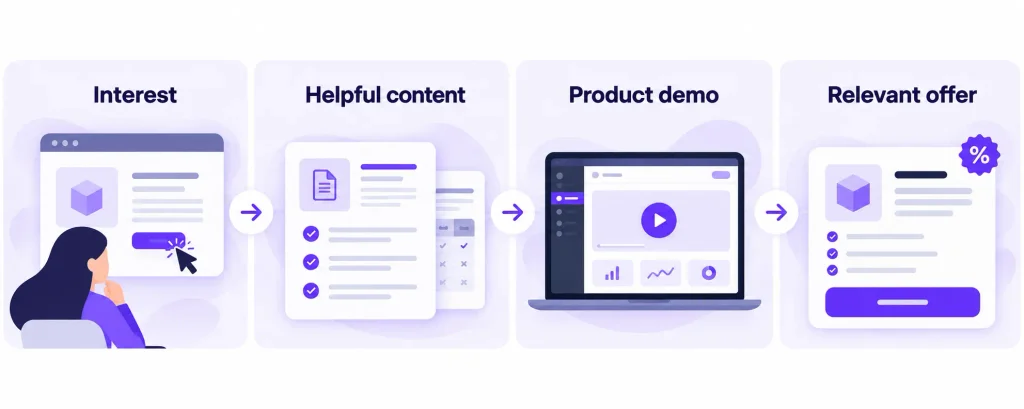
7. Warm interested leads before the discount arrives
The month before Black Friday is for answering buying questions.
A visitor who has viewed pricing, downloaded a guide, clicked a product email, or asked for a demo is already giving you clues. Use those clues to decide what information would help them choose.
For example, a software prospect might need:
- A two-minute setup demonstration
- A comparison of plans
- An explanation of integrations
- A real business use case
- An answer to migration concerns
Then, when the offer launches, the price is new information about a product they already understand.
This timing matters. In its 2025 holiday survey, the National Retail Federation found that 42% of U.S. shoppers planned to begin browsing or buying before November. Some buyers form their shortlist before Black Friday promotions peak.
Practical move: Send a useful guide or demo to interested contacts in early November. Send the sale announcement later, with a link to the product they explored.
8. Check email deliverability before increasing volume
A Black Friday email cannot convert if it is rejected, delayed, or consistently marked as spam.
At least a few weeks before the sale:
- Verify SPF, DKIM, and DMARC for your sending domain.
- Check that your visible “From” domain aligns with your authentication.
- Review bounces and sending errors.
- Remove invalid addresses and honor unsubscribes.
- Test marketing, order confirmation, and access emails.
- Check links and unsubscribe behavior on the final email template.
Google’s sender guidelines cover authentication and spam rates. They also require qualifying high-volume senders to support one-click unsubscribe for marketing messages. Yahoo publishes its own sender requirements.
For WordPress-specific checks, follow our email deliverability guide. FluentSMTP can help you inspect sending logs and failures, while the sending service and domain configuration still need to be set up correctly.
Practical move: Run a complete purchase test and confirm that both the campaign email and the resulting order email reach their destinations.
9. Segment openers, clickers, customers, and inactive contacts
Behavioral segments let you stop treating your list as one audience.
| Segment | What you know | Better next message |
|---|---|---|
| Customers | They have bought from you | A compatible product, upgrade, or exclusive access |
| Link clickers | A particular topic or offer caught their attention | A relevant demo, comparison, or offer |
| Openers who did not click | They may have noticed the message | A clearer explanation of the benefit |
| Inactive contacts | They have shown little recent engagement | A restrained re-engagement attempt, or no sale sequence |
| Demo or sales leads | They have raised a specific business need | A personal follow-up tied to that need |
Set priorities so a customer who clicked an email does not receive conflicting messages from both segments.
Be careful with open rates. Apple Mail Privacy Protection can inflate recorded opens. A click, reply, demo request, or purchase usually tells you more about intent than an open alone. Automated systems can also affect some clicks, so judge behavior in context.
FluentCRM’s integration with FluentCart can connect customer order history to contact segmentation and follow-up. Use purchase-based exits so buyers stop receiving reminders for something they already bought.
Advanced move: Segment by question, not just by product. Two people interested in the same plugin may need different help: one wants a setup demo; the other wants to understand which plan pays for itself.
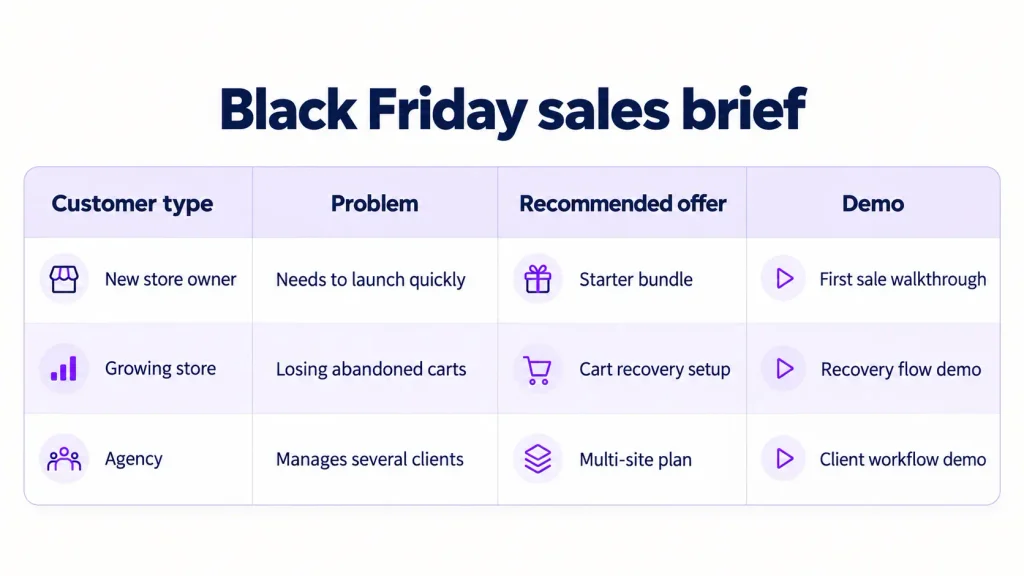
10. Equip your sales team with use cases, ideas, and demos
If you sell software, services, expensive products, or business solutions, prospects may speak to a person before buying. A discount can increase those conversations quickly.
Prepare the team with a short, usable brief:
- What is included in each offer
- Who qualifies
- Which plan suits each type of customer
- Common objections and accurate answers
- Demo links for major use cases
- Upgrade rules
- Who handles exceptions
Then give them business ideas, not just feature descriptions.
A prospect asking about a CRM may want to see how to follow up with leads from a contact form. An agency may want a client onboarding workflow. A store owner may want abandoned-cart recovery. Show the outcome and the steps that create it.
Our sales pipeline guide covers how to structure stages and follow-ups. For demo formats, see our guide to video marketing in 2026.
Practical move: Run a rehearsal. Give each sales rep a customer scenario and ask them to choose the right offer, explain why it fits, and show a relevant demo in under two minutes.
11. Recover abandoned carts without immediately discounting again
When someone leaves checkout, find out whether the campaign itself created the problem. A coupon may not have applied. Shipping may be higher than expected. A payment method may have failed.
Fix those issues first.
Then use a short reminder sequence for shoppers you are permitted to contact. Begin with a direct link back to the cart. Follow with an answer to a likely concern. Near the end of the promotion, state the genuine deadline.
FluentCRM added FluentCart abandoned-cart recovery in 2026. Test the trigger, return link, and rule that stops the sequence after purchase before your campaign goes live.
Advanced move: Compare abandoned carts by product and checkout step. If nearly everyone leaves after seeing shipping, another email will not solve the underlying problem.
12. Give returning visitors a better second message
A first-time visitor may need the basic offer. Someone returning for the third time may need an answer to a specific question.
Change the supporting content based on what you learn:
- People comparing two plans need a comparison.
- People watching a demo need a clear path to the featured product.
- People revisiting the FAQ may need reassurance about setup, compatibility, or returns.
Avoid making unsupported assumptions about individual visitors. Use your own aggregate page, campaign, and support data to identify the questions worth answering.
Our ecommerce content marketing guide has more ideas for comparisons, educational content, reviews, and videos that help shoppers decide.
13. Keep the campaign going after the first purchase
Many Black Friday buyers are new to a brand. Their experience after checkout decides whether the relationship lasts beyond the deal.
Send the order confirmation promptly. Provide setup or delivery information. Follow up when the customer has had time to use the product. Then recommend a relevant next step, if there is one.
Measure more than the weekend’s revenue:
- New versus returning customers
- Profit per order
- Second-purchase rate
- Refunds and support issues
- Sales by channel and offer
If you use FluentCart, our GA4 ecommerce tracking guide explains how to capture product, cart, checkout, and purchase events for a fuller view of the campaign.
A four-week Black Friday preparation plan
| Time before Black Friday | Core work | Advanced work |
|---|---|---|
| Four weeks | Choose goals, offers, and the landing page structure | Identify interested leads and their main questions |
| Three weeks | Create campaign content and checkout tests | Check deliverability and clean the email list |
| Two weeks | Schedule launch emails and channel creative | Build behavioral segments, demos, and sales briefs |
| One week | Test every offer, coupon, device, and payment path | Rehearse sales responses and automation exits |
| Sale weekend | Keep pages accurate and support responsive | Adapt messages to clicks, questions, and checkout problems |
| After the sale | Fulfill orders and help customers get started | Compare results by segment and track repeat purchases |
Black Friday marketing works best when the basics and the advanced work support each other. A clear offer brings people in. Useful content helps them choose. Reliable email and a working checkout let them act. Good follow-up gives them a reason to stay.
Prepare those connections before November 27. The sale will move too quickly to build them while it is happening.

WordPress, automation, eCommerce and growth marketing specialist, a WordPress Core Contributor and Media Corps member blending storytelling with technology to craft strategies in SEO, email marketing, and beyond.
-
10 Best jQuery Table Plugins for Best Data Visualization in 2026
Discover the 10 best jQuery table plugins for 2026. Compare -
How Much Can You Earn With Amazon Affiliate Marketing? Rates & Niches
How much can you earn with Amazon affiliate marketing? Dive -
8 Hidden Factors Slowing Your WordPress Site (and How to Fix Them)
Wondering why your WordPress site is slow? Discover 8 causes,


Leave a Reply
You must be logged in to post a comment.