

Affiliate Commission Structures: Rates, Tiers, and Bonuses That Work
You want affiliates, but one number keeps you stuck: how much to pay them. Set it too low and nobody promotes you. Set it too high and you make a sale, then watch the profit walk out the door.
That fear keeps a lot of good programs from ever launching. This guide breaks down every commission model, the margin math behind it, and how to set it all up inside WordPress.
Key Takeaways
- An affiliate commission structure is the set of rules that decides how much, when, and on what an affiliate gets paid.
- Most programs pay between 5% and 30%, but digital products and SaaS can go far higher than physical goods.
- Flat rates are simple, percentage rates scale with cart size, and recurring rates reward long-term customers.
- Tiered commissions in FluentAffiliate work through manually assigned Affiliate Groups, not automatic promotions.
- Always set your rate from your profit margin, not from what a competitor pays.
- Bonuses can be paid in FluentAffiliate by adding a manual referral to a partner’s account.
- Clear program terms and a self-referral block protect your margins more than any fancy tool.
What An Affiliate Commission Structure Is
An affiliate commission structure is the set of rules that decides how much an affiliate earns, when they earn it, and which sales actually count.
It’s like a pay plan for a sales team that only gets paid when they win. You decide the rate, you decide what triggers a payout, and you decide how long someone gets credit after they send a click. A good structure lines up two things that usually fight each other: a reward big enough that partners want to promote you, and a cost small enough that you still keep money on every sale.
This matters more than it used to. US affiliate marketing spending is projected to pass $13 billion in 2026, and affiliate programs already drive around 16% of online orders in the US and Canada. Roughly 81% of brands now run an affiliate program of some kind. So you are not deciding whether affiliate marketing works. You are deciding how to pay for it without getting burned.
Affiliate Commission Structures Explained
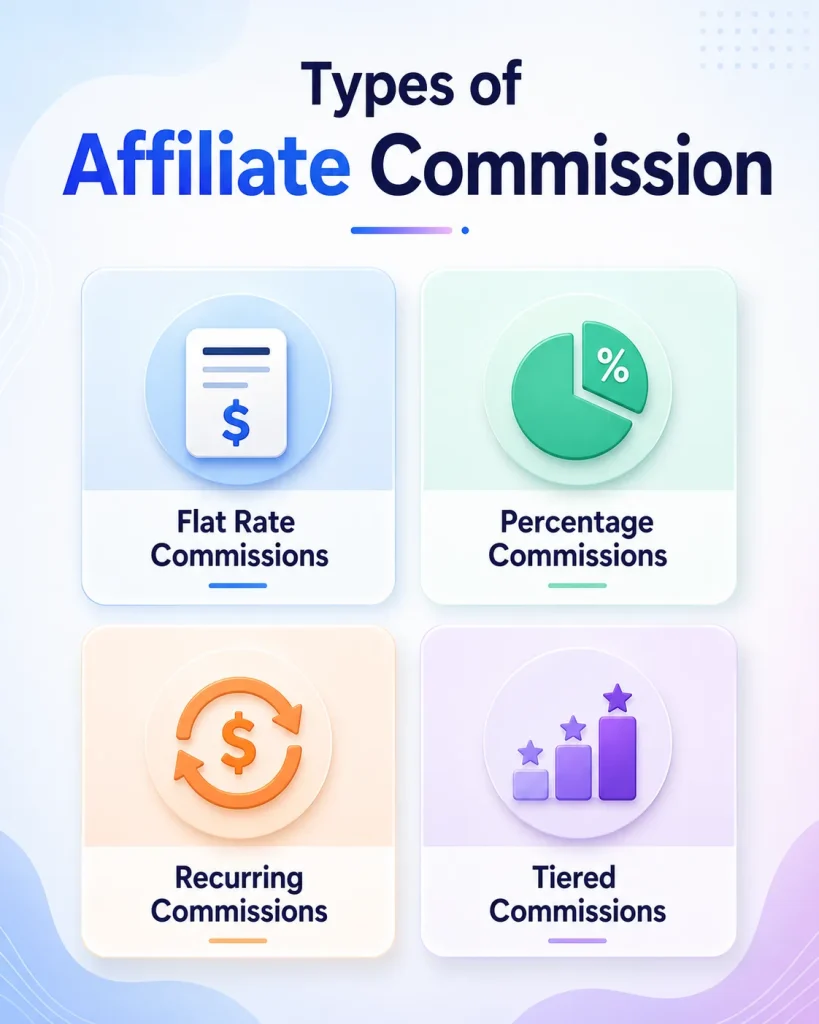
There is no single best model. There are four common ones, and most healthy programs mix them. Let’s go through each, with trade-offs and how each maps to a real setup inside WordPress.
Flat Rate Commissions
A flat rate pays a fixed amount per sale, no matter the order size. Sell a $50 product or a $500 bundle, the affiliate still earns, say, $25.
This is the easiest model to explain to partners, and affiliates love it because they know exactly what they earn. It works great when your prices are fairly consistent.
The downside is obvious: if someone buys a tiny add-on, a flat $25 can wipe out your profit. Flat rates fit lead-style actions and single-price products best.
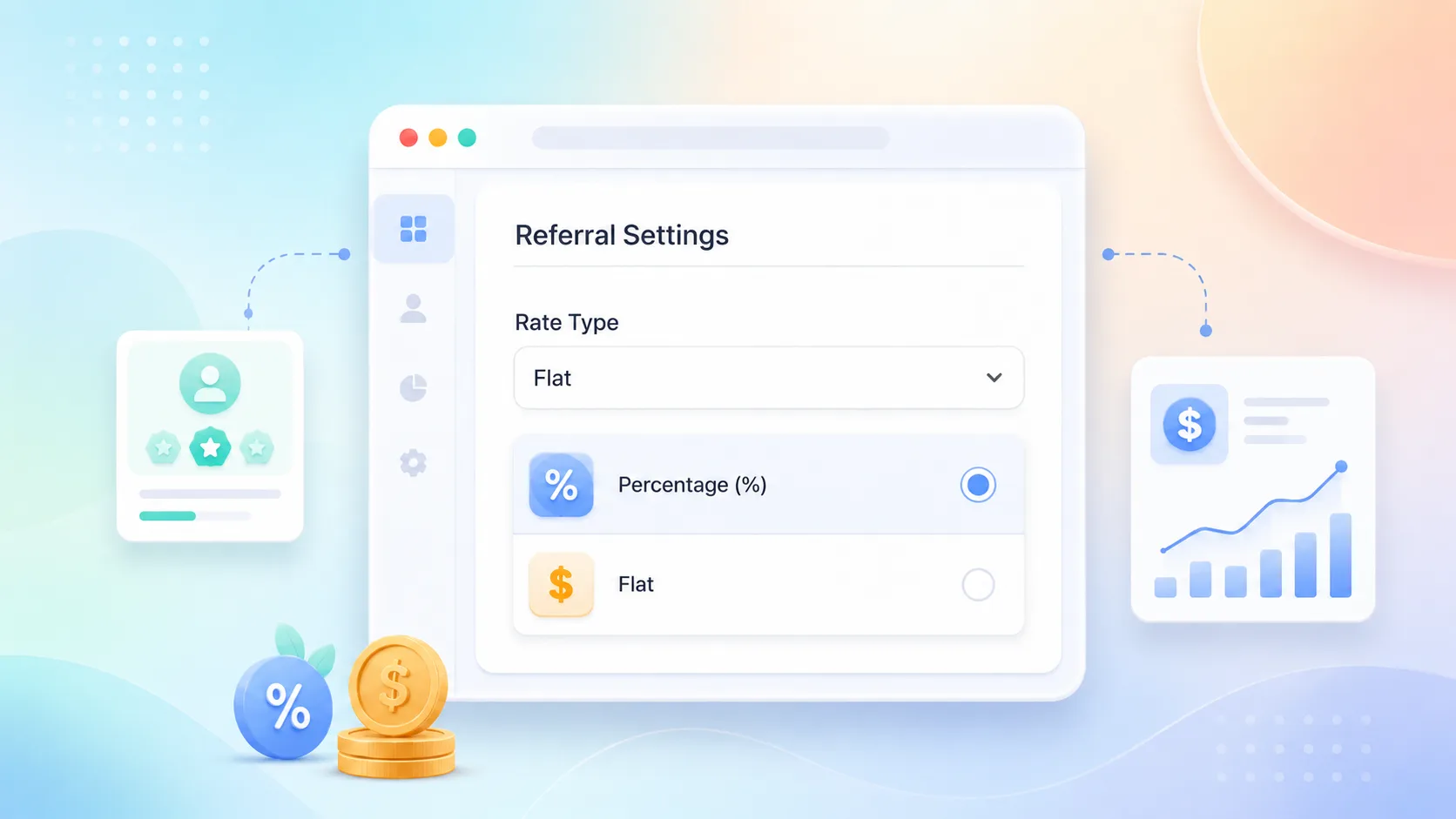
In FluentAffiliate, you set this in your Referral Settings by choosing a fixed rate type instead of a percentage.
Percentage Commissions
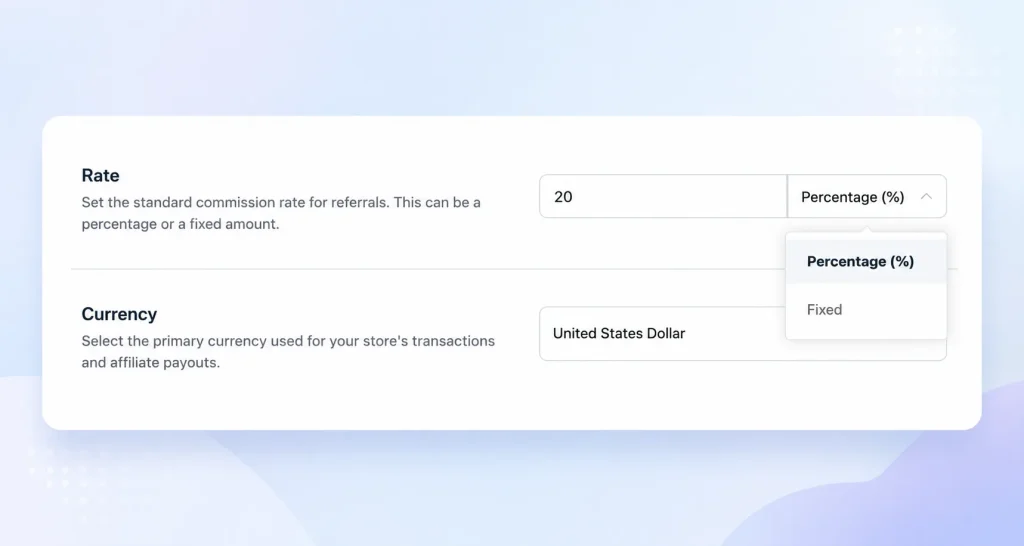
A percentage rate pays a share of the sale, like 20% of whatever the customer spends. Bigger cart, bigger payout.
This is the most common model for a reason. It scales with the order, so your cost stays proportional to your revenue. A small order pays a small commission, a big order pays more, and your margin percentage stays roughly stable. Most programs land between 5% and 30% here.
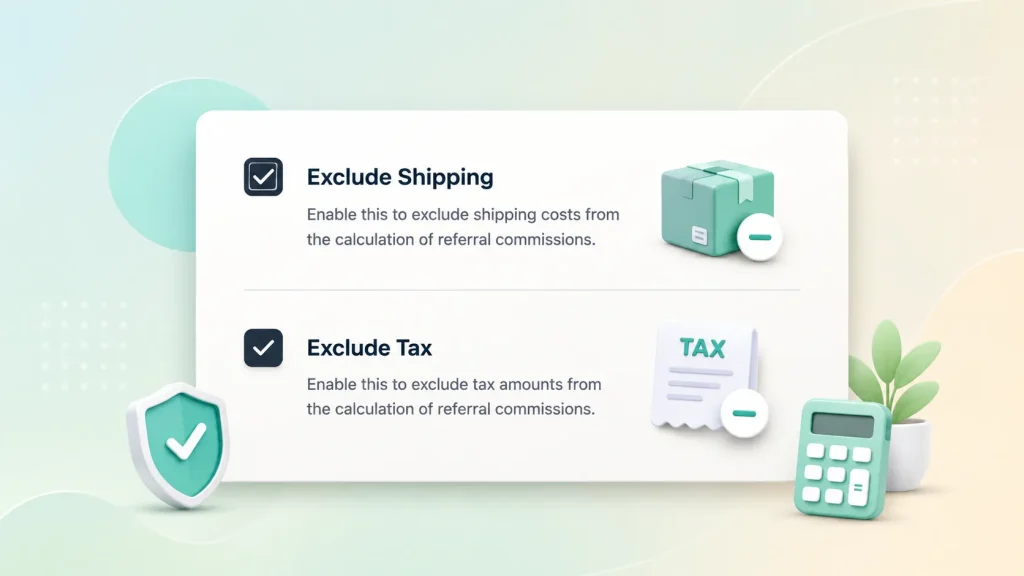
The catch is you need to watch what the percentage applies to. If it includes shipping and tax, you are paying commission on money that was never yours to keep.
FluentAffiliate lets you exclude shipping and tax from the commission calculation in Referral Settings, which is a small toggle that saves real money over time.
Recurring Commissions
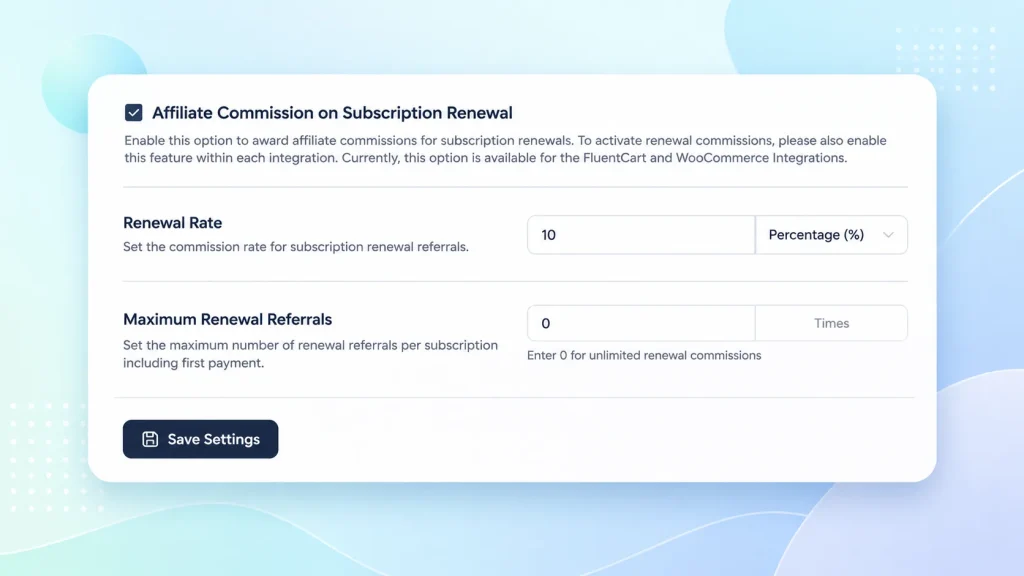
A recurring commission pays the affiliate again every time a customer renews a subscription, not just on the first sale.
This is the standard for SaaS and membership businesses, and the numbers explain why. Around 42.4% of SaaS affiliate programs now use a recurring or revenue-share model. A first-month payout looks small, but a partner who knows they earn for 12 or 18 months will promote you much harder.
The risk is cash flow and churn. If customers leave fast, you may pay out more than the customer was ever worth.
In FluentAffiliate, recurring payouts are handled by the affiliate commission on the subscription renewal feature. This is a FluentAffiliate Pro feature available for FluentCart and WooCommerce users, and you can set a separate renewal rate plus a maximum number of renewals an affiliate can earn from. Set that maximum to zero for unlimited renewals, or cap it to protect your margin.
Tiered Commissions
A tiered structure pays different rates to different groups of affiliates, so your best partners earn more than your newest ones.
This rewards loyalty and gives partners a reason to keep growing. You might pay 15% to new affiliates and 20% to your proven top performers.
In FluentAffiliate, tiers are not automatic. You create Affiliate Groups with their own rates, then assign an affiliate to a group from their profile using the rate type field. The group’s rate then applies to that affiliate.
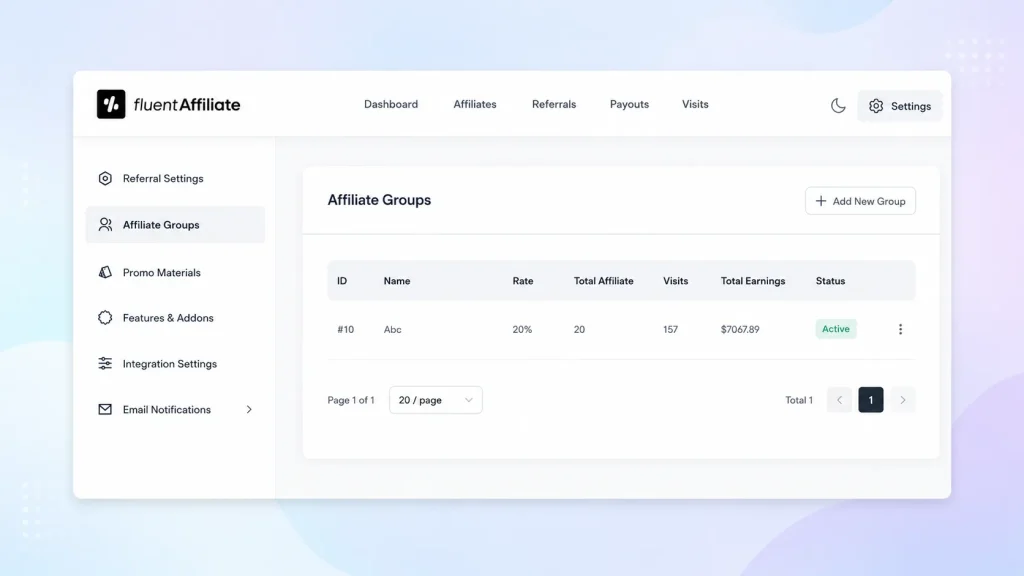
So it is manual, not auto-promotion. For most WordPress shops that is completely fine, because you usually know your top ten partners by name anyway. You just bump them into a higher group when they earn it.
How To Choose The Right Commission Rate
Most of the time, people pick a rate by checking a competitor’s page and adding a point or two. That is the wrong starting point. Start with your own profit, then look outward.
Here is the simple math. Work out your average profit per order, not your revenue per order. If you sell a $100 product that costs you $40 to deliver, your profit is $60. A 30% commission on the sale price is $30, which eats half your profit, not a third. Always run the percentage against your margin so you know what is really left.
A quick way to stay safe is to set a ceiling. Decide the most you are willing to give away per sale and never let a rate push you below break-even. The Shopify and DTC playbooks both treat profit-margin clarity as step one for exactly this reason.
Now bring in benchmarks, because partners do compare. Here is roughly where industries land:
- Physical products: usually 5% to 15%, since margins are thin.
- Digital products like ebooks and software: often 20% to 50%, because each copy costs almost nothing to deliver.
- SaaS and subscriptions: commonly 20% to 30% recurring, spread over the customer’s lifetime.
Then there is the first-sale versus recurring question.
Many smart programs pay more on the first order to attract reach, then pay less or nothing on repeat purchases the customer would have made anyway. That keeps your acquisition cost predictable. If you sell subscriptions, the reverse can work: a modest first payout plus a long recurring tail that only pays out while the customer stays.
Let’s make it real with a quick example. Say you sell a $80 online course that costs you almost nothing to deliver, so your margin is high. You could comfortably offer 30%, which is $24 per sale, and still keep plenty. Now say you sell a $80 physical product that costs you $55 to make and ship. Your profit is only $25, so a 30% rate of $24 leaves you a single dollar. Same price, completely different rate. That is why the product, not the price tag, drives the number.
One more practical tip. Start a little lower than you think, then raise rates as you grow. It is easy to give a top affiliate a raise. It is painful and awkward to cut everyone’s rate after you realize the math does not work.
Ideas For High-Performing Affiliates
Bonuses are how you turn a casual promoter into a real partner. A bonus keeps your best people pushing when they could be promoting someone else. Here are ideas that work well for small WordPress programs.
- Milestone bonus: a one-time reward when an affiliate hits a target, like a $200 bonus at their first 25 sales.
- Streak bonus: a small extra for hitting a monthly sales goal several months in a row, which rewards consistency over luck.
- Launch bonus: a higher payout for the first two weeks of a new product so partners prioritize it.
- Top-partner bonus: a quarterly thank-you for your number one affiliate, even something non-cash like free product or early access.
Streak and milestone bonuses are popular because they reward steady performers, not just one big fluke sale, which is the kind of partner you actually want to keep.
Now the setup note. With FluentAffiliate you can pay bonus effortlessly. Use the + New Referral option in Managing Referrals to add a manual referral to that affiliate’s account for the bonus amount, with a clear description like “Q2 milestone bonus.”
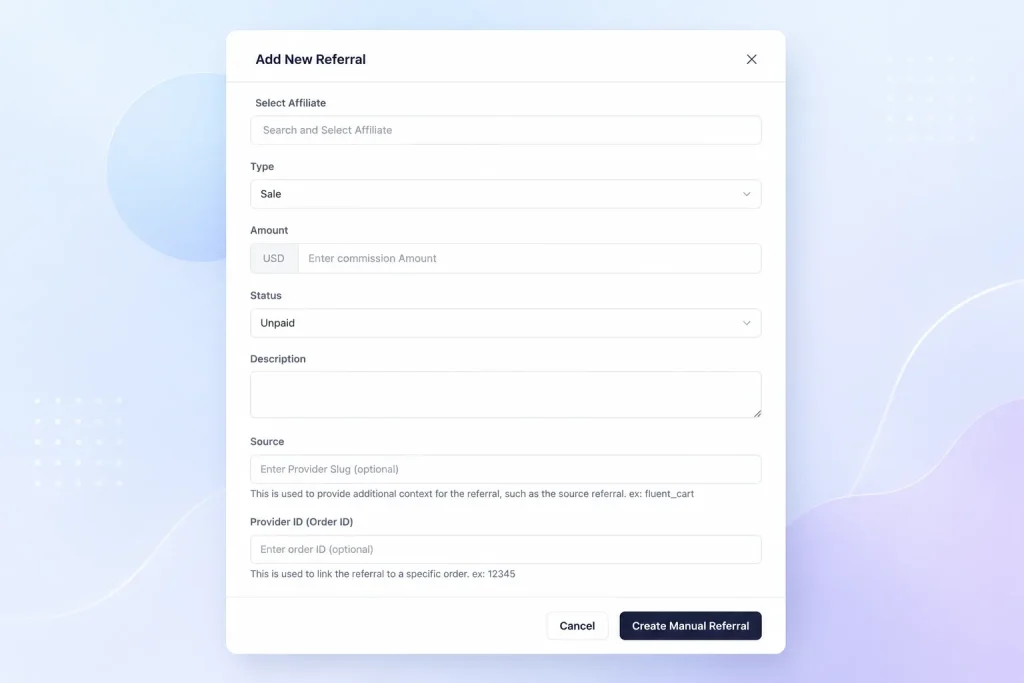
It shows up in their earnings, gets included in the next payout, and stays on the record for your books. Simple, transparent, and it uses tools you already have.
A quick word of caution: write your bonus rules down in terms & conditions before you announce them. Vague bonus promises cause more affiliate disputes than low rates ever will.
Common Commission Mistakes To Avoid
A few small mistakes quietly drain most programs. Catch these early and you will keep far more of your revenue.
First, paying commission on coupon-driven sales you did not really need to pay for.
If a partner shares a discount code that customers were going to find anyway, you can double-discount yourself. FluentAffiliate’s branded coupon codes (available with WooCommerce, EDD, and FluentCart) let you tie a code to a specific affiliate so credit is clear, but you still decide whether those sales deserve full commission. Use them on purpose, not by accident.
Second, letting affiliates earn on their own purchases.
Self-referral abuse is one of the oldest tricks in the book. Turn on the disable self-referral option in Referral Settings so partners cannot buy through their own link for the discount and the commission.
Third, paying full commission on upgrades and renewals you did not intend to.
If you sell tiered products, an affiliate can get credit for an upgrade the customer chose on their own. FluentAffiliate’s disable referrals on upgrades setting in your store integration stops that.
Fourth, fuzzy program terms.
Spell out your cookie duration, what counts as a valid sale, payout timing, and what gets a partner removed. You can set a terms and conditions page that affiliates must agree to during signup in your Registration Settings. Clear terms prevent most arguments before they start.
Finally, a realistic note on fraud.
Invalid affiliate traffic across the industry sat around 7.7% in 2026, so it is real but manageable. FluentAffiliate’s practical fraud controls are the self-referral block, manual approval of new affiliates, pending referral statuses you review before paying, and the visits log you can scan for odd patterns. It does not do automated fraud scoring or device fingerprinting, so the human review step matters. For most programs, requiring manual approval and checking referrals before payout catches the vast majority of nonsense.
How To Track Payouts And Partner Performance
A commission structure is only as good as your ability to track and pay it. This is where a lot of spreadsheet-run programs fall apart. Here is the easiest way to handle it.
Set a clear payout cycle.
Monthly is common and easy to explain. Pick a minimum payout amount so you are not processing tiny payments, and tell affiliates the rule up front so nobody is surprised.
When it is time to pay, FluentAffiliate’s Payout Management walks you through it.
You create a payout, choose a date range, optionally set a minimum amount, and select which affiliates to include. One thing to be clear about: FluentAffiliate records payouts and generates reports, but it does not push money through a payment gateway for you.
You pay affiliates using the PayPal or bank details in their profile, then the plugin logs who got paid and how much. You can export the whole thing as a CSV with affiliate name, email, payout email, amount, and currency for your records or your accountant.
For performance, your admin dashboard shows the metrics that actually tell you if the structure is working: total paid, total unpaid, active affiliates, total visits, referrals, conversion rate, and your top affiliates leaderboard. Watch conversion rate closely, because a partner with lots of visits and few referrals may need better creatives, not a higher rate.
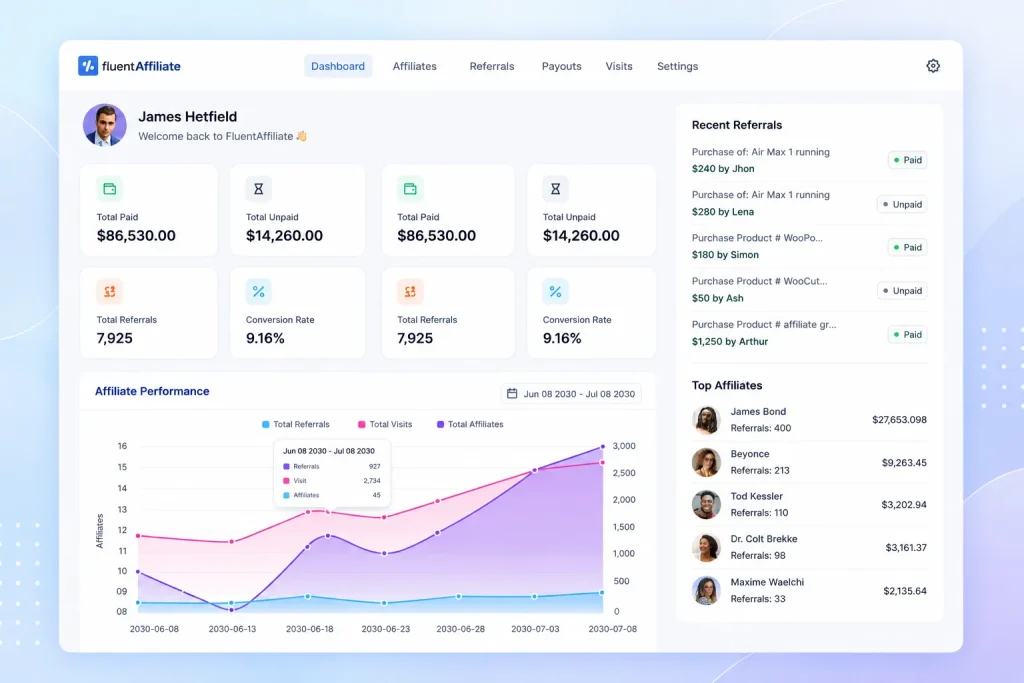
Explore more with the Visits log, which records each click with its destination URL, referrer, and UTM data if your affiliates tag their links. That UTM data is gold. It tells you which campaign or channel a partner used, so you can see whether your top earners are winning with email, social, or blog content.
Pair that with each affiliate’s profile, where you can see their full referral and visit history in one place, and you have everything you need to decide who deserves a tier bump or a bonus.
Build A Smarter Commission Structure With FluentAffiliate
Setting commission rates is not about copying a competitor. It is about knowing your margin, picking the model that fits what you sell, and rewarding the partners who actually move the needle. Flat for simplicity, percentage to scale, recurring for subscriptions, and groups for your top performers. Add a bonus here and there, protect your margin with a few smart settings, and review the numbers every month.
The good news is you can run all of it from your own WordPress dashboard, with your data staying yours and no network taking a slice of every sale. FluentAffiliate gives you the rates, groups, branded coupons, payouts, and performance tracking to build a program that grows without eating your profit.
Ready to set it up the right way? Build a better affiliate program with FluentAffiliate.
Frequently Asked Questions (FAQs)
Here are some of the common questions people ask regarding affiliate commission structures.
What is the most common affiliate commission structure?
The most common structure is a percentage commission, usually between 5% and 30% of the sale. It is popular because the payout scales with the order size, so your cost stays proportional to your revenue. Digital products and SaaS often pay higher percentages because they cost less to deliver.
What is a good affiliate commission rate?
A good rate is the highest one you can pay while still keeping profit on the sale. Run the percentage against your profit margin, not your sale price, then check what competitors in your niche pay. Many programs start lower and raise rates as they grow.
What is the difference between flat and percentage commissions?
A flat commission pays a fixed dollar amount per sale regardless of cart size, while a percentage commission pays a share of the order total. Flat rates are simpler and predictable, but percentage rates protect your margin better when order values vary a lot.
How do recurring affiliate commissions work?
Recurring commissions pay the affiliate again on every renewal of a subscription, not just the first sale. They are common in SaaS and membership programs. In FluentAffiliate, this is handled by the subscription renewal feature, available with FluentAffiliate Pro for FluentCart, where you can set a renewal rate and a renewal cap.
Can I set different commission rates for different affiliates?
Yes. In FluentAffiliate you create Affiliate Groups, each with its own rate, then assign an affiliate to a group from their profile. The group’s rate applies automatically to that affiliate. Assignment is manual, so you control exactly who earns the higher tier.
How do I pay a bonus to a top affiliate in FluentAffiliate?
There is no separate bonus module, but you can add a manual referral to the affiliate’s account using the + New Referral option. Enter the bonus amount with a clear description, and it will be included in their earnings and the next payout, with a record kept for your books.
How do I prevent affiliate commission fraud?
Use the practical controls that matter most: enable the self-referral block, require manual approval for new affiliates, keep referrals in pending status until you review them, and scan your visits log for unusual patterns. FluentAffiliate focuses on these human-review controls rather than automated fraud scoring.

Ashik Elahi is a seasoned Digital Marketing Strategist with a passion for Content Marketing. He believes in the power of storytelling and crafting valuable content that resonates with readers.
-
10 Best jQuery Table Plugins for Best Data Visualization in 2026
Discover the 10 best jQuery table plugins for 2026. Compare -

Black Friday Marketing Strategies for 2026: Core and Advance Move
Black Friday is the most celebrated shopping season worldwide. Discover -

How Much Can You Earn With Amazon Affiliate Marketing? Rates & Niches
How much can you earn with Amazon affiliate marketing? Dive



Leave a Reply
You must be logged in to post a comment.