

8 Myths and Misconceptions about Online Reviews
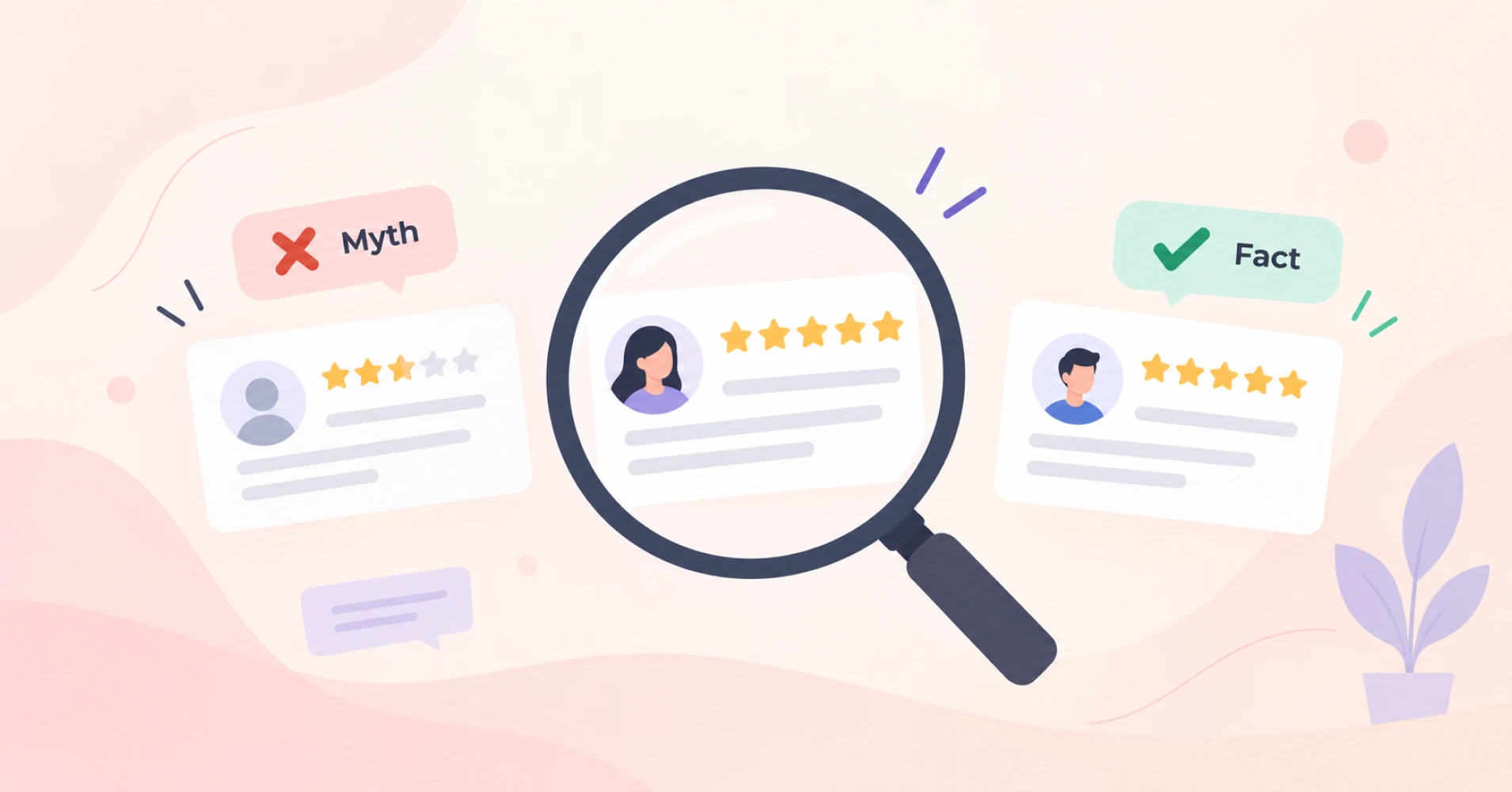
Customer service reviews shape what people buy, book, and trust. One bad review can cost you a sale before the customer ever reaches your site. A strong review profile earns trust you never had to ask for.
Yet many owners still run their reputation on beliefs years out of date: reviews are fake, too hard to get, or not worth the effort. Those assumptions quietly drain revenue.
This guide breaks down eight customer review myths and shows what the current data really says about how people read, write, and act on them.
Key takeaways
- Most customers will leave a review if you simply ask. 96% are open to it.
- Only 4% of consumers say they never read online reviews, so ignoring reviews means ignoring buyers.
- A flawless five-star profile can read as fake. A few honest, critical reviews add credibility.
- Good reviews are specific. Detail and a real outcome beat generic praise every time.
- The FTC now bans fake and AI-generated reviews, with penalties up to $51,744 per violation.
The 8 Customer Service Review Myths, Debunked
Most review advice is a mix of half-truths and habits from a decade ago. Each myth below sets a common belief against current data from BrightLocal, the FTC, and Harvard research.
The throughline is simple: reviews reward businesses that ask, respond, and stay honest.
Myth 1: Customer Reviews Are Too Hard to Get
Most customers will review you if you ask. In BrightLocal’s 2025 Local Consumer Review Survey, 96% of consumers said they are open to writing a business a review. Only 4% said they never would.
The barrier is rarely willingness. It is the ask. The same survey found that email is the most effective request method, with 40% of consumers most likely to respond when asked by email.
Agencies and service providers chasing client reviews see the same pattern. A simple, well-timed request after a good experience does most of the work.
Myth 2: People Don’t Actually Read Reviews
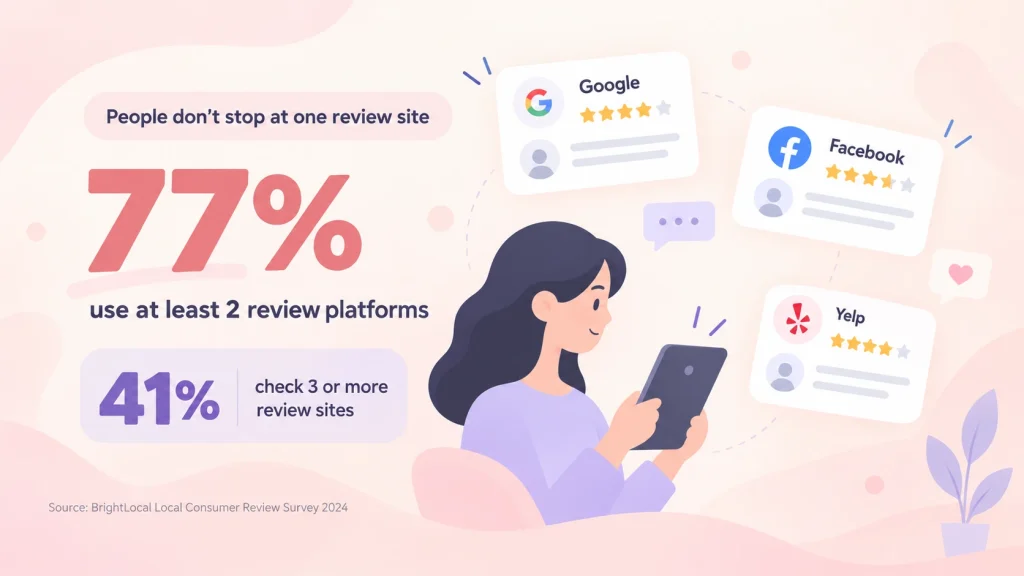
They read them constantly. Just 4% of consumers say they never read online business reviews. The rest check reviews before deciding, and most check more than one source.
BrightLocal found 77% of consumers use two or more review sites during research. Over three-quarters also watch video content when looking into a local business. If your customer service reviews are thin or unanswered across platforms, buyers notice the gaps.
Myth 3: Only 5-Star Reviews Matter
A perfect score can work against you. Consumers now read for detail and objectivity, weighing positive and negative reviews to reach their own conclusions. Star ratings still matter, but their pull is softening. A growing share of shoppers say the star rating alone does not decide their choice.
A flawless 5.0 with no written detail often reads as staged. A spread of ratings with real, specific feedback looks human, and human is what earns trust.
Myth 4: People Only Leave Reviews When They’re Angry
Happy customers write plenty of reviews too. Consumers increasingly write about both good and bad experiences. In 2025, 29% said they leave reviews for positive and negative experiences alike, up from 25% a year earlier.
The top reason people skip reviews is not satisfaction. Nearly a quarter of US adults say the experience simply was not memorable enough to write about. That points back to service. Give people something worth mentioning, then ask.
Myth 5: Most Customer Reviews Are Fake
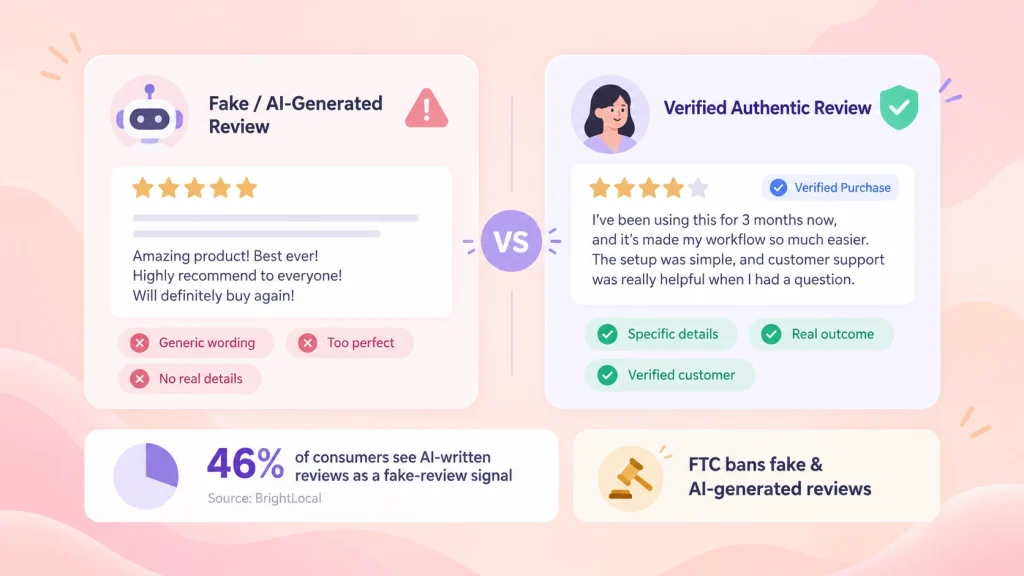
Fake reviews exist, but they are the minority, and the rules just got stricter. The US Federal Trade Commission’s final rule on fake reviews took effect on October 21, 2024. It bans fake and AI-generated reviews, review suppression, and buying reviews written to a set sentiment. Violators face civil penalties of up to $51,744 per violation.
Consumers are alert too. BrightLocal found that 46% treat a review that looks AI-written as a fake-review signal. Buying fake praise is now a legal and reputational risk, not a shortcut. Earning real reviews is the only durable play.
Myth 6: Negative Reviews Always Hurt Your Business
A handled negative review can build trust. Consumers want to see businesses respond to feedback of every kind, good, bad, and neutral. Only 7% of consumers say they do not expect a response at all.
Customer service reviews are where this shows most. A calm, useful reply to a complaint often does more for your reputation than a dozen five-star ratings.
What damages trust is a wall of mostly negative reviews or total silence. An earlier BrightLocal report found that 63% of consumers lose trust after seeing mostly negative written reviews.
Myth 7: Nobody Really Trusts Online Reviews Anymore
Trust is more measured, not gone. In 2020, 79% of consumers said they trusted online reviews as much as personal recommendations. By 2025, that figure sat at 42%.
Read that carefully. Consumers did not stop trusting reviews. They got more discerning. They cross-check multiple sites, read the details, and judge patterns instead of taking a single rating at face value.
That rewards businesses with consistent, well-managed review profiles and punishes thin or neglected ones.
Myth 8: Reviews Don’t Really Affect the Bottom Line
Reviews move revenue. Harvard Business School research on Seattle restaurants found that a one-star increase on Yelp led to a 5 to 9% jump in revenue for independent businesses.
Reviews also feed local SEO, since ratings, recency, and volume correlate with stronger local search rankings.
Treating reviews as optional means leaving discovery, trust, and sales on the table. Reputation is a growth channel, not a chore.
What a Good Customer Review Looks Like
The fastest way to get more good reviews is to show people what one looks like. Specific beats generic every time.
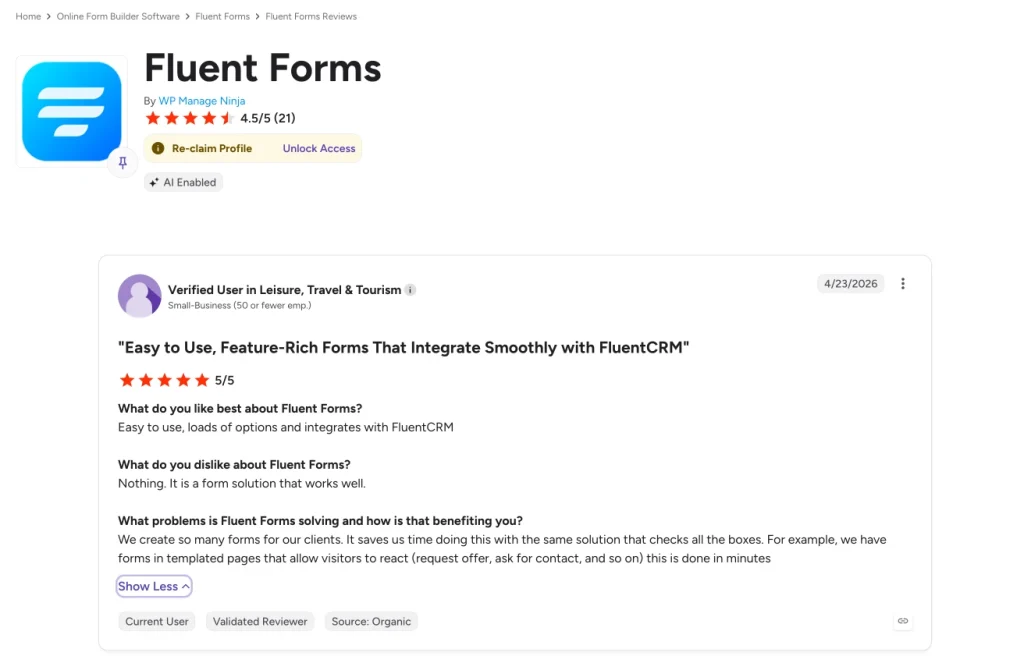
A good review names the person, the product or service, and the outcome. Here are three satisfied customer review examples worth modeling:
- “Booked a same-day repair with Dave’s Plumbing. Marco showed up within the hour, explained the fix before starting, and charged exactly the quote. No surprises.” Names the staff member, the timeline, and honesty on price.
- “I’ve used this tool for six months. Support answered my ticket in under 10 minutes and walked me through setup on a call. That level of service is rare.” A strong customer service review that highlights response time.
- “Great coffee, but the real win is the team. By day three, they knew my order. Small things, big reasons I keep coming back.” Short, warm, and believable.
Notice what these good review examples share: concrete detail, a real outcome, and no marketing gloss.
When you ask customers for feedback, a light prompt like “What stood out?” nudges them toward this kind of specific, useful review instead of a bare star rating.
How to Turn Customer Reviews Into Website Trust
Collecting reviews is half the job. The other half is showing them where buyers decide on your own site. That is where WP Social Ninja helps WordPress owners.
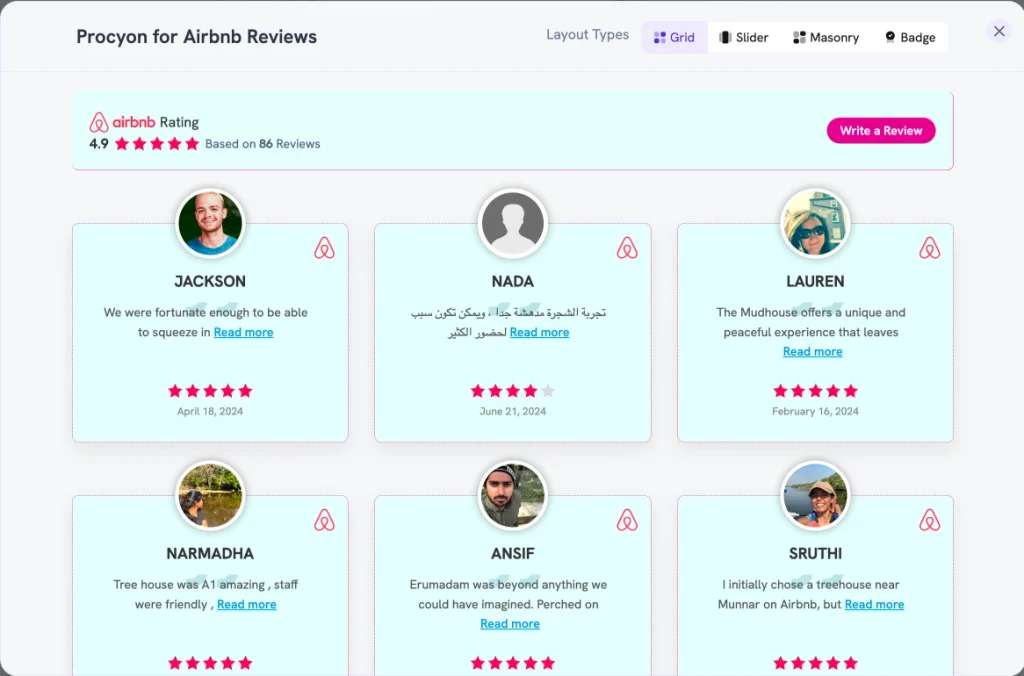
WP Social Ninja is an all-in-one social proof plugin for WordPress. Its business reviews feature pulls client reviews from 9+ platforms, including Google reviews, Facebook, Yelp, Tripadvisor, Booking.com, and WooCommerce reviews, into one customizable widget. No coding needed.
A few things it handles that map directly to the myths above:
- Show a real mix, not a curated wall: Display reviews with genuine ratings and detail, so your proof looks human and credible.
- Filter by minimum rating and hide specific reviews: When you need editorial control without faking anything.
- Auto-sync reviews: So your widget stays current, which matters because consumers weigh recency.
- Schema snippet support: To help star ratings show in Google results and support local SEO.
- Collect reviews: With a QR code or a custom Write a Review Button, the ask is easy.
Displaying real reviews on your pages also lifts your site’s overall credibility, the same signal that trust checkers use to calculate a website trust score.
You can start with the free version and upgrade when you need multiple platforms and advanced layouts.
Make Customer Reviews Work for Your Business
The myths share one root: treating reviews as something that happens to your business instead of something you shape.
You can shape them. Deliver an experience worth talking about, ask every satisfied customer at the right moment, and reply to the critical reviews with the same care as the glowing ones.
Then put the real feedback on the pages where people decide to buy. If you run on WordPress, Google and Facebook reviews with WP Social Ninja and turn everyday feedback into trust that converts.

Partho Hore runs full-stack product marketing at WP Social Ninja, FluentMembers, and FluentReward. He’s a WordPress Core Contributor and dedicated person who cares more about what converts than what sounds good in a deck. He’s spent 5+ years driving organic growth and turning free users into paying customers, building strategy across SEO, social proof, membership, community management, and AI-driven marketing automation. Off duty, he’s chasing new destinations or a good playlist.
-
Vanity Metrics vs Actionable Metrics: What to Track in 2026
Actionable metrics are potential that we can help in measuring. -
Content Marketing: Build a Business From What You Already Know
Learn how to start a content marketing business, grow an -
Popular WordPress Affiliate Plugins: Manage Affiliates Inside Your Dashboard
Compare WordPress affiliate management plugins for tracking referrals, commissions, affiliates,



Leave a Reply
You must be logged in to post a comment.