

Kanban vs Scrum vs Agile vs Waterfall: What’s the Difference?
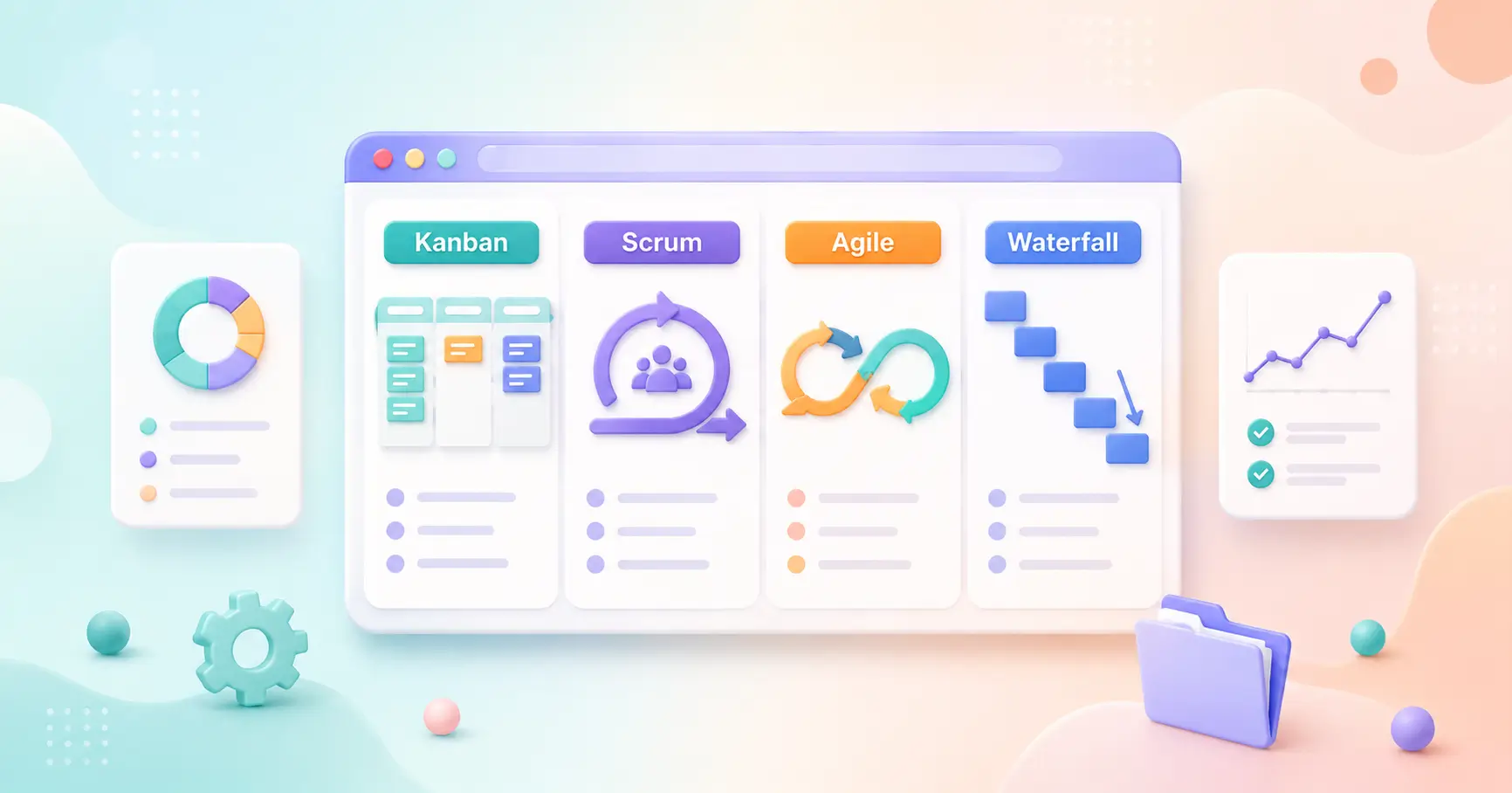
Every project moves through the same basic arc, plan, execute, and deliver. But not every project can move through that arc the same way, some need a fixed path locked in from day one, others need room to shift once real requirements surface.
That’s the real reason methodologies like Waterfall, Agile, Scrum, and Kanban were built in the first place. Different answers to the same question: how should this particular project actually move from start to finish.
This is that comparison, plain and direct, so you can see where each one fits and choose the one your team actually needs.
Key Takeaways
- Agile is a mindset, not a fixed method. Kanban and Scrum are frameworks that put Agile into practice
- Waterfall is a linear process where each phase finishes before the next one starts
- Scrum organizes work into fixed sprints with set roles like Scrum Master and Product Owner
- Kanban uses a visual board and continuous flow, with no sprints
- “Agile vs Scrum” is the wrong question, since Scrum is one way of doing Agile
Kanban vs Scrum vs Agile vs Waterfall: Quick Comparison
Here is the fast side-by-side before we go section by section:
| Methodology | Core Idea | Best For | Work Cadence | Flexibility |
|---|---|---|---|---|
| Kanban | Agile framework using continuous flow | Teams with variable or ongoing work | No fixed cycle | High |
| Scrum | Agile framework using fixed sprints | Teams that want structure and predictability | 2 to 4-week sprints | Medium |
| Agile | Iterative delivery with continuous feedback | Projects with changing requirements | Short, repeated cycles | High |
| Waterfall | Sequential phases, one after another | Fixed-scope projects with stable requirements | One long timeline | Low |
Understanding Kanban, Scrum, Agile, and Waterfall in Project Management
Here’s what each methodology actually means, where it fits, and where it tends to fall apart.
Kanban: Agile as continuous flow
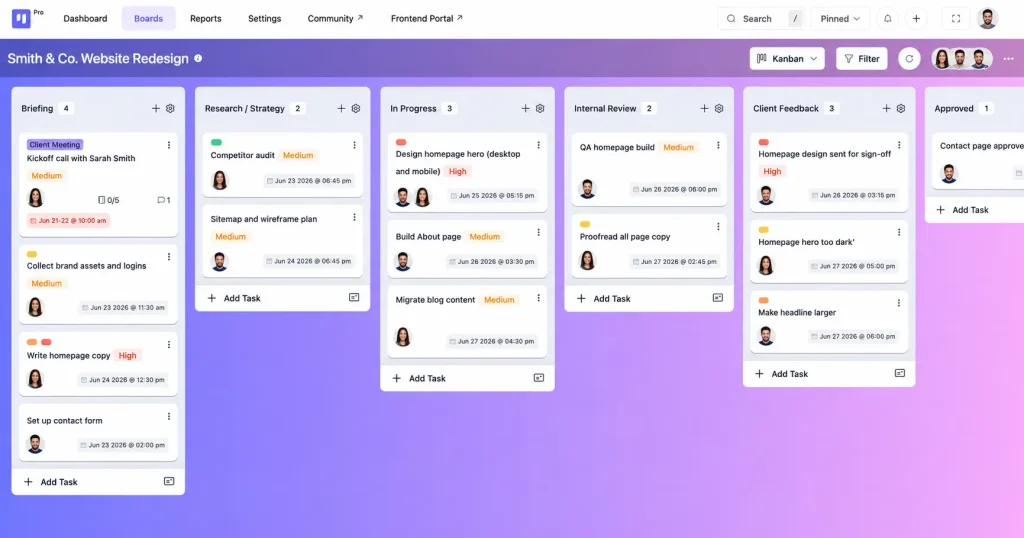
Kanban strips away the fixed sprints and defined roles. Work simply flows across a visual board from one stage to the next, at whatever pace the team can sustain.
How Kanban works
Kanban moves in stages too, but the team decides what those stages are, not the methodology. Tasks move through columns like To Do, In Progress, and Done, or whatever actually matches the work. There is no sprint calendar and no required roles, just a continuous stream of work with limits on how many tasks can sit in progress at once.
Three practices define Kanban:
- Visualize the work, usually on a board with cards representing each task
- Limit work in progress, often called a WIP limit, so the team is not juggling too much at once
- Manage flow, by watching how quickly tasks move from start to finish and fixing bottlenecks as they appear
Advantages and Disadvantages of Kanban
| Advantages | Disadvantages |
|---|---|
| Easiest to adopt with no process overhaul | Tasks can stall without sprint checkpoints |
| Handles unpredictable, ongoing work well | Harder to forecast exactly when work will finish |
| Provides an instant visual snapshot of task status | Can become cluttered without work-in-progress limits |
| No fixed roles, so teams can start immediately | Offers less formal accountability than Scrum |
Scrum: Agile in sprints
Scrum takes the Agile mindset and wraps it in real structure. It is the most role-heavy and meeting-heavy of the four approaches.
How Scrum works
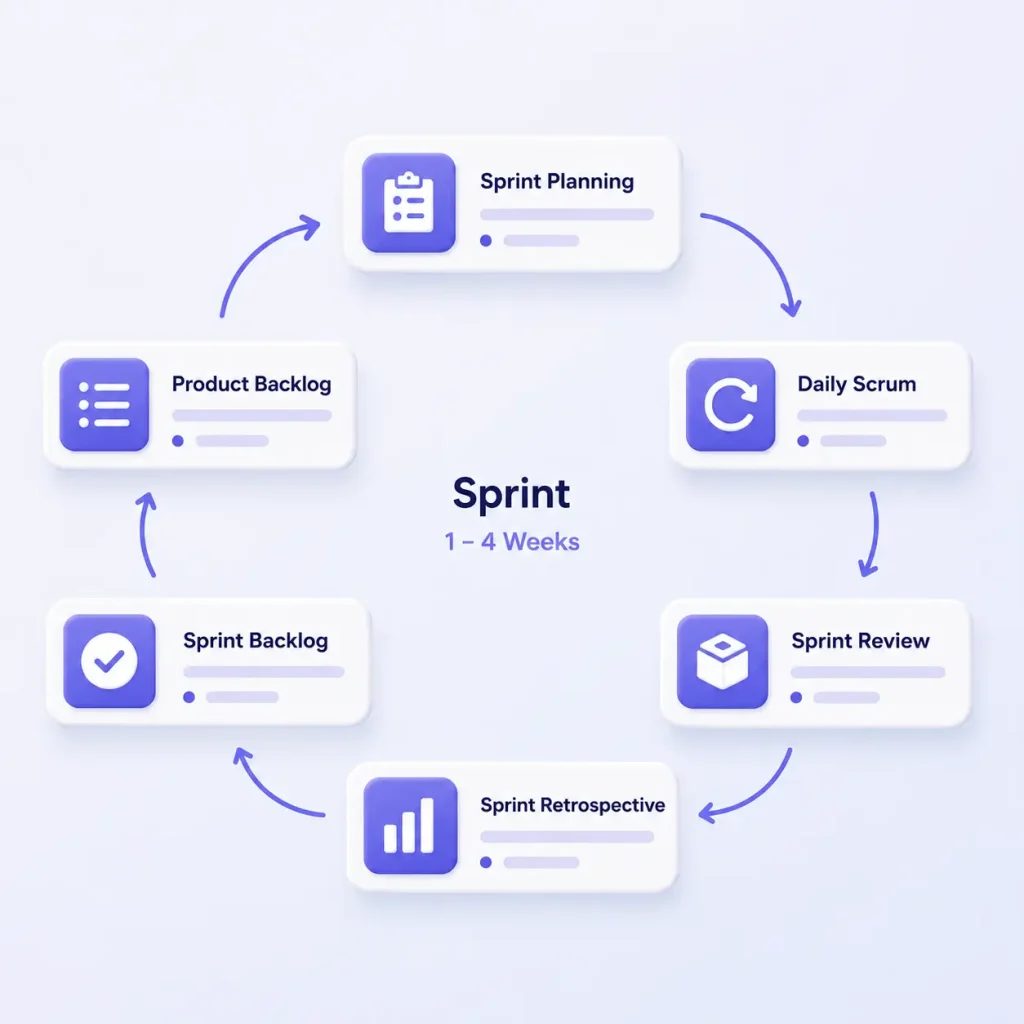
Work is organized into fixed-length sprints, usually two to four weeks. Each sprint follows the same rhythm: sprint planning, daily stand-ups, a sprint review, and a retrospective at the end.
Scrum also defines specific roles that do not exist in the other three methods:
- The Product Owner, who prioritizes what gets built
- The Scrum Master, who removes blockers and keeps the process on track
- The development team, who does the actual work inside each sprint
Advantages and Disadvantages of Scrum
| Advantages | Disadvantages |
|---|---|
| Regular checkpoints catch problems early | Ceremonies take real discipline to run well |
| Clear roles create accountability | Can end up planned like Waterfall underneath |
| Predictable sprint cadence for planning | Rigid sprints don’t fit all types of work |
| Built-in continuous improvement in each cycle | Needs a trained Scrum Master, adding overhead |
Agile: The iterative mindset
Agile is not a single method you install and follow. It is a set of values built around adapting to change instead of locking in a plan from day one.
How Agile works
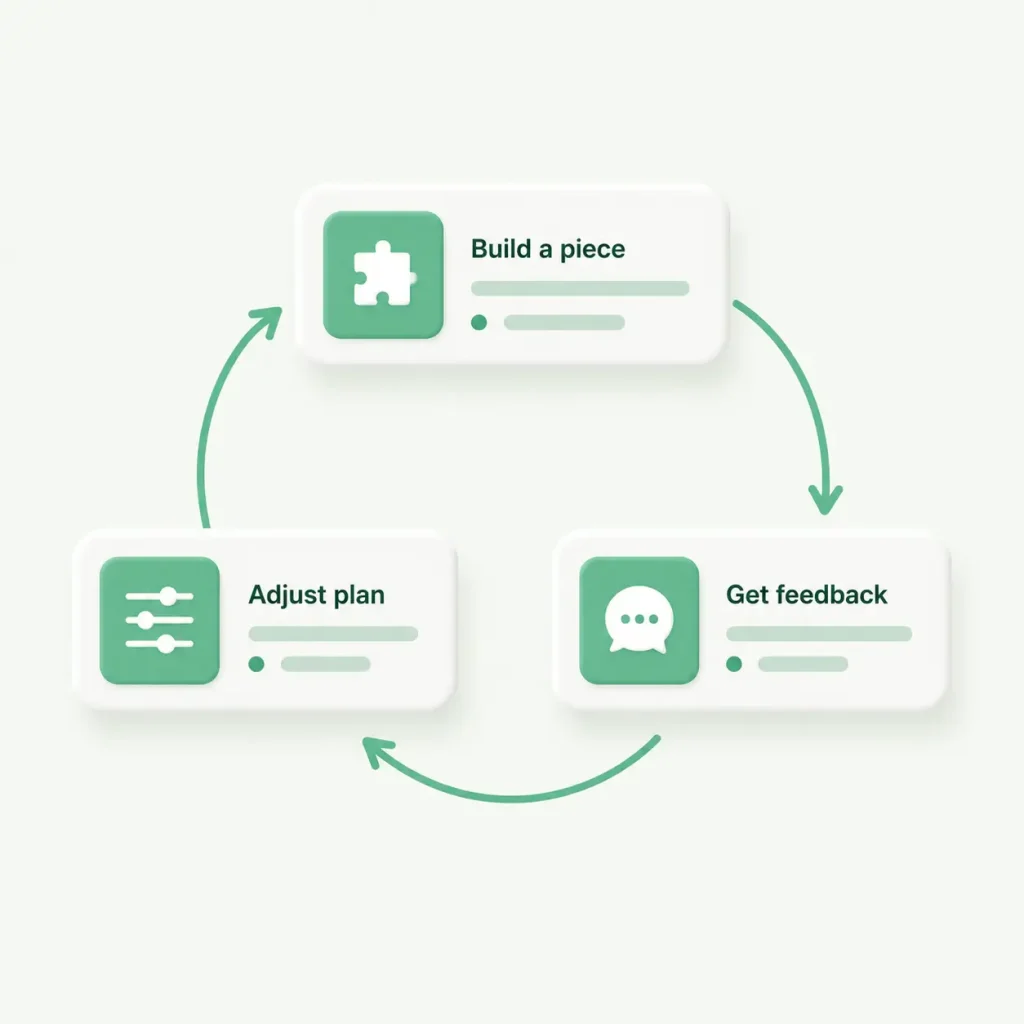
Instead of one long sequence, Agile breaks work into short, repeated cycles. A team builds a small piece of the project, gets feedback, and adjusts before starting the next piece. This keeps the plan flexible for the entire life of the project.
The four core Agile values are straightforward:
- Individuals and interactions over rigid processes and tools
- Working results over exhaustive documentation
- Collaboration with the client over locked-in contracts
- Responding to change over sticking to the original plan
Agile runs on feedback, so it only helps if that feedback actually reaches the team instead of getting lost in email threads. If that’s a recurring pain point, here’s how to manage client feedback without losing track of requests.
Advantages and Disadvantages of Agile
| Advantages | Disadvantages |
|---|---|
| Adapts easily to changing requirements | Hard to set a firm budget or deadline upfront |
| Clients see working results early and often | Scope can creep quietly without discipline |
| Encourages closer team-client collaboration | Needs a client willing to stay engaged |
| Lowers the risk of building the wrong thing | Can feel unstructured to teams used to a fixed plan |
Waterfall: The sequential approach
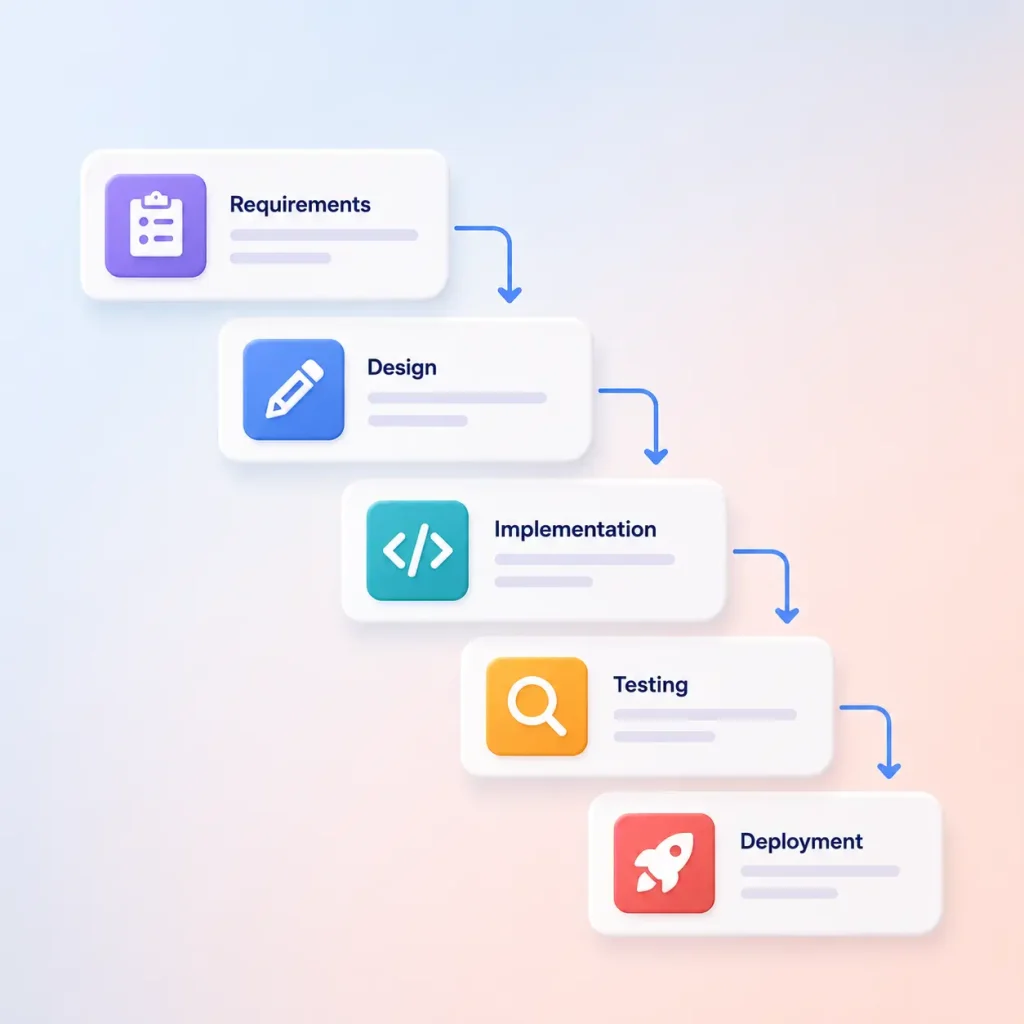
Waterfall is the oldest of the four approaches. It treats a project like a series of steps flowing downward, where each phase must complete before the next one begins.
How Waterfall works
Waterfall moves in one direction only, forward through a fixed set of phases, with no built-in point to circle back once a phase is done. A typical Waterfall project moves through five stages in order:
- Requirements gathering, where the full scope is defined upfront
- Design, where the solution is planned in detail
- Implementation, where the actual work happens
- Testing, where the finished output is verified
- Deployment and maintenance, where the project goes live
Advantages and Disadvantages of Waterfall
| Advantages | Disadvantages |
|---|---|
| Easy to explain to clients | Cannot absorb change once the project has started |
| Predictable timeline and budget | Problems surface late, when they are costly |
| Few meetings once the plan is approved | No working result until near the end |
| Simple for teams new to formal project management | Needs an accurate scope from day one |
Kanban vs Scrum vs Agile vs Waterfall: The Key Differences, Head to Head
Here is how Kanban, Scrum, Agile, and Waterfall actually compare-
Scrum vs Kanban: structure or flow
This is the most confused pair, because both are Agile and both commonly use a board. The real difference is how work is timed and who runs it.
Scrum is time-boxed. Work happens in fixed sprints, usually two to four weeks. Each sprint has defined roles and a set rhythm: planning at the start, a review and retrospective at the end. When a sprint closes, the team has a finished, shippable chunk of work.
Kanban has no fixed cycle and no required roles. Work flows continuously across the board. The only real rule is a limit on how much can sit in progress at once.
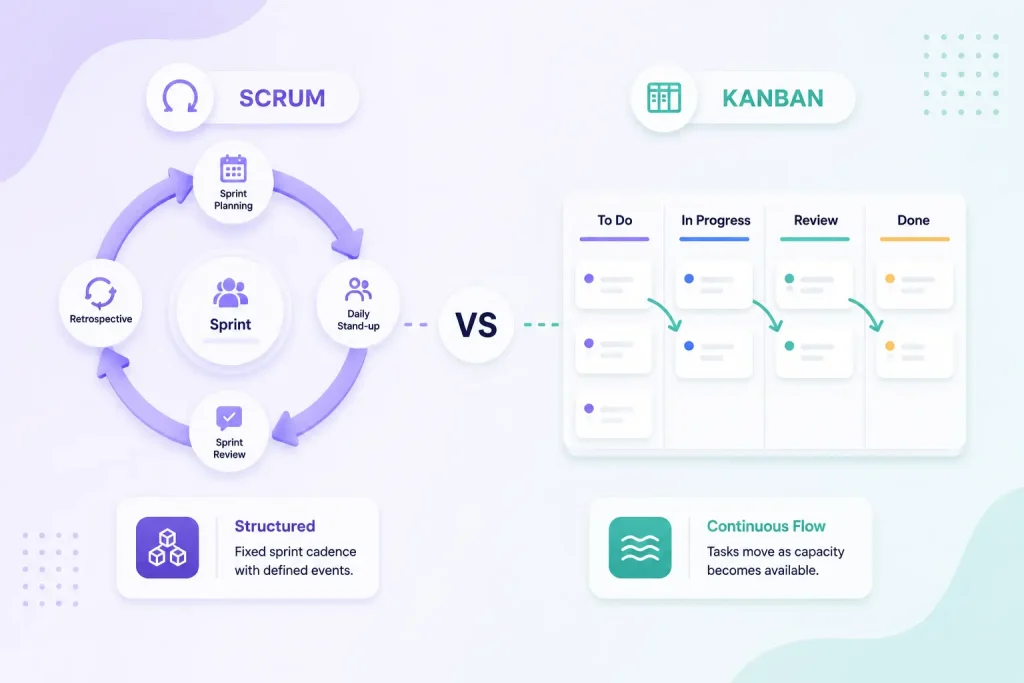
Scrum is more defined, with rules, roles, and ceremonies built in. Kanban is lighter, and you can lay it over a process you already run without changing much.
One thing worth knowing: many teams run Scrum on a Kanban-style board. That is still Scrum underneath, since the sprints and roles are what make it Scrum, not the board.
Agile vs Waterfall: iterative or sequential
This is the biggest divide of the four. It is a difference in philosophy, not just process.
Waterfall plans everything upfront. Every requirement gets locked before real work starts. The project then moves through its stages in order, one at a time, like a checklist.
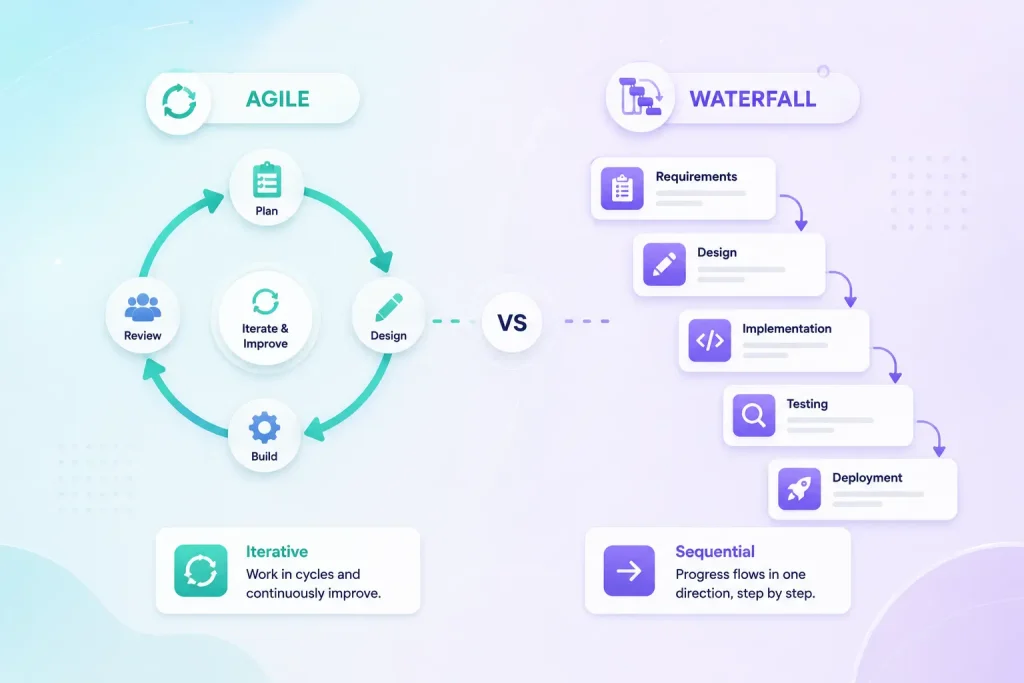
Agile plans a little, builds, learns, and adjusts. The team ships a small piece, sees how it lands, and lets that response shape what comes next.
Waterfall bets that you know the full scope on day one. Agile bets you will learn things you could not have known upfront, and that flexibility is worth more than a locked plan.
Agile vs Scrum: why this one is a trick question
Here is the clarification that clears up most of the confusion in this whole topic: Agile vs Scrum is not really a versus at all.
Agile is the mindset. Scrum is one framework for practicing it, built on Agile’s values.
Asking “Agile or Scrum” is a bit like asking “vehicle or car.” You can be Agile without Scrum. Plenty of teams are, just by keeping projects small, naming one clear owner, and holding regular check-ins.
But you cannot run Scrum without being Agile. Scrum’s short cycles, constant feedback, and willingness to adjust all come directly from Agile values.
So if someone on your team asks whether to go Agile or Scrum, the real question is different. It is whether Scrum’s structure fits how you work, or whether a lighter approach like Kanban is the better match.
How to Choose the Right Methodology for Your Team
There is no single best answer. The right fit depends on how your team works and how much your projects are likely to change. This quick flow gets you close:
In short:
- Choose Kanban if your work is ongoing, variable, or split across several projects at once
- Choose Scrum if your team wants structure and has a backlog worth planning against
- Start with plain Agile principles if your team is not ready for a full framework and wants to begin small
- Choose Waterfall if your requirements are locked and the client expects a fixed timeline
Agencies running several client projects at once tend to lean toward Kanban, since it handles overlapping, unpredictable work without forcing a sprint calendar onto every client.
Run Kanban Inside WordPress
Set up a free FluentBoards board and move tasks through stages
Frequently Asked Questions
Is Kanban a type of Agile, or is it separate from it?
Kanban is a specific Agile framework, not a separate methodology. It follows Agile’s core idea of continuous improvement, just without sprints or fixed roles.
Can you combine Scrum and Kanban?
Yes, teams sometimes blend the two into an approach often called Scrumban. It borrows Scrum’s planning cadence and Kanban’s visual flow, though it is worth mastering one framework fully before mixing them.
Is Agile always better than Waterfall?
No. Waterfall still works well for teams with fixed requirements and a small, well-defined scope, where a sequential timeline is an advantage rather than a limitation.
What is the biggest difference between Kanban and Scrum?
Scrum delivers work in fixed sprints with defined roles. Kanban has no fixed cycle and no required roles, just continuous flow with limits on work in progress.
Which methodology works best for a small team?
Kanban is usually the easiest starting point for small teams, since it requires no dedicated roles and can be adopted without retraining the whole team on new ceremonies.
Start With the Method That Fits Your Team
None of these four is universally better. The right one depends on how predictable your work is and how much structure your team wants. If your projects involve steady, overlapping work, Kanban is usually the easiest place to start.
Pick the methodology that matches how your team already works, then give it a real tool to live in. If Kanban’s visual, no-sprints approach fits, see how FluentBoards features support it and try it on your next project.

Hi there! I’m Mahjabin, a content writer at WPManageNinja. I write about project management and love helping teams find smarter solutions to everyday work challenges.
-
10 Best jQuery Table Plugins for Best Data Visualization in 2026
Discover the 10 best jQuery table plugins for 2026. Compare -

Black Friday Marketing Strategies for 2026: Core and Advance Move
Black Friday is the most celebrated shopping season worldwide. Discover -
How Much Can You Earn With Amazon Affiliate Marketing? Rates & Niches
How much can you earn with Amazon affiliate marketing? Dive



Leave a Reply
You must be logged in to post a comment.