

Types of Online Communities to Help Scale Your eCommerce Store
Every store owner reaches the same point eventually. Sales come in, but they do so more slowly than the ad spend justifies. Customers buy once, and most of them never come back.
That’s when you start looking for something ads can’t buy. People who stick around, talk about your product, and bring in more people without being asked.
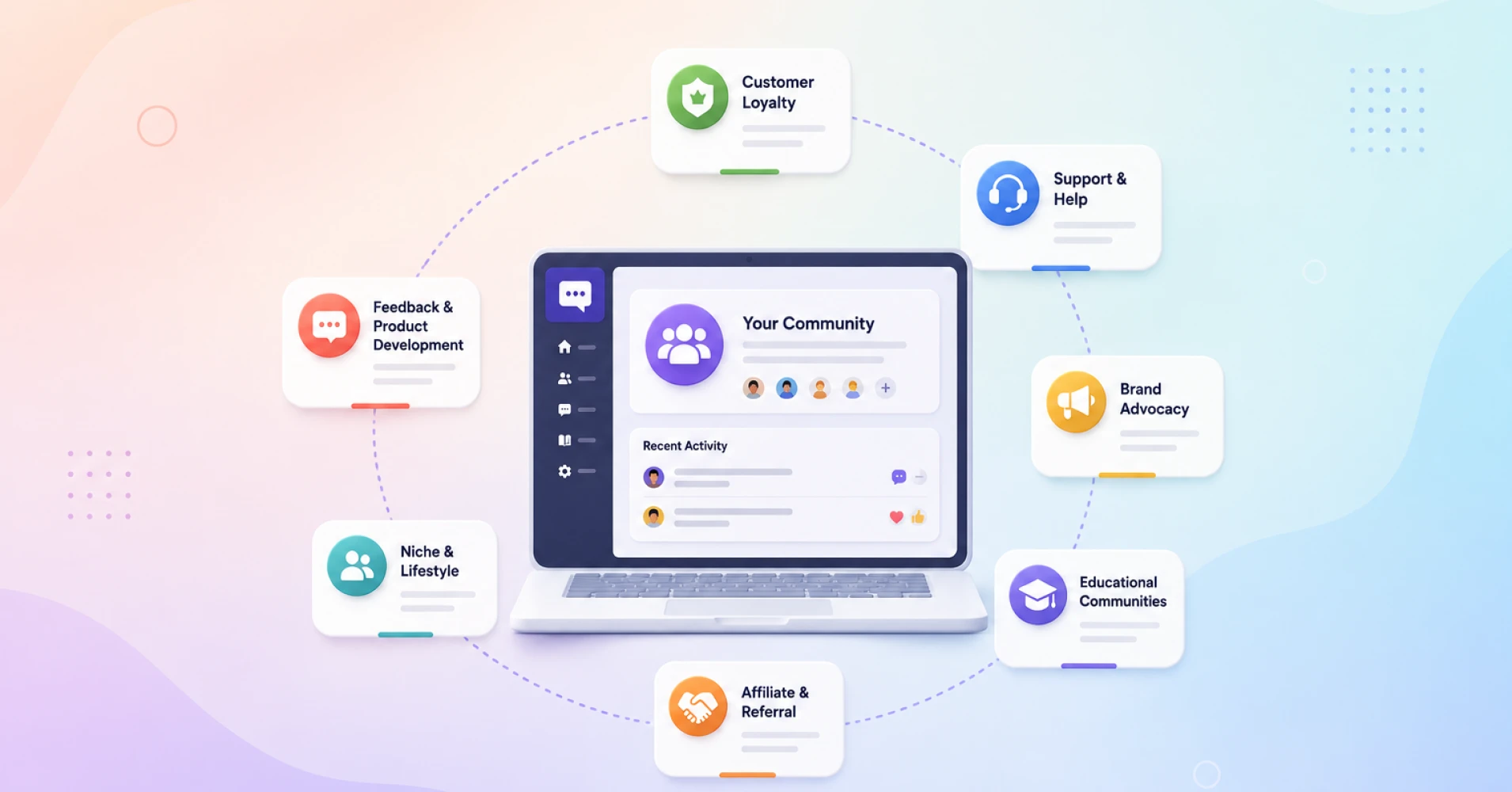
That something is a community. However, “build a community” is vague advice on its own, because online communities aren’t one thing. A support forum solves a different problem than a VIP loyalty group, and a beta-testing space serves a different purpose than a group built around a shared lifestyle. Picking the wrong type wastes months of effort on the wrong kind of engagement.
This post walks through the types of online communities that actually help an eCommerce store scale, what each one is built to do, and how to tell which one fits where your store is right now. You don’t need all of them at once. Most stores start with one and add more as the customer base grows.
Key Takeaways
- Choose the right community for your current challenge. Focus on the type that solves your biggest growth bottleneck, whether that’s retention, support, product feedback, or referrals.
- Start with one, then expand. Building a single, well-managed community is far more effective than launching multiple communities at once.
- Prioritize value over promotion. Communities thrive when members gain exclusive access, helpful resources, meaningful conversations, or a voice in your brand—not constant sales pitches.
- Think long-term. A strong community increases customer loyalty, encourages word-of-mouth marketing, and creates sustainable growth that goes beyond paid advertising.
Customer Loyalty Communities
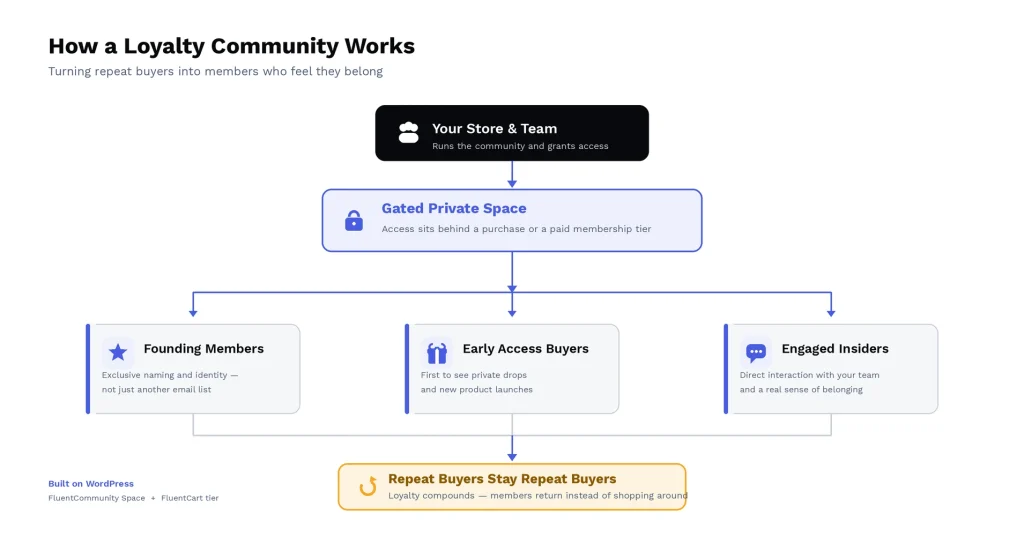
This is usually the first type of community an eCommerce store builds, and for good reason. A loyalty community gives your repeat buyers a reason to stay repeat buyers, instead of shopping around the next time they need something similar.
The format is simple. A private space, gated behind a purchase or a membership tier, where members get early access to new products, private drops, or direct interaction with your team. The exclusivity is the product here, not just the discount.
What makes this work is naming it properly. “Founding Member” or “Inner Circle” carries more weight than “Newsletter Subscribers.” People stay in communities that make them feel like they belong to something, not just another list receiving a sales email.
On WordPress, this is typically built with a private FluentCommunity Space linked to a paid tier through FluentCart, so access is granted and revoked automatically based on purchase status.
Support and Help Communities
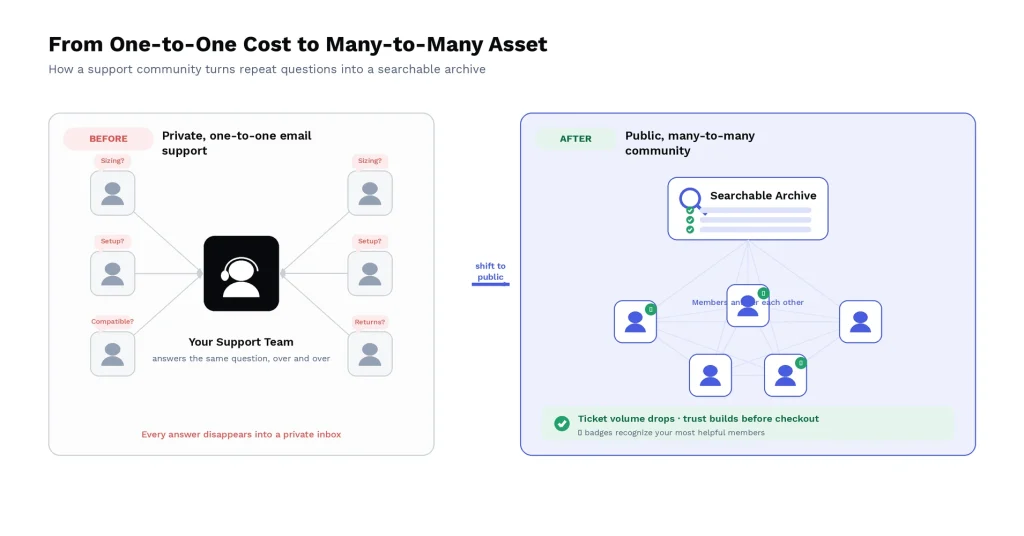
Once loyalty is in place, support is often the next natural type to build. A support community shifts customer service from a private, one-to-one cost into a public, many-to-many asset. Instead of your team answering the same question fifty times over email, members answer each other, and every solved thread becomes a resource the next customer finds through search.
This matters more for eCommerce than most other businesses, because product questions repeat constantly: sizing, compatibility, setup, troubleshooting. A public “asked and answered” space cuts down ticket volume over time and, in turn, builds trust for people who haven’t bought yet. Seeing quick, real answers before checkout does more for conversion than another testimonial ever will.
Additionally, this type of community takes pressure off your team as it grows. The busier your store gets, the more these threads pile up as a searchable archive, so new customers often find their answer before they ever need to open a ticket.
The trick is keeping this public without compromising privacy. Order-specific issues stay in tickets; general product questions move to the community, where recognizing your most helpful members with a badge or shoutout keeps them answering.
Brand Advocate Communities
Support answers questions. Advocacy creates them. Once members trust your product enough to help each other, some of them are ready to talk about it publicly, and that’s the audience an advocate community is built for.
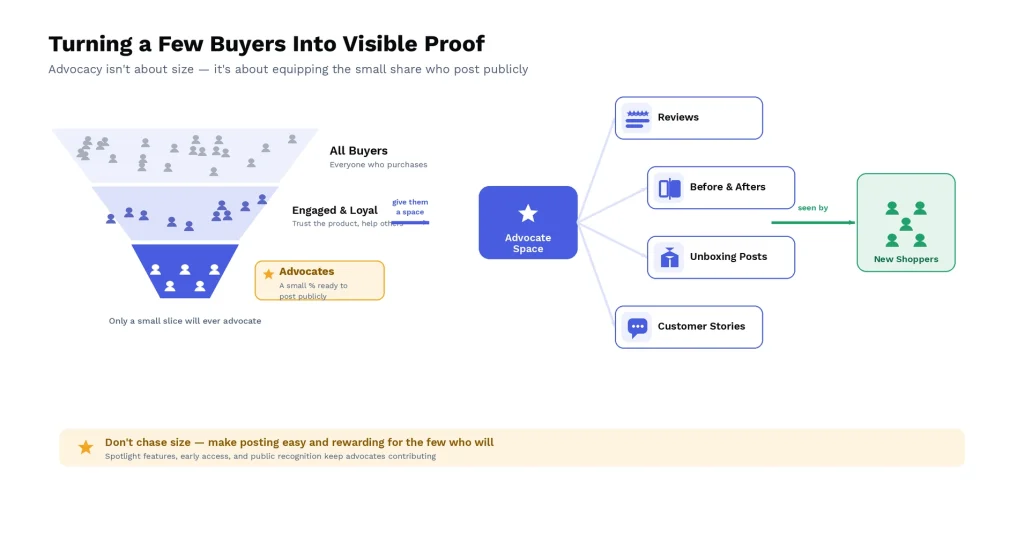
This type of community exists to turn buyers into a visible source of proof: reviews, before-and-afters, unboxing posts, and stories other shoppers can see before they buy. Rather than waiting for reviews to trickle in, you give advocates a dedicated space, a simple prompt to post in, and a reason to keep contributing, whether that’s a spotlight feature, early access, or public recognition.
The mistake most stores make here is treating every buyer like a potential advocate. In reality, only a small percentage of your customers will ever want to post publicly, so the goal isn’t size. It’s making it easy and rewarding for the ones who will.
Feedback and Product Development Communities
Where advocate communities look outward, feedback communities look inward. This type of community exists purely to make your product better, and it does that by giving your most engaged customers a direct line into decisions you’re already making.
A feedback community usually looks like a smaller, gated group where members vote on upcoming features, test early releases before public launch, and see their suggestions acknowledged when something ships. The size stays intentionally small, because the value here is depth of input, not volume of members.
What keeps this community alive is closing the loop. If a member suggests something and it disappears with no response, they stop suggesting. If you ship it and credit them for it, they become one of your most loyal customers, because they now have a stake in the product’s success alongside you.
Educational Communities
Customers who understand how to use your product properly buy more of it, keep it longer, and return fewer orders, which makes education one of the more overlooked growth levers in eCommerce.
An educational community wraps tutorials, walkthroughs, and courses around your product inside a space where customers can ask questions as they go. Instead of a static help page nobody reads until something breaks, learning happens alongside a group of people working through the same material, which keeps people engaged for longer than a one-off video ever could.
This works especially well for products with a real learning curve, such as skincare routines, software tools, or anything assembled or configured after purchase. A short “get started in 7 days” course, paired with a community thread for questions, does more for retention than another discount email.
Niche and Lifestyle Communities
Not every community needs to center on the product directly. Some of the strongest ones form around the lifestyle or interest a product supports, rather than the product itself.
A running shoe brand can build a community around running, not shoes. A coffee brand can build one around home brewing. The product becomes part of a bigger conversation members would have anyway, which means people join for the topic and stay for the brand behind it.
This type takes longer to build trust and requires genuine, non-salesy content to work. That said, it also reaches people who aren’t ready to buy yet. By the time they are, your store is already familiar, not a cold ad.
The tradeoff is patience. A lifestyle community won’t show up in your sales numbers within the first few weeks, and treating it like a sales channel too early tends to drive people away rather than in. Measure it by conversation quality first, and let purchases follow later.
Affiliate and Referral Communities
The last type turns your existing customers into a distribution channel, without asking them to become salespeople. A referral community works best when it’s built around a small group of engaged affiliates or partners who already talk about your product, rather than opening it up to everyone.
Give them a dedicated space to share what’s working, access to new products before launch, and a clear, trackable referral program, using something like FluentAffiliate, so credit and payouts are automatic.
Timing matters more than the reward structure. A referral ask lands better right after a customer has had a good experience with your product than at signup, when they haven’t experienced anything worth recommending yet.
Which Type Should You Start With?
You don’t need all seven types running at once, and trying to launch them together usually means none of them get the attention actually to work. Start with the type that solves your most pressing problem right now.
If repeat purchases are low, start with a loyalty community. When support tickets are piling up, start with a help community. If you’re about to launch new products and want fewer guesses, start with a feedback community.
As your customer base grows, the types compound. Loyalty members become advocates. Advocates become affiliates. Meanwhile, customers who learn from your educational content are often the same ones answering questions in support threads. What starts as one small space usually grows into several, each solving a different problem, but all built around the same group of people who already trust your store.
Ultimately, the store that ends up ahead in a few years won’t be the one with the biggest ad budget. It’ll be the one where customers stuck around long enough to bring the next ones in.

My full name is Anzuman Ara Chowdhury. But people know me as Prema Anjum. I’m a Digital Marketer by profession, a WordPress community contributor, and a travel enthusiast by heart.
-
Ecommerce SMS Marketing: Strategies, Examples & Best Practices
Learn ecommerce SMS marketing strategies, campaigns, and best practices to -
10 Best jQuery Table Plugins for Best Data Visualization in 2026
Discover the 10 best jQuery table plugins for 2026. Compare -
Omnichannel Marketing: 7 Steps to a Connected Shopping Experience
It’s never too late to upgrade your marketing plan. Whether

Leave a Reply
You must be logged in to post a comment.