

Real Estate Farming Ideas: How to Become the Go-To Agent in Your Area
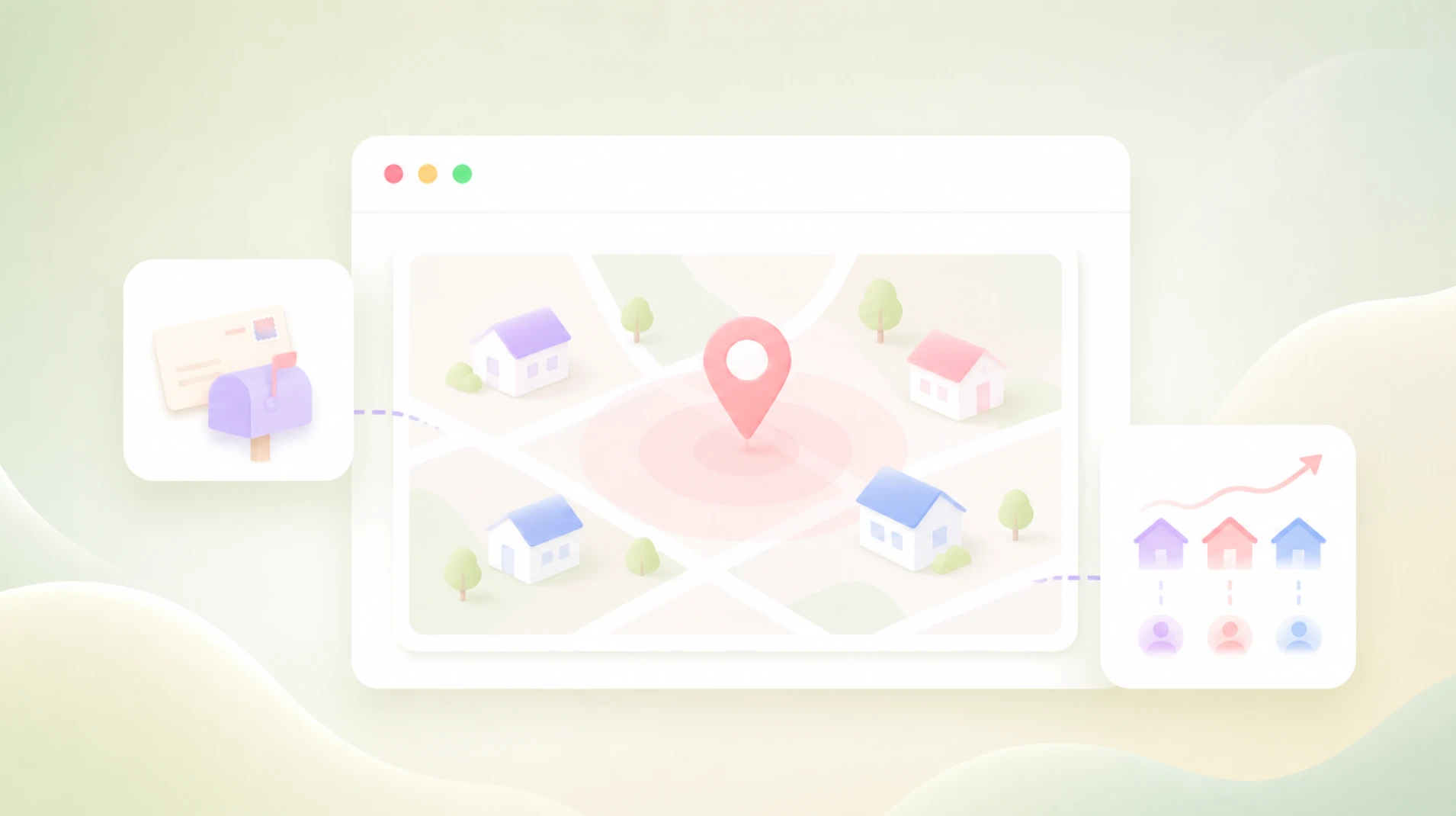
Most agents chase leads. The ones who dominate a market grow them. Real estate geographic farming is how you stop competing for attention and start owning it. This guide covers the strategies, tools, and mindset that turn a chosen neighborhood into a steady, predictable source of listings.
Key Takeaways:
- Geographic farming works through consistent visibility, not one-time campaigns
- Choosing the right farm area is as important as the marketing itself
- Offline and digital strategies work best when they reinforce each other
- Your farm needs a home base online — a dedicated local presence that works around the clock
- Results take 6 to 12 months, but the compounding effect makes it worth every month
What Is Real Estate Geographic Farming?
Geographic farming means picking a specific neighborhood or subdivision and becoming the most recognized, most trusted agent in it. You show up consistently, deliver value regularly, and position yourself so that when anyone in that area thinks about buying or selling, your name is the first one that surfaces.
It is different from chasing individual leads. Instead of hunting, you plant. You invest time and resources into a defined area until the market comes to you.
Why it still works in 2026
Digital advertising has made it easier than ever to reach people. That also means it is easier than ever to be ignored. Geographic farming cuts through because it is local, personal, and repeated. A postcard from a neighbor-agent who just sold three homes on the same street hits differently than a Facebook ad from someone three counties away.
The psychology is simple. Familiarity builds trust. Trust generates listings. Listings build reputation. Reputation attracts more listings. The cycle compounds over time, which is why agents who commit to farming rarely go back to cold prospecting.
Geographic farming vs. demographic farming
Demographic farming targets a type of person (first-time buyers, retirees, investors) across a wide area. Geographic farming targets everyone in a specific place.
For most agents, geographic farming is the more practical starting point. The boundaries are clear, the marketing is tangible, and name recognition builds faster in a contained area.
How to Choose the Right Farm Area
Your farm selection is not a branding decision. It is a business decision. Pick the wrong area and you will spend a year marketing to a neighborhood that does not move.
Analyze turnover rate first
Turnover rate tells you how many homes in an area sell in a given year. The formula is simple: divide annual sales by total homes, then multiply by 100.
A neighborhood with 400 homes and 28 annual sales has a 7% turnover rate.
Target areas with at least 5% annual turnover. Below that, the opportunity is too thin and the wait for your first listing becomes a grind. Areas between 6% and 10% are the sweet spot for new farmers.
Check the competition
Before committing, find out who else is already farming there. Pull the last 12 months of sold listings and look at the listing agents. If one agent holds 30% or more of the market share, that area is already dominated.
Move on. You are looking for a neighborhood where no one has planted a flag yet, or where the current agent is inconsistent.
Match the farm size to your budget
A farm of 200 to 500 homes is the right range for most individual agents. Smaller than 200 and the sample size is too limited to build momentum.
Larger than 500 and your per-home marketing cost becomes hard to sustain before your first commission.
At 300 homes and one mailer per month at $0.75 per piece, you are spending roughly $225 monthly on direct mail alone.
That is manageable. Scale that to 800 homes before you have traction and the math gets painful fast.
Consider natural boundaries
The best farm areas have clear edges. A neighborhood bound by a highway, a school district line, a park, or a major road is easier to own because residents already think of themselves as a distinct community.
That shared identity makes your local-agent positioning land more naturally.
Community-Driven Real Estate Farming Ideas
The offline strategies are where most agents either win or quit. They require consistency and patience, but they build the kind of trust that no digital ad can replicate.
1. Show up before you need anything
The fastest way to fail at farming is to appear only when you want to sell something. The fastest way to succeed is to become a recognizable presence before you ever ask for business.
Walk the neighborhood. Introduce yourself. Attend the HOA meeting. Wave at people from your car. This sounds obvious, but most agents never do it.
Your physical presence is a marketing channel that no algorithm can take from you.
2. Send direct mail that people actually read
Generic postcards with your headshot and a phone number go straight to the recycling bin. Hyper-local market updates get read.
Send a one-page report every month: how many homes sold, what the average price was, how long they sat on the market, and what that means for the homeowner holding the piece of paper.
Make the data about them, not about you. The agent branding is secondary. The local insight is what earns the reader.
3. Host a neighborhood event
A block party, a fall cleanup, a back-to-school drive, events give you a reason to be there that is not transactional. You are not asking for anything. You are giving something.
Keep it simple. A food truck, a bouncy house for kids, a donation table for a local charity. Let the neighborhood associate your name with community investment, not commission checks.
One event per year is enough if the other strategies are running consistently.
4. Knock on doors with a purpose
Door knocking gets a bad reputation because most agents do it wrong. They show up with nothing to offer and a pitch ready to go. Instead, show up with something useful.
Bring your monthly market report. Give a referral for a local contractor. Bring a neighborhood guide you created. Have a conversation, not a script. Ask questions about the neighborhood.
Listen more than you talk. The goal of door knocking is not to sign a listing agreement on the spot. The goal is to be remembered as someone who was genuinely helpful.
5. Run seasonal campaigns
Seasonal touchpoints keep you top of mind without feeling repetitive. A spring home maintenance checklist, a summer neighborhood guide for local events, a holiday card with a personal note, a January market forecast for the year ahead.
Each touchpoint is low-pressure and high-value. When stacked across the year, they create a steady drumbeat of presence that compounds with every month you stay consistent.
6. Get involved in the community
Join the neighborhood Facebook group. Sponsor the local little league team. Volunteer at the school. Support a neighborhood fundraiser.
These are not marketing activities in the traditional sense, but they build the kind of relationship capital that converts to listings years later.
People do business with people they like. Authentic community involvement is the most efficient way to become someone the neighborhood likes.
7. Create a neighborhood competition or challenge
Yard of the month. Best Halloween display. Holiday lighting contest. These work because they give residents something fun to participate in, and they give you a reason to reach out personally to the winners.
You are not just an agent dropping mail. You are the person who organized the thing everyone in the neighborhood talked about. That positioning is hard to replicate and impossible to buy.
Digital Real Estate Farming Strategies
Offline presence builds trust. Digital presence extends your reach and makes you findable when someone finally decides they are ready to move.
1. Create a neighborhood-specific web presence
Your main agent website is too broad to farm effectively. A page or site dedicated to a specific neighborhood, with local market data, community resources, and recent sales, tells search engines and potential sellers exactly who you are and where you operate.
When someone types “homes for sale in [neighborhood name]” or “best agent in [subdivision],” your dedicated local presence is what gets found. This is the digital anchor for your entire farming strategy.
The next post in this series covers exactly how to build this in WordPress without needing a developer.
2. Claim and optimize your Google Business Profile
Search for real estate agents in any city and the Google Business Profile results appear before anything else. Claim yours, fill it out completely, and optimize it for your farm area.
Use the neighborhood name in your business description. Add photos from the area. Collect reviews from past clients on the farm.
A complete, active Google Business Profile makes you visible to people who do not already know your name, which is most of the neighborhood when you are just starting out.
3. Build an email list and send local market updates
Email is still the highest-ROI channel in real estate. Every person whose email address you collect in your farm is someone you can reach directly, without paying for ad placement, without competing with anyone else’s content in a feed.
Build the list through your open houses, your door knocking, your events, and your neighborhood website. Then send a monthly market update. Keep it short — five to eight sentences and a few key numbers.
Be consistent. The goal is to be in their inbox every month so that when they are ready to make a move, your name is already there.
Tools like FluentCRM let you manage your contact list, segment leads by neighborhood or interest, and automate your monthly send directly from WordPress.
No separate subscription to a standalone email platform required.
4. Be active in the neighborhood Facebook group
Most neighborhoods have a private Facebook group. Join it as a resident, not as an agent. Contribute to conversations. Answer questions about local contractors, restaurants, or services. Share useful information without pitching yourself.
Over time, you become a trusted voice in the community. When someone posts “does anyone know a good agent?” you will already have the social proof to back up any recommendation.
Do not start the group yourself unless no group exists. Owning the group changes your dynamic from trusted neighbor to administrator, and administrators feel like brands, not people.
5. Create neighborhood video content
Short videos work across YouTube, Instagram, and Facebook. Walk the neighborhood park and talk about what makes the area special.
Review a local restaurant. Do a “living in [neighborhood name]” style video that answers the questions buyers actually ask.
These videos do two things. They make you visible to buyers considering the area, which expands your sphere. And they demonstrate to current residents that you are genuinely invested in showcasing their community.
6. Use targeted digital ads within your farm’s zip code
Paid ads targeted to a specific zip code or radius are budget-friendly when the radius is small. You are not trying to reach everyone in a metro area.
You are trying to stay top of mind with 300 to 500 households. At that scale, even a modest daily budget keeps your name in front of the right people consistently.
Retargeting ads, which follow people who have already visited your neighborhood website, are especially effective. The person who looked at your local market data page is far more likely to be thinking about moving than someone who has never heard of you.
7. Collect and publish local data regularly
Homeowners are curious about their property values. Feed that curiosity. Publish quarterly market reports for your specific farm area. Share them on social media, on your website, and via email.
UseFluent Forms to create a simple “get your home’s value” form that captures contact information in exchange for a personalized report.
Data-driven content positions you as the local expert before anyone has ever spoken to you. It also gives you a steady stream of leads who self-identify as people thinking about their home’s value.
Advanced Farming Strategies Worth Adding After Year One
Once your baseline strategies are running consistently, these additions can accelerate your momentum.
Open house micro-farming
Every open house is a farming opportunity, even if the home is not in your primary farm. Before the event, send postcards to the 50 to 100 nearest neighbors inviting them to see the home.
At the event, collect contact information from every attendee. After the event, send a follow-up with the results: how many people attended, how many offers came in, what it sold for.
This turns a single transaction into a neighborhood marketing campaign. The neighbors who did not attend still see your brand on the postcard. The ones who did attend now have a direct relationship with you.
Just listed and just sold campaigns
Every time you list or sell a home in your farm, announce it to the neighborhood. A postcard with the photo, the list price, and the sale price tells the story in seconds. It is social proof in physical form.
The “just sold” announcement is more powerful than the “just listed” one. It tells the neighborhood what their neighbor’s home was actually worth and signals that you are the agent who got the result.
Do this consistently and your market share numbers will reflect it.
Build a referral network with local businesses
The coffee shop owner, the gym manager, the daycare director, the neighborhood dentist — these people interact with your farm residents daily.
A relationship with them means your name gets mentioned in conversations you will never be part of.
Bring them a small gift. Send them referrals when you can. Refer your clients to them first. Reciprocity is the most underused tool in real estate farming and it costs almost nothing.
How to Build Your Farming Plan Step by Step
A strategy without a schedule is just an idea. Here is how to turn everything above into a working system.
Phase 1 (Months 1 to 3): Claim your ground
Pick your farm, verify the turnover rate and competition, and commit to the area. Set up your Google Business Profile. Launch your first direct mail campaign. Build your neighborhood website or landing page.
Introduce yourself to five to ten neighbors in person each week.
Phase 2 (Months 4 to 6): Build your presence
Start your monthly email list. Begin door knocking with your market update in hand. Join the neighborhood social media group. Host or sponsor your first local event. Collect every email address and phone number you can.
Phase 3 (Months 7 to 12): Convert your relationships
By now, some residents know your name. Follow up with the people who engaged with your content or attended your events. Offer free home valuations. Start asking for referrals. Your first listing in the farm changes the trajectory of everything.
Phase 4 (Year 2 and beyond): Compound your results
A second listing in the farm is easier than the first. A third is easier than the second. Once your market share crosses 10%, the neighborhood starts to self-select you as the obvious agent. Referrals become your primary lead source. Your marketing budget per listing goes down while your results go up.
Common Real Estate Farming Mistakes to Avoid
Even solid strategies fail when execution breaks down. These are the mistakes that kill most farming efforts before they get results.
Starting too large. A 700-home farm sounds impressive, but you cannot touch every home consistently on a solo budget. Start with 200 to 300 homes. Own that area before you expand.
Stopping at month six. Most agents quit around the six-month mark because they have not seen a listing yet. This is exactly when the investment starts to pay off. Results in geographic farming follow a long lag. The market report you sent in month three may generate a listing inquiry in month nine.
Marketing to the farm without listening to it. One-way communication is not farming. It is broadcasting. Ask questions when you knock on doors. Read the neighborhood Facebook group before you post in it. The agents who build real market share know what the neighborhood cares about.
Ignoring digital entirely. Direct mail and door knocking alone leave a massive gap. If someone types your name into Google after receiving your postcard and finds nothing, you have lost them. Your digital presence validates your offline marketing.
Having no dedicated web presence. This one deserves its own mention. A generic agent website is not enough. You need a page or site that is built around your farm, with local data and local content, so search engines connect your name to that specific neighborhood.
Measuring Whether Your Farming Is Working
Before you can improve your results, you need to know what you are measuring.
The leading indicators show up before any listing does:
- Name recognition: are people in the neighborhood starting to recognize you?
- Inquiry rate: are you getting calls or emails from farm residents, even just questions?
- Website traffic: is your neighborhood page getting organic visits?
The lagging indicators confirm that the strategy is working:
- Listings in the farm: how many have you closed this year vs. last?
- Market share: what percentage of total farm sales did you represent?
- Referral source: what percentage of your farm leads came from within the farm itself?
Track these numbers monthly. They tell you whether to stay the course or adjust your approach before another six months pass.
Building Your Online Home Base for the Farm
Every strategy above points back to one thing: you need a dedicated digital home for your farm. Not just a bio page on a brokerage site. A real, local, content-rich web presence that works for you around the clock.
In the next article in this series, we walk through exactly how to build a real estate farming website in WordPress — step by step, without a developer, using tools that handle your forms, your contact database, your community engagement, and your email outreach in one connected system.
If you are ready to put the ideas in this guide into a real system, that next piece is where to go.

WordPress, automation, eCommerce and growth marketing specialist, a Core Contributor and Media Corps member blending storytelling with technology to craft purposeful strategies in SEO, email marketing, and beyond.
-

10 Best jQuery Table Plugins for Best Data Visualization in 2026
Discover the 10 best jQuery table plugins for 2026. Compare -

Black Friday Marketing Strategies for 2026: Core and Advance Move
Black Friday is the most celebrated shopping season worldwide. Discover -

How Much Can You Earn With Amazon Affiliate Marketing? Rates & Niches
How much can you earn with Amazon affiliate marketing? Dive


Leave a Reply
You must be logged in to post a comment.