
Strategies for Community-Driven eCommerce: WordPress Guide
Ad costs keep climbing. Algorithms keep shifting. And yet some online stores grow steadily without pouring money into paid channels every month.
The difference isn’t a better product or a bigger budget. It’s a community.
If you’ve been running an online store for a while, you’ve probably felt this tension. You get customers, but they don’t come back. They don’t refer to friends. They don’t leave reviews unless you beg. The growth you have feels fragile. One bad ad month and revenue dips.
This guide is about fixing that at the root. We’ll walk through what community-driven ecommerce actually means in practice, why it works especially well in 2026, how to choose the right model for your store, and a 10-strategy playbook you can start executing this week, each mapped to real tools if you’re building on WordPress.
What Is Community-Driven eCommerce?
Community-driven eCommerce is about turning customers into active participants in your brand, not just buyers. Instead of focusing only on transactions, businesses create spaces where people share feedback, experiences, and support. It’s not simply running a social group. It’s building real relationships that drive trust, loyalty, and long-term growth for your store.
The Simple Version
Community-driven eCommerce is a growth approach where trust plays the biggest role in driving sales and loyalty. When people feel a sense of belonging, shared identity, and connection with other customers, they naturally trust the brand more. This creates a simple loop: community builds trust, trust leads to purchases, happy customers become advocates, and their recommendations attract more people to the community.
Every interaction a customer has, whether it’s using the product, reading content, getting support, or connecting with other members, strengthens their feeling of belonging. And that sense of belonging builds a level of loyalty that discounts alone can never achieve.
What It’s Not?
It’s not “start a Discord and hope.” A server with 300 members who never talk isn’t a community. It’s a mailing list with a different interface.
Community-driven ecommerce is intentional. It means designing rituals, creating reasons to return, building systems for advocacy, and connecting those systems to your store.
Community Commerce vs. Social Commerce: One Key Distinction

People often confuse social commerce with community-driven commerce, but they are not the same. Social commerce means selling directly on social platforms like Instagram or TikTok, where the platform itself acts as the store.
Community-driven commerce, on the other hand, uses a community to build trust and relationships with customers. The actual purchase can happen anywhere on your website, checkout page, or online store. In this model, the community builds trust, encourages repeat purchases, and drives referrals. Simply put, the community is the foundation, and commerce is the result.
Why It Works in 2026?
In 2026, customers don’t just buy products. They look for brands they can trust and feel connected to. Traditional marketing alone is becoming less effective as people rely more on recommendations, real experiences, and peer opinions. Community-driven eCommerce works because it builds genuine relationships, turning customers into loyal members who repeatedly buy, share feedback, and recommend the brand to others.
The Loyalty Problem With Transactions Alone
Points programs and discount ladders work, to a point. They create transactional loyalty: “I come back because I get something.” But they rarely create emotional loyalty: “I come back because I belong here.”
Harvard Business Review research on community loyalty programs consistently shows that communities outperform pure rewards programs on long-term retention. Members who feel identity-connected to a brand spend more, refer more, and churn less, not because they’re incentivized, but because leaving feels like a social loss.
The Community Flywheel (McKinsey Framework, Adapted)
McKinsey’s community flywheel model outlines five elements that, when working together, create self-reinforcing growth:
- Define your target communities: Not demographics, but shared problems, identities, or aspirations
- Pick your hero products: The one thing people rally around and talk about
- Tell authentic stories: Founder stories, customer wins, behind-the-scenes reality
- Feed the community with content: Education, entertainment, tools, and conversations
- Spur advocates to generate UGC: Make it easy and rewarding to share
When these five elements are firing, each new customer you acquire accelerates growth for the next one. That’s the flywheel.
Why This Matters More Now?
CAC is rising. Meta and Google CPMs are significantly higher than three years ago across most niches. The payback period on paid acquisition keeps getting longer. Trust is the conversion lever. Shoppers in 2026 read reviews, check community threads, and look for social proof before buying. A store with visible, active community signals converts better, even with cold traffic.
Retention is the real ROI. Increasing repeat purchase rate by 10% typically outperforms a 20% increase in new customer acquisition on LTV. Community drives retention.
Choose Your Community Model: Owned vs. Rented
Before you build anything, you need to decide where your community lives. There are two options, and the right answer is usually both, in sequence.
Rented Platforms (Facebook Groups, Discord, Reddit, Slack)
When you use platforms like Facebook, Discord, or Reddit to build a community, you get several advantages. You can reach people quickly, take advantage of existing user habits, and benefit from algorithm-driven discovery without needing to build your own infrastructure. However, there are trade-offs. You don’t fully own your data, you have limited control over branding, and you depend on platform algorithms and rules.
For example, a Facebook Group might suddenly stop appearing in members’ feeds, Discord could change its pricing, or Reddit might restrict or remove a community. In short, you don’t truly own your audience. These platforms work best during the discovery phase, when you’re trying to gain early traction, test your messaging, and find your first core group of engaged members.
Owned Platforms (FluentCommunity + Your Email List + On-Site Proof)
When you build a community on your own platform, you gain full ownership of your data and can create a fully branded experience that matches your business. It also allows a direct connection to your store and CRM, giving members a stronger and more permanent sense of belonging.
The main challenge is that you don’t get automatic distribution, so you need to bring people to the platform yourself. However, this approach works best for long-term retention, engaging high-value members, offering gated content, and linking community activity directly with purchasing behavior.
The Migration Playbook
The smartest move isn’t either/or. It’s a staged approach:
- Start on a rented platform where your audience already is
- Create enough value that members want more
- Offer owned community access as an upgrade (exclusive content, early access, direct founder time)
- Migrate your most engaged members first. They become the culture setters
- Keep the rented space for discovery; make the owned space feel like the inner circle
This “outer ring > inner circle” architecture works because it maps to how people actually build trust with brands over time.
The FluentCart Community Flywheel
Here’s how to take the McKinsey framework and make it native to a WordPress store running on the WPManageNinja stack.
The Three Components
1. Hero Product (FluentCart)
Your FluentCart store is where the transaction happens, but the hero product is what people buy and talk about. For digital product sellers, this might be a flagship course, a plugin bundle, or a signature membership. It’s the thing that earns you a place in someone’s identity.
2. Membership Access (FluentCommunity)
FluentCommunity gives your buyers a place to land after purchase. Gated spaces, exclusive content, members-only posts, community challenges, leaderboards, these create the rituals that turn a one-time buyer into a regular participant.
3. Lifecycle Automation (FluentCRM)
FluentCRM connects purchase behavior to community behavior. New buyer > automated welcome sequence > community onboarding > activation milestone > advocacy trigger. Without automation, you’re relying on memory and manual effort. With it, the flywheel runs itself.
Top 10 Best Strategies for Community-Driven eCommerce
Building a thriving community around your brand can transform the way you sell products. But growing a community that actually drives trust, repeat purchases, and referrals takes more than good intentions.
These top 10 strategies for community-driven eCommerce show you practical ways to engage members, foster loyalty, and turn your community into a powerful growth engine.
Strategy 1: Build a Membership Identity, Not Just a Discount Club
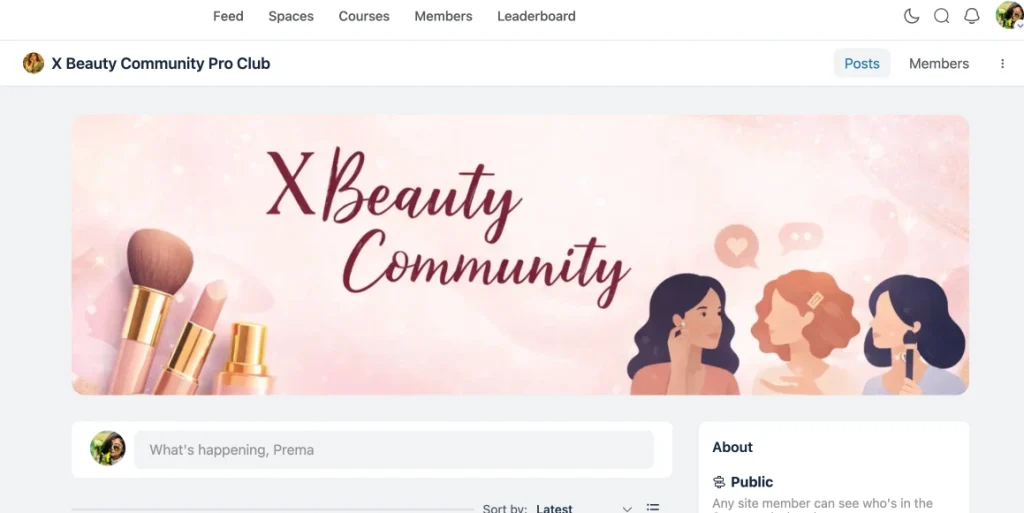
At first, give buyers a sense that they’re members of something with perks that feel like status, not just percentage-off coupons.
How to execute:
- Create a named membership tier (e.g., “Founding Member,” “Inner Circle,” “Pro Club”)
- Offer early access to new products, behind-the-scenes updates, and private drops before public launch
- Communicate this identity consistently in emails, community posts, and thank-you pages
- Design an onboarding moment that makes the new member feel the identity (“Welcome to the inner circle, here’s what that means for you”)
What to measure: New member activation rate (completed onboarding), membership retention at 90 days, survey on “do you consider yourself a member?” at 30 days
Tool mapping: FluentCommunity (gated spaces, member profiles) + FluentCart (access control, gated product delivery)
Strategy 2: Design Rituals That Repeat Weekly
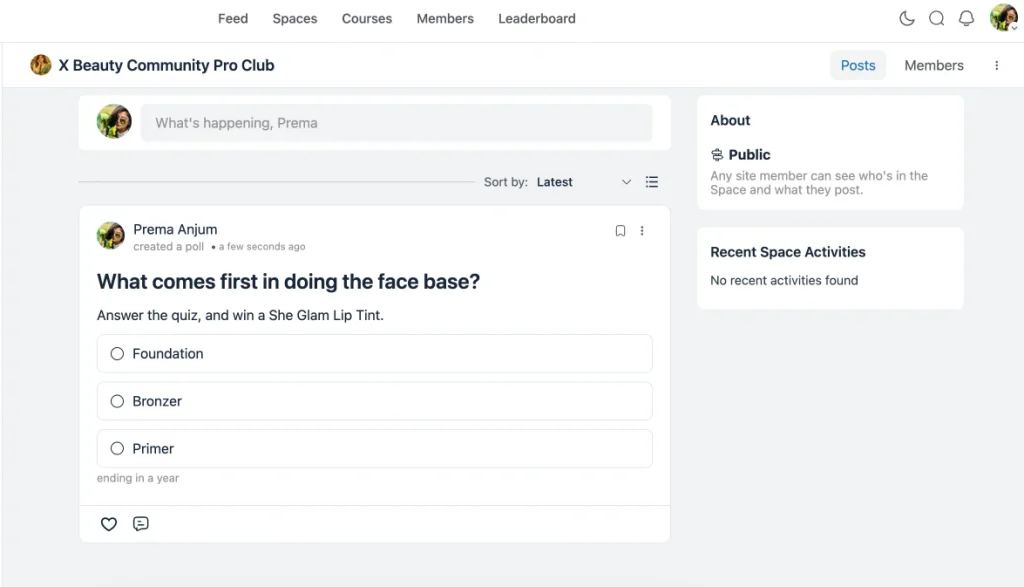
This is about recurring, predictable community moments that give members a reason to show up every week, not just when they have a problem.
How to execute:
- Pick one or two rituals that fit your audience: Office Hours (live Q&A), Feedback Fridays (submit your project for review), Monday Wins (share a recent win), Monthly Community Drop (exclusive product or content release)
- Announce them consistently on the same day/time
- Involve members in running them (ask community champions to co-host)
- Reference past rituals in new member onboarding (“Every Friday, we do…”) so new members feel the culture immediately
What to measure: Weekly active members, attendance/participation rate per ritual, posts triggered by ritual prompts
Tool mapping: FluentCommunity (posts, spaces, event threads) + FluentCRM (automated ritual reminder sequences)
Strategy 3: Systemize UGC (Turn Fans Into Content Creators)
Stop waiting for reviews to appear naturally. Create a system that makes it easy, rewarding, and fun for customers to share their experiences. Start by defining UGC prompts like “Show us how you use [product],” “What changed for you in 30 days?” or a “Before/after screenshot challenge.”
Build a simple post template that members can copy and customize, and create a dedicated community space to showcase wins and results, giving prospective members social proof.
Reward sharing with status perks such as “Community Spotlight” badges, homepage features, or newsletter shoutouts, rather than only discounts. Use FluentCRM to automate UGC requests, sending messages after key purchase milestones to encourage members at the right time. Then, display these submissions on your store pages using embeds, screenshots, or feed tools like WPSocialNinja to highlight member content and build trust.
Measure success by tracking UGC submissions per month, the conversion rate influenced by embedded UGC, and how often members share content externally.
Strategy 4: Community-Led Product Development
Involve your community in deciding what you build next. This does two things: you make better products, and your members feel ownership over what you create.
How to execute:
- Run polls before major product decisions (“Which feature do you want us to prioritize?”)
- Create a beta group channel in FluentCommunity for pre-release testing
- Publish a public roadmap (even rough) and update it based on community votes
- Close the loop: when a community-suggested feature ships, announce it with credit (“You asked for this, it’s here”)
- Hold a quarterly “roadmap reveal” as a community event
What to measure: Poll participation rate, beta group engagement, conversion lift on launches that had a community preview.
Tool mapping: FluentForms (polls, feature request forms, beta signup forms) + FluentCommunity (beta group spaces, roadmap discussion threads)
Strategy 5: Segment by Intent, Not Demographics
Most stores segment by who their customers are (location, age, company size). The better approach is segmenting by where they are in the journey and communicating accordingly.
How to execute:
- Define four intent stages: New (just purchased, not yet activated), Activated (used the product, seen value), Power User (regular usage, high engagement), Advocate (refers others, posts UGC)
- Tag each customer in FluentCRM as they hit stage milestones
- Build separate automation sequences for each stage, different goals, different CTAs
- New > activate; Activated > deepen; Power User > recognize and equip; Advocate > reward and amplify
- Don’t pitch advocacy to someone who hasn’t activated yet. Don’t send activation tips to someone who’s already a power user.
What to measure: Stage progression rate (% moving from New > Activated within 14 days), advocate conversion rate, LTV by stage
Tool mapping: FluentCRM (tagging, segmentation, stage-based automation sequences)
Strategy 6: Turn Customer Education Into Conversion
Customers who know how to use your product get more value from it, buy more, and stay longer. Education is retention, and often your best sales tool.
How to execute:
- Create short product walkthroughs (video + written) for your most valuable features
- Build a mini-course for new buyers: “Get started with [Product] in 7 days”
- Host live demos as community events, open to prospects as well as existing members
- Gate advanced education content inside FluentCommunity to give members a reason to participate
- Deliver education through FluentCRM sequences triggered by product usage or milestone events
What to measure: Course completion rate, support ticket volume (education reduces tickets), conversion rate of demo attendees
Tool mapping: FluentPlayer (host and deliver video education content) + FluentCart (sell premium course access) + FluentCRM (drip education sequences)
Strategy 7: Make Support Public (Selectively) and Community-Powered
Most support happens in private. Some of it, the answers to common questions, is enormously valuable publicly. When customers see others getting helped fast, it builds purchase confidence.
How to execute:
- Create a public “asked & answered” thread format in FluentCommunity for frequently asked questions
- Train your support team to post solution summaries in the community after resolving recurring issues
- Enable community members to answer questions for each other, recognize and reward the best helpers with “Community Expert” badges
- Don’t make all support public. DM/ticket flows stay private. Only surface answers that would genuinely help others.
- Link from store product pages to relevant community threads (“See how other members use this”)
What to measure: Community answer rate (% of questions answered by members, not just staff), ticket volume trend over time, pre-purchase engagement with Q&A threads
Tool mapping: FluentSupport (ticket management, internal workflows) + FluentCommunity (public Q&A spaces, expert recognition)
Strategy 8: Create Referral Moments, Not Referral Spam
Most referral programs fail because they ask for referrals too early, too bluntly, or too often. The fix is to trigger referral asks at the exact moment a customer experiences peak satisfaction.
How to execute:
- Map your “aha moments,” the specific interactions where customers feel the product clicked (first successful campaign sent, first sale made, etc.)
- Trigger referral invitations only after those activation milestones, not at signup
- Frame it as “share this with someone who’d love it, “not “give us your contacts.”
- Create a tiered structure: small reward for first referral, escalating rewards for consistent advocates
- Feature top referrers in the community (public leaderboard, monthly shoutout)
What to measure: Referral link click rate, referral conversion rate, % of new customers from referral, advocate repeat referral rate
Tool mapping: FluentAffiliate (referral/affiliate program management) + FluentCRM (milestone triggers for referral asks)
Strategy 9: Run Community Commerce Campaigns

Instead of launching products to your audience, launch products with your community. Members become co-owners of the launch, and the launch becomes a community event.
How to execute:
- Phase your launches in four stages:
1. Community Preview: Share the idea/product with existing members first; collect feedback
2. Waitlist: Open a waitlist that’s community-exclusive before public
3. Launch Day: Announce with member testimonials, community buzz, live event
4. Recap + UGC Showcase: Post-launch roundup featuring community responses, results, screenshots
- Give waitlist members a 24-48-hour head start before public launch
- Create a dedicated community thread for launch day, let the energy build publicly
- After launch, compile a “community launch recap” post showing the collective response
What to measure: Waitlist-to-buyer conversion rate, UGC generated during launch window, launch revenue from community vs. cold traffic
Tool mapping: FluentForms (waitlist signup forms) + FluentCRM (waitlist nurture sequences + launch day automation) + WPSocialNinja (embed UGC from launch)
Strategy 10: Publish a Living “Community Proof” Page
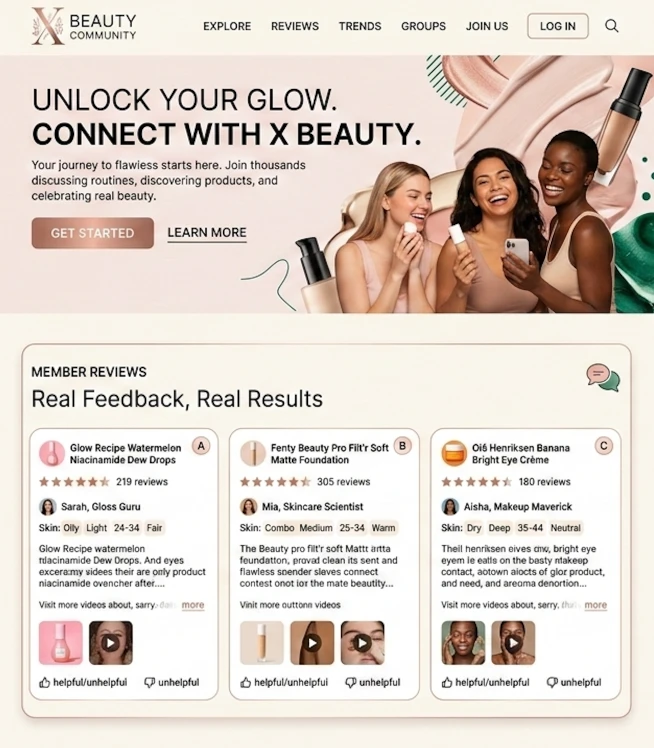
A dedicated page on your store that’s not a static testimonials gallery. It’s a live, updating feed of community activity, customer wins, reviews, and milestones.
How to execute:
- Design a page that combines: recent reviews (auto-pulled via WPSocialNinja), milestone stats (members joined, products sold, community posts), featured community wins (curated monthly), and UGC highlights
- Update the curated wins section monthly, treat it like a community newspaper
- Link to it from product pages, checkout thank-you pages, and welcome emails
- Name it something that reflects belonging: “Community Wins,” “Our Members,” “The [Brand] Community.”
- Include real member names and faces where possible (with permission), this is proof, not decoration
What to measure: Page traffic, time on page, conversion rate of visitors who view the proof page vs. those who don’t, return visits
Tool mapping: Ninja Tables (curate and display community wins + member directories) + WPSocialNinja (live review and social feeds)
Measurement: Proving Community = Revenue
Vanity metrics (follower count, post count, likes) feel good, but don’t tell you if the community is actually moving your business. Here’s a simple scorecard.
Community Health Metrics
| Metric | What It Tells You |
| Monthly Active Members (MAM) | Are people actually showing up? |
| Posts per week | Is the community generating content or just consuming it? |
| Ritual attendance rate | Are weekly touchpoints working? |
| Average response time | Do members feel heard? |
| New member activation rate | Are people completing onboarding and engaging within 7 days? |
Commerce Impact Metrics
| Metric | What It Tells You |
| Repeat purchase rate (90-day) | Community members vs. non-members |
| LTV proxy (12-month revenue per customer) | Community cohort vs. general cohort |
| Referral revenue % | What share of new revenue came from existing members? |
| Conversion lift on proof pages | Do pages with community signals convert better? |
| Churn rate by segment | Do advocates churn less than non-engaged customers? |
The One Note on Vanity Metrics
A community with 5,000 members and 3 posts per week is weaker than a community with 200 members and daily conversations. Don’t optimize for size. Optimize for engagement depth and commerce impact.
Your 30-Day Community Commerce Implementation Plan
You don’t need to build everything at once. Here’s a copy-paste schedule to get your flywheel turning in a month.
Week 1: Define the Promise + Set Up Infrastructure
Start by defining your community’s core promise in a single sentence. Clearly stating who the community is for and the outcome members can expect. Then decide on your platform mix by choosing where you’ll attract new people, and where your core community will live. Set up your FluentCommunity space with your branding, create one or two initial spaces, and publish a welcome onboarding post.
At the same time, build a three-email welcome sequence in FluentCRM to guide new members by introducing the community, explaining what to do first, and encouraging their first interaction. You should also segment your existing customers in FluentCRM by stages such as New, Activated, Power User, and Advocate so you can communicate with them more effectively.
Week 2: Launch Your First Ritual + Seed UGC
Focus on engagement by launching your first community ritual and encouraging user-generated content (UGC). Announce a recurring activity such as Office Hours, Feedback Friday, or Monday Wins so members know when to participate regularly. Post your first UGC prompt inside the community to motivate members to share their experiences, results, or questions.
You can also strengthen your store’s social proof by embedding customer content using WPSocialNinja on your top product pages. Create a simple “Community Proof” page that showcases discussions, testimonials, or highlights from the community, and link it from your store’s navigation. To ensure early engagement, personally invite your 10–20 most active or loyal customers to join and help kickstart conversations.
Week 3: Build Advocacy Triggers + Referral Moment
Your goal is to build advocacy and referrals. Start by identifying your product’s “aha moment”. The point at which customers clearly experience the value of your product. Once you know this moment, create an automation in FluentCRM that sends a referral invitation email when a customer reaches it.
Launch a basic FluentAffiliate program, so your most enthusiastic users can promote your product and earn rewards. Within the community, introduce a simple leaderboard or recognition post that celebrates top contributors and encourages participation. You can also automate requests for testimonials or screenshots after key milestones, turning happy customers into valuable social proof.
Week 4: Run Your First Community Campaign + Publish Proof Roundup
Run your first small community campaign and begin showcasing results. Choose one product and run a mini launch using a simple four-phase structure: preview the idea, open a waitlist, launch the offer, and share a recap afterward. Collect user-generated content from this campaign, such as feedback, screenshots, or testimonials, and embed it on the product page to strengthen trust. Then publish your first “community wins” roundup, highlighting five to ten memorable moments, achievements, or discussions from the month.
Finally, review your metrics from the first three weeks to identify what worked best and what you should focus on in the next month. Set recurring reminders for your community rituals, monthly proof updates, and quarterly roadmap discussions so your community continues to grow and stay active over time.
Your WordPress Stack for Community Commerce
If you’re building this on WordPress, here’s a clean tool mapping:
| You Need | Use This |
| Store engine | FluentCart |
| Community hub (owned) | FluentCommunity |
| Forms, surveys, waitlists, polls | Fluent Forms |
| Lifecycle automation + segmentation | FluentCRM |
| Social proof + UGC embeds | WPSocialNinja |
| Support workflows | Fluent Support |
| Referral + affiliate programs | FluentAffiliate |
| Payment and donation forms | Paymattic |
| Member directories + leaderboards + curated tables | Ninja Tables |
| Video lessons + onboarding content | FluentPlayer |
| Amazon affiliate content (optional) | AzonPress |
Every tool in this stack integrates natively on WordPress. You own your data. There’s no platform tax, no SaaS subscription ratchet, no risk of being deplatformed.
The Bottom Line
Community-driven ecommerce isn’t a tactic you add to an existing strategy. It’s a shift in how you think about customer relationships, from transactional to relational.
The stores that will grow sustainably over the next three years aren’t the ones with the highest ad budgets. They’re the ones with the highest trust. Trust is built through consistency, belonging, education, peer relationships, and authentic proof.
The community flywheel doesn’t replace your paid channels. It reduces your dependence on them. Every new member you activate becomes an asset that compounds, more referrals, more UGC, better conversion on every product page they visit.
Start this week. Pick one ritual. Set up one automation. Get ten existing customers into your community. The flywheel doesn’t need to be perfect. It just needs to start turning.

Hello, This is Prema. I work as a Senior Marketing Strategist at WPManageNinja, and Fluent Forms. Aside from the daily grind, I go to explore nature.
-
How to Sell Videos Online With WordPress (Step by Step) in 2026
Learn how to sell videos online with WordPress using FluentCart -
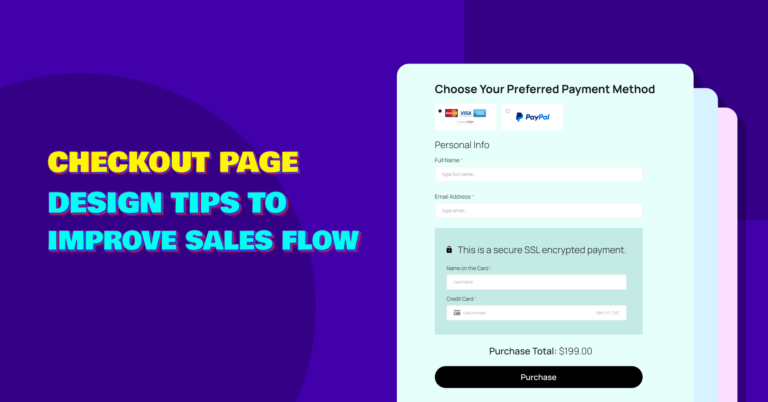
Top 10 Checkout Page Design Tips to Improve Sales Flow
By optimizing your checkout page, you can increase your sales… -
7 Proven Ways to Optimize WooCommerce Product Pages
If you want to know how to optimize WooCommerce product…
Leave a Reply
You must be logged in to post a comment.