

WPManageNinja August 2026 Roundup: Month of Security, AI and Growth
August 2026 was one of the most eventful months at WPManageNinja.
We shipped major product updates, expanded AI and MCP capabilities, reached new adoption milestones, and grew our media presence. At the same time, a serious security incident pushed us to strengthen our release infrastructure and introduce a more robust approach to plugin update security.
This roundup covers the biggest product moves, lessons, milestones, and ecosystem progress that shaped the month.
August at a Glance
There was a lot happening across WPManageNinja this month. Some of the numbers:
- FluentCart crossed 8,000+ active installations
- FluentPlayer crossed 2,000+ active installations roughly a month after its public launch
- 100+ blog resources were published and updated
- 15 resourceful YouTube videos were produced
- 200+ social media resources went live
- WPManageNinja received its YouTube Silver Creator Award
- Dedicated YouTube channels were launched for Fluent Forms, FluentCRM, FluentCart, and FluentCommunity
- Major updates shipped across almost the entire WPManageNinja ecosystem
- MCP connectivity continued expanding across Fluent products
- FluentCart introduced one of its most important migration tools yet
- And most importantly, we introduced a stronger approach to plugin update security with signed releases
There is a lot to unpack.
Security Became the Most Important Work of the Month
We would have preferred August’s biggest story to be a new feature.
Instead, security took center stage.
When the incident surfaced, our immediate responsibility was clear: investigate the affected products, communicate with customers, release clean updates, and reduce the risk for users as quickly as possible.
But fixing the immediate issue was only part of the job.
A security incident can be treated as a patching exercise, or it can be treated as a reason to improve the system behind the software. We chose the second path.
That work led to one of the most important infrastructure improvements we introduced this month: signed plugin updates.
For commercial WordPress plugins, an update package should not simply be downloadable. There should also be a reliable way to verify that the package actually came from the expected source and was not modified somewhere between release and installation.
Signed updates add that verification layer.
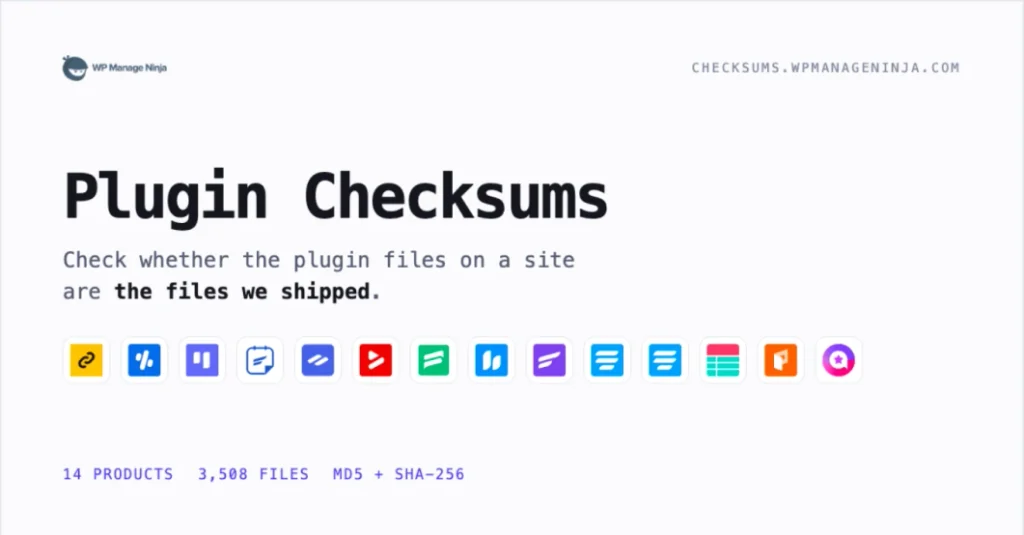
We also started rolling out publicly verifiable checksums for plugin files, giving customers and security researchers another way to confirm that distributed plugin files match the versions officially released by WPManageNinja.
Alongside that work, our teams reviewed permissions, access controls, update flows, package distribution, and other security-sensitive areas across multiple products.
The goal was not to say, “The issue is fixed, let’s move on.”
The goal was to come out of August with a stronger release process than the one we entered it with.
Security will always require continuous work. No responsible software company can claim otherwise. But the changes introduced this month have given WPManageNinja a stronger foundation for how commercial plugin updates are delivered and verified going forward.
FluentCart Reached 8,000+ Active Installations and Removed a Major Barrier to Switching
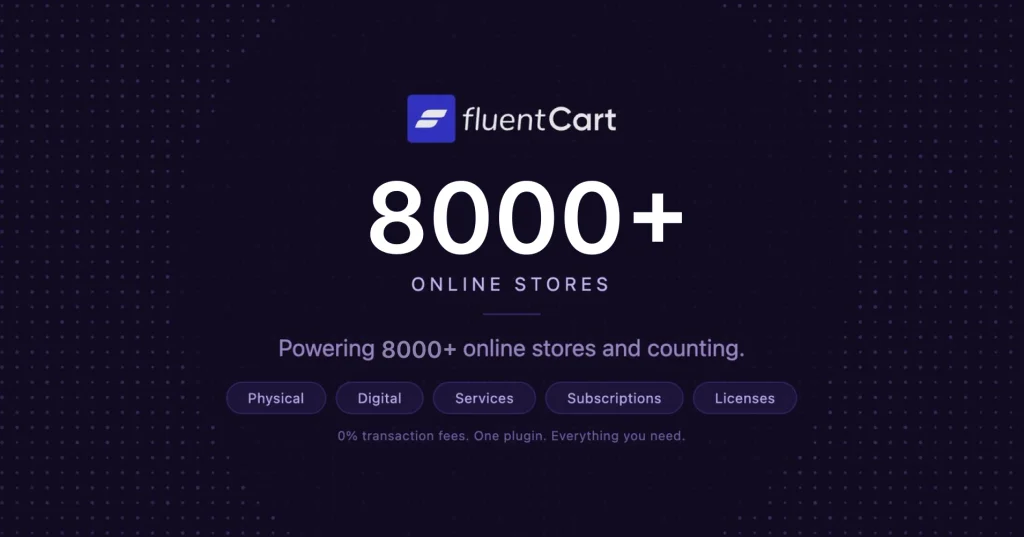
FluentCart continued its steady climb this month and crossed 8,000+ active installations.
For a relatively new eCommerce product competing in one of the most established categories in WordPress, that milestone matters. But the more important FluentCart story in August was not the number itself.
It was migration.
One of the biggest questions we have heard from WooCommerce users interested in FluentCart is simple:
“What happens to everything I already have?”
An established store is not just a list of products. It has customers, orders, coupons, tax data, subscriptions, history, and years of operational information tied to the current platform.
Rebuilding all of that manually is not realistic for most businesses.
That is why the WooCommerce to FluentCart migrator became one of the most significant FluentCart updates we have shipped so far.
The migration system is designed to help store owners move important WooCommerce data into FluentCart without starting from zero. Products, customers, orders, coupons, tax information, subscriptions, and other relevant store data can now be brought across through a much more structured workflow.
This changes the conversation for existing WooCommerce businesses.
Previously, someone could like FluentCart, prefer its interface, or want its performance advantages and still decide against moving because migration looked too complicated. Now there is a practical path.
The rest of FluentCart also continued to mature throughout August. Saved payment methods, failed-renewal notifications, export capabilities, reporting improvements, inventory controls, Divi integrations, and other store-management enhancements all pushed the platform further beyond its initial launch phase.
FluentCart is no longer simply proving that a new WordPress commerce platform can exist.
It is increasingly focused on proving that existing stores can realistically move to it.
FluentPlayer Crossed 2,000+ Active Installations Within a Month of Launch
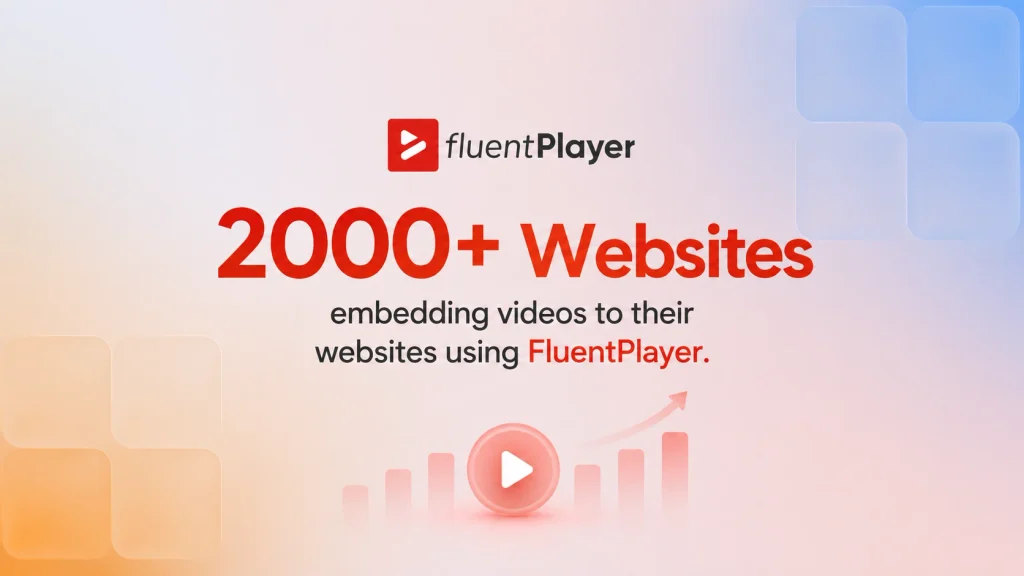
FluentPlayer’s early adoption has been another encouraging story.
Within roughly a month of its public launch, the plugin crossed 2,000+ active installations.
That momentum came while the product itself was still expanding.
The August release brought proper Vimeo support alongside the existing video experience, giving users more flexibility in how they host and present video content on WordPress.
It also introduced improvements such as Single Playback, which automatically pauses another player when a visitor starts a new video. For pages containing several videos, courses, documentation libraries, or content hubs, this creates a much cleaner viewing experience.
The release also improved areas such as delayed video loading, cookie-consent workflows, resume behavior, autoplay previews, permissions, and WordPress compatibility.
Reaching 2,000 installations this quickly is a nice milestone.
The more important task now is giving those users enough reasons to keep FluentPlayer installed for the long term.
MCP Is Changing How the Fluent Ecosystem Can Work With AI
AI has been part of nearly every software conversation in 2026, but simply adding an AI-powered text box to a product is not particularly interesting anymore.
The more useful question is this:
Can AI actually work with the tools and information businesses already use?
That is where MCP, or Model Context Protocol, becomes important.
During August, MCP connectivity became a much more visible part of the Fluent ecosystem.
Fluent Forms is one of the clearest examples. With MCP support, compatible AI clients can work with supported form information, entries, reports, and related operations through a structured connection.
That makes completely different workflows possible.
Instead of manually opening a WordPress dashboard, selecting a form, filtering entries, exporting data, and then bringing that information somewhere else for analysis, an AI assistant can increasingly become another interface through which users interact with the system.
The bigger story is that this direction is not limited to Fluent Forms.
MCP connectivity is becoming part of a broader strategy across Fluent products, including tools such as FluentCRM and FluentCart, while FluentHub is becoming increasingly important as a connection point across the ecosystem.
The long-term opportunity is not “AI inside every plugin.”
It is a Fluent ecosystem where your forms, CRM, commerce data, customer information, and other business tools can work together more naturally—and where compatible AI assistants can help users interact with that ecosystem without forcing them through ten different dashboards.
That is a much more meaningful direction for AI in WordPress.
FluentHub Is Starting to Feel Like Infrastructure
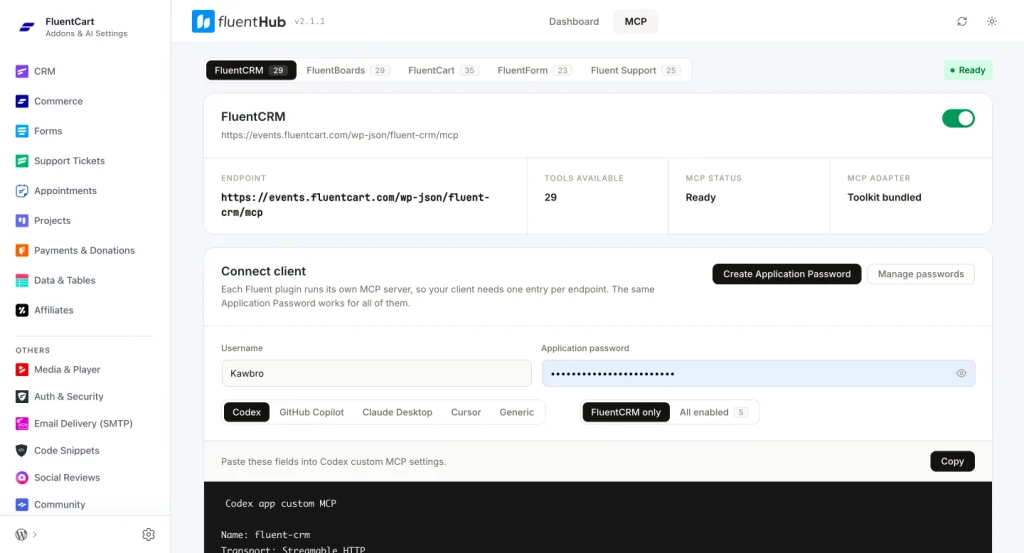
As the Fluent ecosystem expands, managing everything becomes a problem of its own.
A business might use Fluent Forms for lead generation, FluentCRM for email automation, FluentCart for commerce, FluentBooking for appointments, FluentCommunity for memberships or learning, and several other Fluent products alongside them.
Individually, each product solves a problem.
Together, they create another challenge: managing the ecosystem efficiently.
That is where FluentHub is becoming increasingly useful.
FluentHub is evolving into a more practical central layer for discovering, installing, accessing, and connecting Fluent products. Instead of viewing every plugin as an isolated tool, it gives users a clearer way to think about the ecosystem as one connected stack.
The expanding MCP work makes that role even more interesting.
If the future of the Fluent ecosystem includes more connected data, shared workflows, and AI-assisted operations, FluentHub has the potential to become much more than a convenient dashboard.
It can become part of the infrastructure that holds the ecosystem together.
FluentCommunity Took a Big Step Toward an App-Like Experience
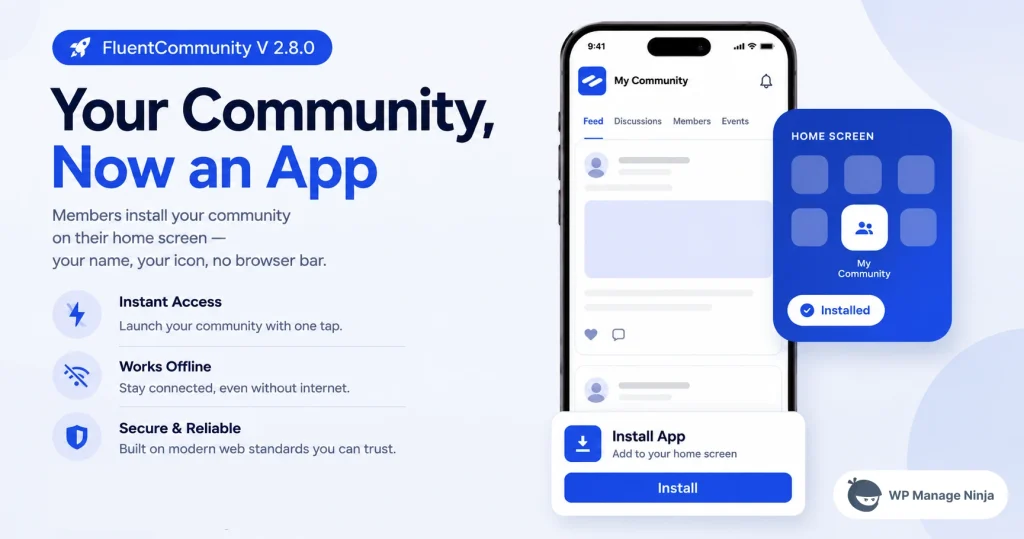
FluentCommunity also delivered one of August’s most meaningful product updates.
With the introduction of Progressive Web App support, community owners can now offer members a much more app-like experience directly from their WordPress community.
Members on supported devices can install the community to their home screen and return to it more naturally, without the business having to build and maintain a traditional native mobile application for the basic experience.
For online communities, membership businesses, creators, and educators, that matters.
One of the hardest parts of running a community is not creating the platform. It is getting members to come back consistently.
Removing friction between the member and the community helps.
Alongside PWA support, FluentCommunity added unlisted posts, improved member and student sorting, better FluentCRM bounce handling, email reconfirmation tools, tighter posting controls, security improvements, and broader compatibility work.
The result is a FluentCommunity release that was not about one flashy feature. It made the platform feel more complete.
Major Updates Continued Across the Rest of the Ecosystem
August’s work extended far beyond FluentCart, FluentPlayer, Fluent Forms, and FluentCommunity.
WP Social Ninja 4.4.0 brought video testimonials, frontend review search and filtering, review categories, new social feed layouts, and deeper video capabilities. Businesses now have more ways to collect and display social proof without making every testimonial look exactly the same.
FluentSMTP added Cloudflare Email Sending support and improved connection health monitoring, logs, diagnostics, and email-management workflows. Email delivery is one of those parts of WordPress infrastructure that should feel boring when it is working properly, and these updates move it further in that direction.
FluentBooking received security-focused improvements alongside new booking controls, FluentCart customer information, FluentCRM workflow improvements, interface refinements, and performance work.
Paymattic made it easier for Stripe customers to update saved card details directly from their dashboard while also strengthening areas around payment feeds, webhooks, subscriptions, exports, and payment security.
FluentAffiliate improved registration workflows, custom fields, CAPTCHA protection, CRM connectivity, referral controls, migration options, and update security.
FluentBoards continued polishing its newer experience with stronger responsive behavior, RTL support, subtask improvements, role management, and better handling when tasks are moved between projects or boards.
Ninja Tables received accessibility work, filtering improvements, Fluent Forms integration fixes, WordPress compatibility updates, and stronger package verification.
Fluent Support, FluentCRM, Ninja Charts, and FluentSnippets also received improvements throughout the month, ranging from security and permissions to compatibility, interface refinements, exports, and performance.
This is one of the less glamorous parts of building a large WordPress ecosystem.
Not every meaningful change deserves a launch campaign.
Sometimes progress looks like dozens of small improvements landing across products at the same time.
All Updates
We Also Started Preparing More Products for WordPress 7.1
Another theme running quietly through August was WordPress 7.1 compatibility.
Products including FluentCommunity, FluentPlayer, FluentBoards, Fluent Support, Ninja Tables, Ninja Charts, and others received compatibility work as teams prepared for upcoming WordPress changes.
These releases rarely produce dramatic screenshots.
They do something more valuable: reduce the chance that customers have to choose between updating WordPress and keeping the rest of their business stack working.
For a plugin company, that maintenance work is just as important as feature development.
Our YouTube Journey Reached a New Milestone

The product teams were not the only teams shipping in August.
Our media operation continued growing too.
This month, WPManageNinja received the YouTube Silver Creator Award after crossing the 100,000-subscriber milestone.
The award is obviously exciting, but the number behind it represents years of work: product tutorials, WordPress education, troubleshooting guides, feature walkthroughs, comparisons, conversations, and videos answering the questions users ask every day.
And rather than treating the milestone as the finish line, we used it as a reason to expand.
Dedicated YouTube channels have now been launched for Fluent Forms, FluentCRM, FluentCart, and FluentCommunity.
That gives each product more space to serve its own audience.
Someone learning how to automate email campaigns with FluentCRM needs very different content from someone building an online store with FluentCart. A community manager using FluentCommunity has different questions again.
Dedicated channels make it easier to go deeper without turning the main WPManageNinja channel into a feed where every subscriber only cares about one out of four videos.
The goal is not simply to create more video. It is to make product education easier to find.
More Than 100 Blogs, 15 Videos, and 200+ Social Resources
That same focus on education carried across the rest of our content operation.
Throughout August, our teams worked on 100+ blog resources, including new articles, tutorials, updates, comparisons, product education, and improvements to existing content.
We also produced 15 resourceful YouTube videos and more than 200 social media resources across our brands and channels.
Those numbers are useful internally, but volume itself is not the goal.
A product becomes significantly easier to adopt when a customer can search for a problem and immediately find the tutorial, video, documentation, or example they need.
That is why we increasingly view education as part of the product experience rather than something that happens after development is finished.
Talking About AI and the Next Era of WordPress
The AI conversation also moved beyond our product dashboards this month.
Our CEO, Jewel, joined Jeffrey from Lytbox for a conversation titled “AI in WordPress…The New Era (with Jewel).”
The discussion looked at the changing relationship between AI and WordPress, where the ecosystem may be heading, and how the way people build and manage websites could evolve as AI becomes more deeply connected to existing tools.
You can watch the full conversation here:
The timing made the discussion particularly relevant for us.
At the same time we were talking publicly about where AI and WordPress could go, our teams were actively expanding MCP connectivity across Fluent products.
The interesting part is no longer whether AI will influence WordPress.
It already is.
The real question is how useful we can make that connection for everyday businesses.
We Launched a Special Deal to Celebrate With Our Customers
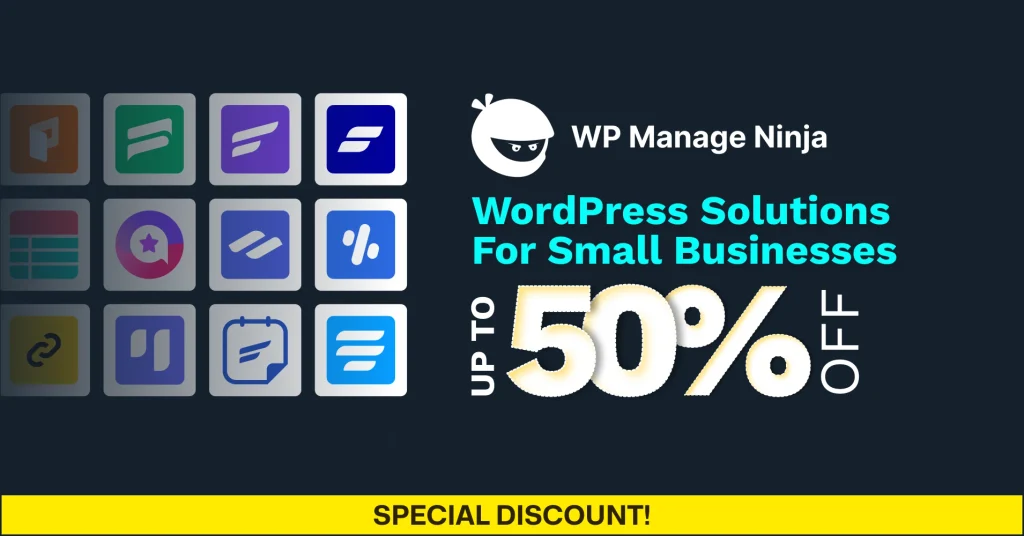
After everything that happened this month, we also wanted to give customers another reason to explore the broader WPManageNinja ecosystem.
So we launched a special campaign offering up to 50% off WPManageNinja plugins.
For existing customers, it is an opportunity to add another product to their stack at a lower cost. For free users who have been considering Pro features, it is also one of the better times to upgrade.
The deal is part celebration, part thank-you.
Because none of the installation milestones, YouTube numbers, product releases, or ecosystem growth happens without the businesses and WordPress users choosing to build with our tools.
What August Taught Us
Looking back, August was not defined by one release.
FluentCart grew and became easier to migrate to. FluentPlayer crossed an early adoption milestone. FluentCommunity became more app-like. MCP pushed the Fluent ecosystem closer to AI-assisted workflows. FluentHub became more useful as the products around it expanded. Our media network grew, and thousands of new users discovered our products.
But the most important work came from the challenge we did not plan for.
The security incident forced us to look beyond individual patches and strengthen the way we distribute and verify software.
That work will outlast August.
So yes, this was a month with plenty of numbers worth celebrating.
- 8,000+ FluentCart installations.
- 2,000+ FluentPlayer installations.
- 100+ blog resources.
- 15 videos.
- 200+ social resources.
- A Silver Creator Award.
But numbers are only one part of the story.
The bigger story is that WPManageNinja entered August as one company and left it with a stronger security process, a more connected ecosystem, a clearer AI direction, a larger education network, and several products that had moved another step forward.
Now we take that momentum into September.

WordPress, automation, eCommerce and growth marketing specialist, a WordPress Core Contributor and Media Corps member blending storytelling with technology to craft strategies in SEO, email marketing, and beyond.
-
WPManageNinja September 2026 Roundup: Commerce, CRM & Connection
WPManageNinja’s September 2026 roundup with 21 releases, FluentCRM 3.2.0, FluentCart -
Signed Plugin Updates in WordPress: How Secure Updates Work
Learn how signed plugin updates, Ed25519 signatures, and public checksums -
Security incident on 31 July 2026: What Happened and What You Should Do
Fluent Forms Pro and Ninja Tables Pro were tampered with.


Leave a Reply
You must be logged in to post a comment.