

Starting an Appointment Setting Business: A Complete Guide
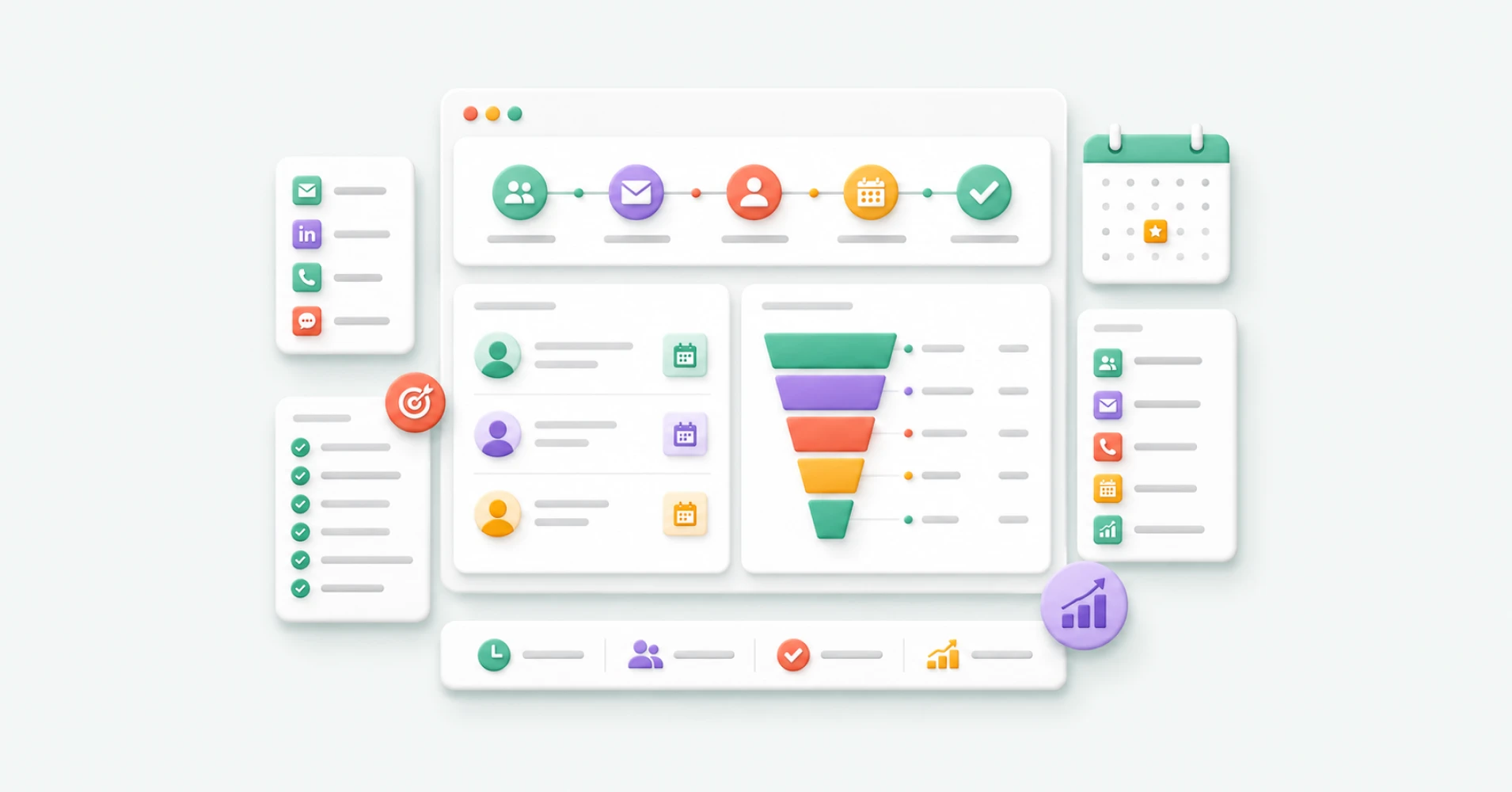
Many businesses don’t struggle to find leads; they struggle to follow up and turn those leads into booked meetings. That gap creates missed sales opportunities every day.
Starting an appointment-setting business helps solve that problem by connecting qualified prospects with sales teams and creating a steady flow of revenue-generating appointments.
Key Takeaways
- Appointment setting helps businesses book qualified sales meetings
- You can start with low costs and work remotely
- Choosing the right niche makes client acquisition easier
- Strong pricing and clear systems help you scale faster
- Consistent follow-up and tracking improve long-term results
What Is an Appointment Setting Business?
An appointment-setting business helps companies schedule meetings between their sales teams and potential customers. Instead of spending hours chasing leads, sales reps can focus on closing deals while appointment setters handle outreach, follow-ups, and booking qualified meetings.
This service is common in industries with longer sales cycles, where strong relationships and consistent follow-up matter most.
What appointment setters do
The daily work usually includes:
- finding potential leads
- sending cold emails or LinkedIn messages
- making outbound calls
- qualifying prospects based on interest and fit
- booking discovery calls or sales meetings
- updating CRM records
- sending reminders and reducing no-shows
The goal is not just to fill calendars, but to book meetings with people who are likely to become customers.
Industries that need appointment setters
Many industries depend on appointment setting services, including:
- SaaS companies
- real estate businesses
- coaching and consulting services
- healthcare providers
- marketing agencies
- financial services
- legal services
These businesses often rely on steady sales conversations to grow revenue.
Appointment setter vs. sales representative
An appointment setter focuses on the early stage of the sales process. Their job is to identify leads, start conversations, and schedule meetings.
A sales representative takes over after the appointment is booked. They handle deeper conversations, present offers, answer objections, and close deals.
Both roles support the same goal, but they work at different stages of the sales funnel.
Why Starting an Appointment Setting Business Is a Smart Move
Appointment setting is one of the easiest service businesses to start because it solves a direct revenue problem for companies. Businesses need qualified meetings, and they are willing to pay for consistent results.
You do not need a large budget, office space, or a big team to begin. With the right process, you can start small and grow into a full agency.
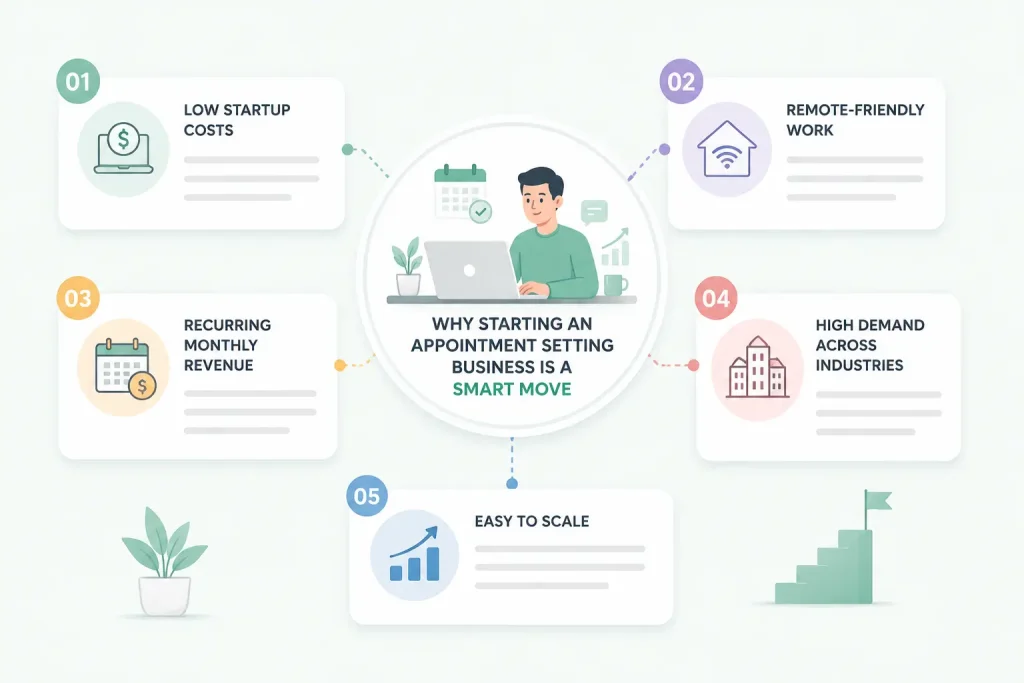
- Low startup costs: Most of the work can be done with a laptop, internet connection, and a few basic tools like a CRM, scheduling software, and email outreach platforms. This makes it a practical business model for freelancers, virtual assistants, and sales professionals.
- Remote-friendly work: You can run an appointment setting business from home and work with clients from different cities or countries. This flexibility helps you build recurring income without location limits.
- Recurring monthly revenue: Many clients need ongoing lead generation and appointment support every month. Instead of one-time projects, you can build stable monthly retainers and predictable cash flow.
- High demand across industries: From SaaS companies to real estate agencies, businesses constantly need new appointments to keep their sales pipeline active. This creates strong demand for reliable appointment setters.
- Easy to scale: You can begin as a solo operator, then hire more setters as client demand grows. Over time, this can grow into a full appointment-setting agency with repeatable systems and a team handling daily operations.
Skills You Need Before You Start
Starting an appointment setting business does not require a formal degree, but strong practical skills make a major difference. Since your work directly affects sales results, clients expect consistency, professionalism, and clear communication.
The most important skills include:
- Communication and persuasion: You need to speak clearly, build trust quickly, and guide conversations without sounding too sales-heavy
- Sales and objection handling: Prospects will often hesitate or say no. You should know how to handle objections, ask better questions, and keep conversations moving
- CRM and scheduling knowledge: Familiarity with tools like FluentCRM, HubSpot, or FluentBooking helps you manage leads and appointments more efficiently
- Follow-up discipline: Consistent follow-up matters in appointment setting. Tools like FluentCRM can help automate reminders, email sequences, and lead nurturing so no prospect gets missed.
- Time management and reporting: Managing multiple clients means tracking leads, appointments, and performance metrics without missing important details
The stronger these skills become, the easier it is to deliver consistent results, keep clients longer, and grow your appointment setting business with confidence.
How to Start an Appointment Setting Business: Step-by-Step Guide
Building an appointment setting business becomes much easier when you follow a clear process. Instead of trying to offer everything at once, focus on creating a simple system that helps you attract clients, deliver results, and grow steadily.
Choose Your Niche
Rather than serving every industry, focus on a niche where you already understand the market or have some experience. Whether it is B2B SaaS, real estate, insurance, healthcare, or coaching, specialization helps you stand out and deliver better results.
When you focus on one niche, it becomes easier to understand client pain points, improve your outreach, and position yourself as an expert instead of a general service provider.
Define Your Services
Before reaching out to clients, decide exactly what your appointment-setting business will offer. Clear service packages make it easier for businesses to understand your value and hire you faster.
Your services may include cold outreach, lead qualification, follow-up, LinkedIn outreach, discovery call booking, CRM updates, and calendar management. You can start with a few core services and expand later as your business grows.
Create Your Pricing Model
Your pricing should reflect the value of qualified appointments, not just the number of calls you make. Different clients prefer different pricing structures depending on their goals and sales process.
Common pricing models include monthly retainers for ongoing support, pay-per-appointment pricing, hourly rates for smaller projects, and hybrid models that combine a base fee with performance bonuses. Many businesses prefer retainers because they create predictable monthly revenue.
Set Up Your Tools
A strong tech stack helps you stay organized, reduce manual work, and improve client results. Even as a solo operator, having the right systems in place makes your business look more professional.
At a minimum, you will need a CRM platform like FluentCRM, HubSpot, or Zoho, calling software, and email automation tools.
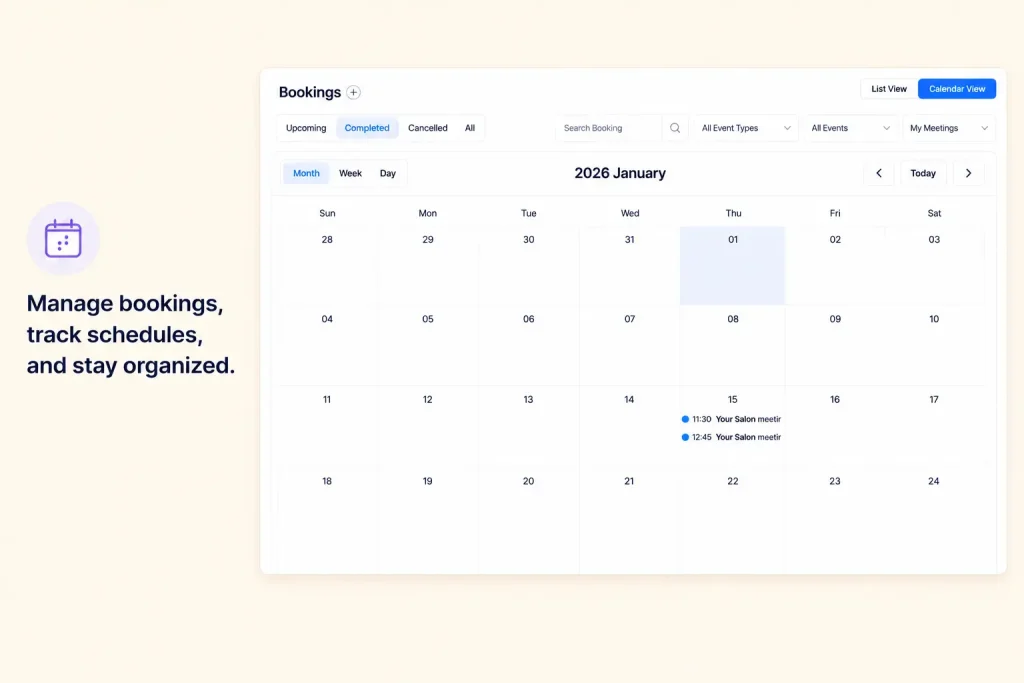
If you manage bookings inside WordPress, FluentBooking helps automate scheduling, reminders, and calendar management while reducing no-shows.
Create Your Outreach Scripts
Strong outreach starts with clear messaging. Whether you use cold email, LinkedIn, or phone calls, your goal is to start real conversations, not send generic sales pitches.
Your scripts should focus on the prospect’s pain points and explain how your service helps solve them. Strong follow-up messaging also works well with event reminder email templates for better engagement.
Keep your message short, personalized, and flexible enough to sound natural. Include qualifying questions that help you understand their needs, timeline, and decision-making process.
Good scripts improve reply rates, reduce wasted outreach, and help you book more qualified appointments.
Get Your First Clients
Your first clients will usually come from direct outreach, not passive marketing. The same strategies you use for clients can help you grow your own business.
Start with LinkedIn outreach, cold email campaigns, referrals, freelance platforms like Upwork and Fiverr, and your personal network. Focus on showing results like appointments booked, conversion rates, and return on investment instead of only talking about your services.
Build Your Sales Process
You also need a repeatable process for selling your own appointment-setting service. Without a clear system, client acquisition becomes inconsistent and difficult to scale.
A simple process starts with finding prospects, reaching out through email or LinkedIn, qualifying leads, booking meetings, closing clients, onboarding them, a discovery call, and then delivering results. Systems create consistency and make future growth much easier.
Client Onboarding and Setup
Once you close a client, the next step is creating a smooth onboarding process. This helps you understand their business and set clear expectations from the beginning.
Start by learning what they sell, who their ideal customers are, and what kind of appointments they want to book. You should also define target industries, geographic focus, lead qualification rules, and communication preferences.
A strong onboarding process makes outreach more accurate and helps avoid confusion later. It also builds trust because clients can clearly see how your appointment-setting process will support their sales goals.
Track Results and Build Case Studies
Results are what keep clients paying month after month. If you can clearly show business impact, your service becomes much easier to sell.
Track important metrics like reply rate, show-up rate, appointments booked, conversion rate, and client ROI. Even small wins can become strong case studies that help you attract better clients, build trust faster, and charge higher prices.
Scale Your Business With a Team
Once client demand increases, handling everything alone becomes difficult. This is the stage where many appointment setters move from freelancing into building an agency.
Start by hiring people with strong communication skills, sales confidence, and follow-up discipline. Train them using your scripts, workflows, and client processes so results stay consistent.
You should also track performance metrics like call-to-appointment ratio, show-up rates, and client retention. Clear systems make it easier to grow without losing service quality.
Understand Basic Compliance Rules
Appointment setting involves handling business contact information, outreach campaigns, and client data. This means basic compliance matters, especially when working with international clients.
You should understand email rules, consent requirements, and privacy regulations like GDPR when reaching out to prospects. Always keep records organized, use clear client agreements, and make sure your outreach follows ethical sales practices.
Strong compliance protects your business, builds client trust, and helps you avoid unnecessary legal problems.
Common Challenges in Appointment Setting
Starting an appointment-setting business is simple, but running it consistently comes with real challenges. From low response rates to client expectations, small problems can quickly affect your results if they are not handled early.
Understanding these common issues helps you build stronger systems, improve client retention, and deliver better long-term results.
- Low reply rates: Generic outreach often gets ignored. Improve targeting, personalize your messaging, and focus on solving a specific problem instead of sending broad sales pitches
- No-shows: Booked meetings still fail if prospects do not attend. Use reminder emails, confirmation messages, and easy rescheduling options. Tools like FluentBooking help automate reminders and improve attendance
- Bad-fit clients: Some clients have unrealistic goals, poor lead quality, or no clear sales process. Qualify your own clients before signing them to avoid difficult partnerships
- Unrealistic client expectations: Some clients expect fast results from day one. Set clear expectations during onboarding by explaining timelines, reporting methods, and realistic conversion rates
- Lead quality problems: More appointments do not always mean better results. Ask stronger qualifying questions about budget, urgency, fit, and decision-making authority before booking meetings
- High rejection rates: Rejection is part of the process. Strong follow-up discipline, better targeting, and emotional consistency help you stay productive and improve long-term results
The good news is that most of these challenges can be solved with better systems, clearer communication, and consistent follow-up. When you focus on quality instead of volume, appointment setting becomes much easier to manage and far more profitable.
Build a Business That Keeps Calendars Full
Starting an appointment-setting business is a smart way to build recurring income with low startup costs. Success comes from choosing the right niche, creating clear systems, and staying consistent with follow-up.
For smoother scheduling and fewer no-shows, FluentBooking helps automate bookings, reminders, and calendar management for you and your clients.
FAQ
How do I start an appointment setting?
Start by choosing a niche such as SaaS, real estate, healthcare, or consulting. Then define your services, set your pricing model, and build a simple outreach system using tools like CRM software and scheduling platforms. Once your process is ready, focus on getting your first clients through LinkedIn outreach, referrals, and cold email campaigns.
Is appointment setting good money?
Yes, appointment setting can be a profitable business because companies are willing to pay for qualified sales meetings. Beginners may start with small retainers or pay-per-appointment pricing, while experienced appointment setters and agencies can earn stable recurring monthly income from long-term clients.
How can I become an appointment setter?
You can become an appointment setter by learning communication skills, sales basics, lead qualification, and follow-up strategies. Familiarity with tools like HubSpot, Calendly, and FluentBooking also helps. Many people start as freelancers and grow into full appointment-setting agencies over time.
How do you make money from appointment setting?
Most appointment setters earn money through monthly retainers, pay-per-appointment pricing, hourly rates, or hybrid pricing models. Some charge a fixed monthly fee for ongoing support, while others earn based on the number of qualified meetings they book for clients.
What is the salary of an appointment setter?
The salary of an appointment setter depends on experience, industry, and pricing structure. Freelancers may start with smaller monthly retainers, while experienced professionals and agency owners can earn significantly more through multiple client contracts and recurring revenue. Income usually grows as results and client trust improves.

I enjoy making complex ideas simple and engaging through my writing and designs. With a strong knowledge of content writing and SEO, I create technical content that’s both easy to understand and interesting.
-
10 Best jQuery Table Plugins for Best Data Visualization in 2026
Discover the 10 best jQuery table plugins for 2026. Compare -

Black Friday Marketing Strategies for 2026: Core and Advance Move
Black Friday is the most celebrated shopping season worldwide. Discover -

How Much Can You Earn With Amazon Affiliate Marketing? Rates & Niches
How much can you earn with Amazon affiliate marketing? Dive



Leave a Reply
You must be logged in to post a comment.